
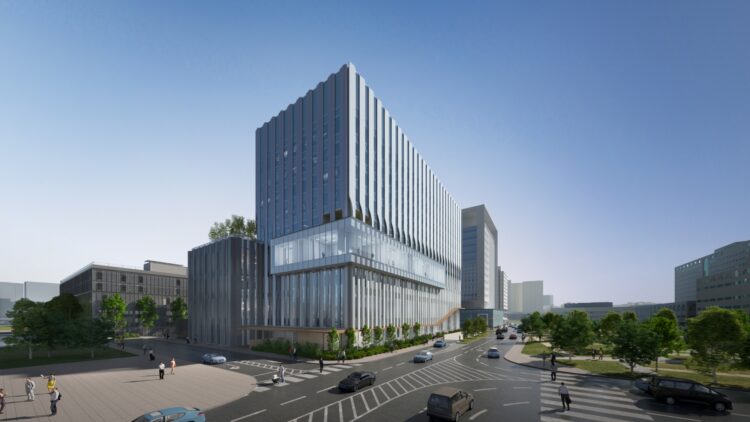
Asan Medical Center is bringing heavy-ion therapy—one of the world's most advanced weapons against cancer—to its campus, breaking ground on what will become South Korea’s largest heavy-ion therapy center. Often hailed by oncologists as a "dream cancer treatment," this cutting-edge technology destroys malignant cells with far greater efficiency than conventional radiation, focusing its destructive energy precisely on tumors while minimizing collateral damage to surrounding healthy tissue.
Heavy-ion therapy works by accelerating carbon particles to nearly the speed of light to generate a high-energy beam. Unlike traditional radiation, this beam releases very little energy as it travels through human tissue, delivering a concentrated, explosive burst of destructive power only when it reaches the exact depth of the cancer cells before immediately dissipating. Compared to the protons utilized in proton therapy, the carbon ions used in heavy-ion therapy are roughly 12 times heavier, giving them significantly higher cell-killing capabilities.
The treatment process is also remarkably brief. While conventional radiation therapy typically requires 30 or more sessions, heavy-ion therapy is completed in an average of just 12 sessions. For early-stage lung cancer patients, it can occasionally eliminate tumor cells in a single visit. Consequently, it has emerged as a crucial lifeline for individuals whose cancers have recurred or who fail to respond to standard chemotherapy and radiation.
Severance Hospital became the first in South Korea to introduce heavy-ion therapy in 2023. Because it remains a non-covered service outside national health insurance, the out-of-pocket financial burden is substantial, yet demand is exceptionally high—so much so that patients currently face wait times exceeding six months. Meanwhile, Seoul National University Hospital is constructing its own heavy-ion center in Gijang County, Busan, aiming for a late 2027 launch, while Asan Medical Center's facility is slated to open in 2031.
Unprecedented Scale and Next-Generation Specifications
The decision to integrate heavy-ion therapy at Asan Medical Center, one of South Korea's preeminent cancer care institutions, marks a major milestone for the domestic medical community. Asan Medical Center treats over 1.06 million cancer patients annually, meaning roughly one in eight cancer patients nationwide receives care at the facility.
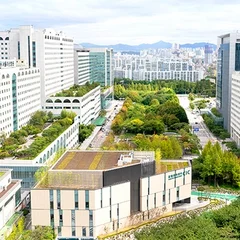
The new center will be built on an unprecedented scale, spanning three basement levels and nine above-ground floors with a total floor area of approximately 12,000 pyeong (around 39,600 square meters). Three heavy-ion therapy systems will be anchored in the underground facility. As South Korea's top-tier tertiary hospitals vie to advance their oncology capabilities, Asan Medical Center aims to set a new standard by deploying systems with the latest technical specifications.
First, the incoming system can irradiate a wider target area with a much higher hourly radiation dose than existing equipment, allowing clinicians to treat larger areas in less time. Additionally, the multi-particle system will be capable of utilizing a versatile range of ions depending on the clinical situation—including helium, neon, and oxygen alongside carbon. The hospital notes that this safety-enhancing technology will successfully expand its research and clinical applications to pediatric oncology.
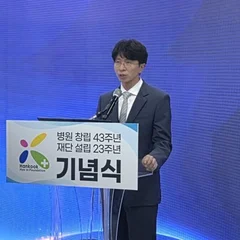
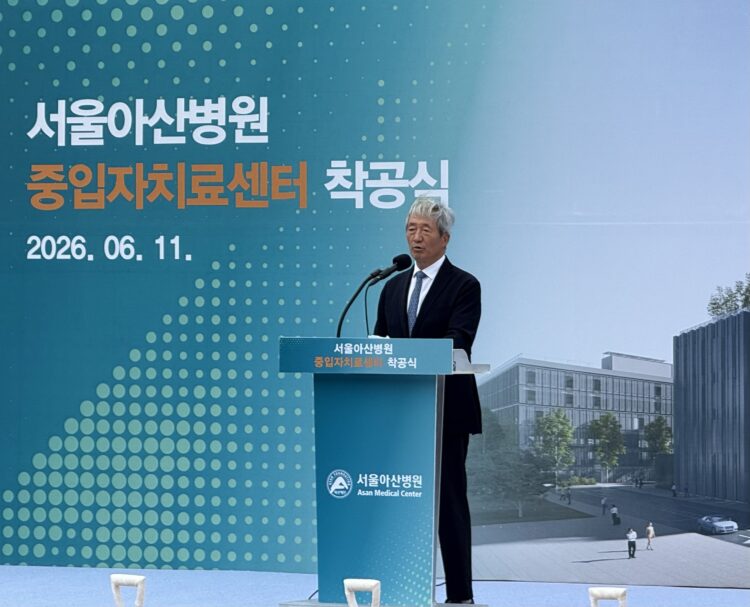
At the groundbreaking ceremony held on the 11th, Chairman Chung Mong-joon noted, "While areas lacking medical doctors have largely vanished today, there are still far too many patients who continue to suffer because their illnesses do not improve." He added, "Delivering renewed hope through heavy-ion therapy to those waiting for a therapeutic breakthrough is the ultimate way to carry on the wishes of my late father, founder Chung Ju-yung."
Hospital President Park Seung-il echoed this vision, stating, "This milestone will not only significantly improve clinical outcomes for cancer patients but will also further elevate our hospital's global competitiveness."