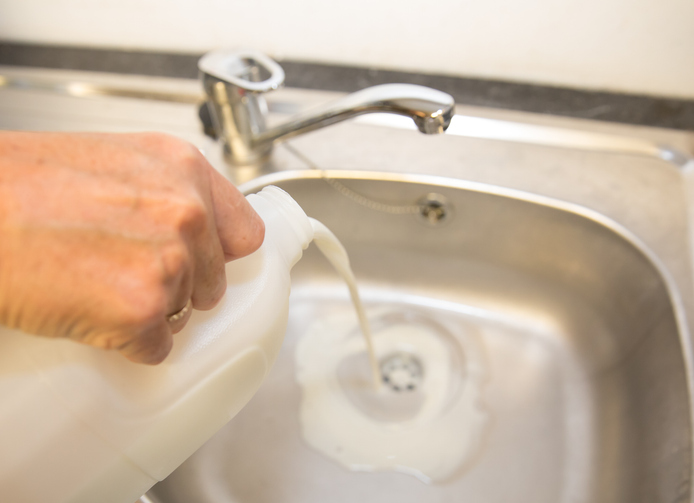
Milk is celebrated for its high calcium and protein content, which strengthens bones and bolsters immune function. However, consuming milk past its use-by date can trigger gastroenteritis, leading to uncomfortable symptoms like abdominal pain and diarrhea. While it might be tempting to dump a spoiled carton straight down the kitchen sink, doing so can harm your plumbing. Fortunately, there are practical ways to test milk for spoilage, repurpose it around the house, and safely dispose of the remainder.
Testing for Spoilage with the Cold-Water Method
Milk that is well past its expiration date typically reveals its condition through a sharp, sour odor and a curdled, clumpy texture. This happens because multiplying lactic acid bacteria raise the liquid's acidity. When the milk is right on the line and visual or olfactory cues aren't entirely obvious, a simple cold-water test can determine whether it is still usable.
The method is straightforward: fill a glass with cold water and add one or two drops of milk. If the milk sinks directly to the bottom, it is still fresh. If the droplets immediately dissolve and spread through the water, it has spoiled.
Practical Household Uses for Spoiled Milk
Instead of discarding spoiled milk immediately, it can be utilized as a gentle polish for jewelry and accessories like rings, earrings, and necklaces, which naturally lose their luster over time. Soaking these items in the milk for a few hours, rinsing them under running water, and wiping them with a soft cloth can help restore their original shine. However, this mild solution is not a substitute for heavy-duty chemical cleaners and will have little effect on stubborn rust or severe tarnishing.
Slightly turned milk can also benefit indoor houseplants. Mixing milk and water in a 1-to-1 ratio and wiping the solution onto plant leaves with a soft cloth removes dust and helps the foliage breathe. The natural calcium and protein supply subtle nutrients while leaving a healthy sheen on the leaves. Caution is advised, however, as heavily spoiled milk can leave behind an unpleasant odor in the room.
Safe Disposal to Protect Your Plumbing
When you decide it is time to discard expired milk completely, the safest method is to absorb the liquid with newspaper or paper towels and throw it away with regular household trash. Pouring liquid milk down the drain may seem convenient, but it places a heavy strain on sewage treatment facilities and risks damaging your home's pipes.
The fats and proteins in milk can solidify inside drainpipes. When these milk residues cling to pipe walls and mix with existing grease buildup, they form a hardened, stubborn film. Because these byproducts do not wash away easily with standard water flow, they frequently cause clogged drains and emit foul odors throughout the kitchen.