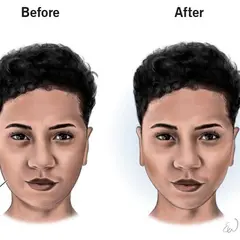
When individuals feel their midface (the central part of the face) appears too long, a common instinct is to pursue procedures that shorten adjacent areas, such as the forehead or chin. However, reducing these features simply because the face feels elongated can inadvertently make the midface look prominently longer. Beyond basic length adjustments, certain surgeries and treatments disrupt facial volume and structural balance, exacerbating the very issue patients hope to resolve.
This aesthetic concern is far from a modern trend. Even in Western societies, where longer and narrower facial structures are more common, an elongated midface has historically been associated with a tired, less refined, and older appearance.
This visual association is famously illustrated in Disney’s 1950 animated film Cinderella. At the time, the studio directly linked physical features to character traits. Cinderella’s stepsisters, depicted as uncultured and greedy, were drawn with distinct features that define a long-looking midface.
Crucially, the absolute physical length of the midface is rarely the primary culprit. The older, fatigued impression is typically created by a combination of a retruded chin tip, a mouth that naturally hangs slightly open, a prominent philtrum, and facial tissues that sag downward. The core issue is not an excessively long midface, but rather insufficient structural support from the lower face and an overall descent of facial tissue.
The Pitfalls of Chin Reduction and Weakened Lower Support
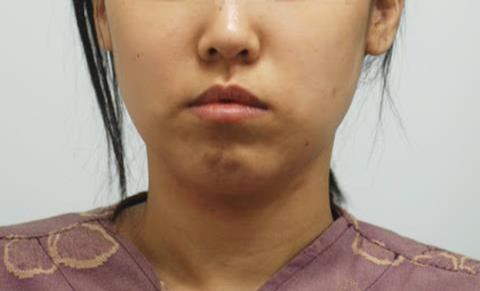
In faces where the midface appears elongated, procedures that reduce the volume of the chin tip or push it backward must be approached with extreme caution. When chin support is weakened, the corners of the mouth droop and the jaw tends to hang open. To force the lips closed, the philtrum is pulled downward, making it appear longer and more prominent. Furthermore, losing this lower structural foundation causes cheek fat to sag, compounding the illusion of an elongated central face.
When surgeons ignore the underlying lack of chin projection and instead make the lower face smaller, the heavy appearance of the midface intensifies. This lack of support deepens marionette lines, worsens cheek sagging, and blurs the definition between the jawline and the neckline, ultimately aging the patient.
Downward Volume Shifts and Aggressive Cheekbone Reduction
Maintaining volume in the upper midface—specifically the anterior cheeks and the under-eye area—is vital for a youthful, vibrant appearance. However, if zygoma (cheekbone) reduction surgery is performed too aggressively, or if the supporting soft tissue weakens, the cheek fat pads descend. This leaves the under-eye area looking hollow and gaunt, prompting patients to complain that their midface looks longer and more tired.
A notable example of how volume changes affect facial proportions can be seen in singer Kim Taeyeon. Historically, her features did not convey an elongated midface. However, subsequent weight loss and a reduction in cheek fat and chin volume created a visual impression that elongated her midface.
Conversely, attempting to fix a flat or long midface by injecting dermal fillers or autologous fat into the anterior cheeks requires careful precision. If the underlying cheek tissue has already migrated downward, accumulating around the mouth and jawline, adding heavy volume can overtax the skin's elasticity. If the structural highlight of the cheek drops from its natural, high position down toward the nose or mouth, it merely increases the visual heaviness of the lower midface.
When cheek sagging occurs after zygoma reduction, the lateral philtrum appears elongated and the perioral area feels heavier, intensifying the long-face appearance. Singer Kim Song reportedly underwent a philtrum reduction shortly after a zygoma reduction, a sequence often necessitated when cheekbone surgery triggers midface sagging.

The Failure of Philtrum and Mouth-Corner Lifts
Philtrum reduction remains one of the most misguided procedures chosen to address a long midface. The philtrum typically looks elongated because the chin is recessed or because the patient must stretch the tissue downward to close an open mouth. Cutting away skin does not fix this underlying structural deficit. Instead, it frequently distorts the center of the upper lip into an unnatural "S" shape, makes closing the mouth even more difficult, exposes the upper front teeth awkwardly, and leaves permanent scarring.
Similarly, mouth-corner lifts are often sought to correct the drooping smile associated with a weak chin. This procedure fails to address the lack of lower facial support, often leaving unnatural, irreversible scars around the mouth without improving the overall midface proportion.
Rhinoplasty and Endoscopic Forehead Lifts: Double-Edged Swords
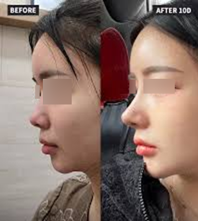
Because the nose provides midface three-dimensionality, a well-executed rhinoplasty can help balance a long midface, particularly when a short nose causes the philtrum to look disproportionately long. However, caution is required with the current trend of creating an excessively sharp, extended nasal tip. Utilizing rib cartilage to noticeably lengthen the nose downward physically increases midface length. In patients who already have an insufficient chin and a heavy midface, lengthening the nose will worsen the facial imbalance.
Endoscopic forehead lifts, despite their many benefits, also require careful consideration. By lifting the eyebrows, this procedure directly increases the visual boundaries and absolute length of the midface. Patients who undergo forehead lifts without evaluating this factor often experience post-operative dissatisfaction due to an inadvertently elongated facial appearance.
Addressing the Essence of the Problem
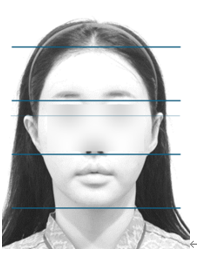
A wide array of procedures are marketed under the umbrella of "midface reduction." However, the absolute physical length of the bone is rarely the true issue. The real challenges are insufficient lower-face support, heaviness around the mouth, sagging tissues, and the resulting aged appearance.
Consequently, standard midface reduction techniques often miss the mark entirely. The human face cannot be optimized simply by cutting away or reducing specific sections. Successful rejuvenation requires a comprehensive understanding of structural deficiencies, tissue descent, and collapsed three-dimensionality.
In the upcoming final installment, we will explore the anatomical and fundamental solutions required to effectively balance a long midface.