You notice your belly starting to protrude. You haven't significantly increased your calorie intake, nor has your activity level plummeted. Many dismiss this as the inevitable "middle-age spread," but such complacency may be quietly taxing your vital organs.
As the basal metabolic rate declines in middle age, the risk of stubborn weight gain intensifies—especially when balanced against the demands of work, childcare, and social commitments. However, the true concern isn't the amount of fat, but its specific location..
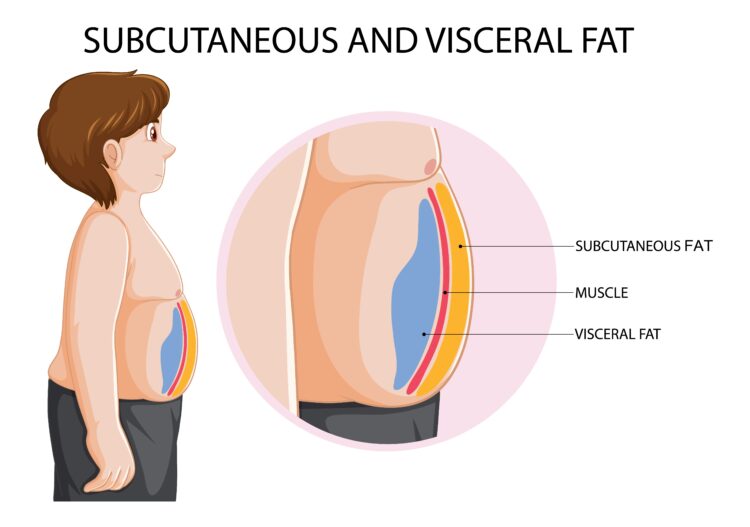
Visceral Fat: The Silent Disruptor
In middle age, fat shifts its primary storage site. For women, dropping estrogen levels in the late 40s encourage fat to accumulate in the abdomen rather than the hips. For men, declining testosterone and muscle loss after 50 mean that even a stable diet can result in increased internal fat.
This "visceral fat," which sits deep within the abdominal cavity around internal organs, is far more dangerous than the subcutaneous fat found just under the skin. Unlike subcutaneous fat, which serves as long-term energy storage, visceral fat is metabolically active. It continuously releases inflammatory substances and fatty acids that disrupt insulin sensitivity and can harm the liver, blood vessels, and brain.
A Waistline That Ages the Brain and Heart
Recent research highlights a direct link between abdominal fat and accelerated aging. A study by Ben-Gurion University of the Negev, published in Nature Communications in March 2026, followed 533 adults for 16 years. Researchers found that even if a person lost overall weight, their brain volume continued to shrink unless they specifically reduced visceral fat. Conversely, those who lowered their visceral fat preserved better cognitive function.
Similarly, the University of Washington School of Medicine reported in late 2025 that higher levels of visceral fat are associated with a "biological brain age" that exceeds a person's actual chronological age. The heart faces a similar fate; a study from Imperial College London involving over 21,000 participants found that excess abdominal fat significantly ages the heart's biological profile.

Strategic Ways to Melt Visceral Fat
For the busy middle-aged adult, success lies in shifting tactics rather than simply adding more gym time.
Interval Walking: Instead of a steady stroll, try alternating 2–3 minutes of fast walking with 1–2 minutes of a slower pace. Repeat this 4–5 times. Starting with just 20 minutes, three times a week, can be highly effective.
Lower-Body Strength: Squats and lunges are essential. Performing 10–15 repetitions 2–3 times a week helps mitigate the muscle loss that leads to fat accumulation.
Post-Meal Movement: A 10–15 minute light walk after eating blunts blood sugar spikes. Simply avoiding the urge to sit immediately after a meal makes a measurable difference.
Protein Distribution: Rather than consuming all your protein at dinner, spread it across breakfast and lunch to better support muscle maintenance.
Alcohol and Activity Breaks: Alcohol intake should be limited, with at least one alcohol-free day between drinks to prevent fat storage. Additionally, avoid sitting for more than an hour at a time; standing up briefly can "reset" your body's fat-burning functions.
Abdominal obesity is generally defined by a waist circumference of 90 cm or more for men and 85 cm or more for women. Even if the scale remains steady, a creeping waistline is a signal that it is time to take action. Changes in the body often manifest at the waist long before they appear on the scale.