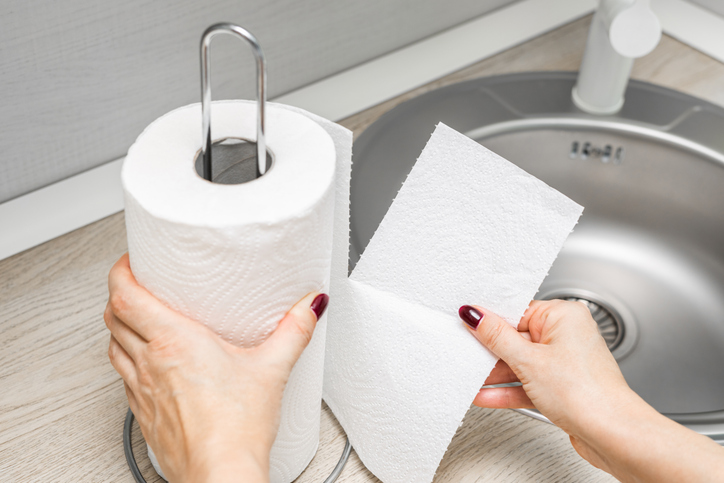
Paper towels are a ubiquitous kitchen essential, valued for their ability to soak up grease, blot ingredients, and manage moisture. However, their convenience often leads to indiscriminate use. While they appear soft, the fibrous texture of virgin or recycled pulp can be surprisingly abrasive, leading to permanent damage on delicate surfaces.
To preserve your belongings, it is critical to understand where paper towels do more harm than good.
The Hidden Abrasiveness: Wood and Stainless Steel
A paper towel’s surface is composed of fibers that can act like ultra-fine sandpaper. When used repeatedly on solid-wood furniture or coated finishes, these fibers can create microscopic scratches that dull the wood's luster over time. For high-quality furniture, a soft, slightly dampened cloth is a far safer alternative.
The same caution applies to modern kitchen appliances. Wiping a stainless-steel refrigerator with a paper towel can lead to a buildup of visible scuffs. Stainless steel has a specific grain; wiping against that grain with paper pulp can compromise the finish. Manufacturers recommend using a microfiber cloth and following the direction of the metal’s grain to maintain its reflective quality.
Mirrors, Glass, and Digital Displays
It is a common habit to reach for a paper towel to clean bathroom mirrors or windows, but this often backfires. As the paper absorbs moisture, it tends to shed lint that clings to the glass. More importantly, the friction can cause fine scratches that become visible under direct light over time.
Electronic devices—including smartphones, tablets, and TVs—are even more vulnerable. These screens are often treated with specialized oleophobic (fingerprint-resistant) coatings. The coarse fibers in paper towels can strip these coatings away or leave permanent marks on the display. For electronics, always use a dedicated soft cloth and avoid cleaners containing alcohol or benzene, which can chemically degrade the screen.
Maximizing Utility: Smart Kitchen Hacks
While they should be kept away from screens and mirrors, paper towels excel at moisture management and safety when used correctly:
Preventing Clumps: Placing a sheet at the bottom of a container for salt or sugar absorbs ambient humidity, preventing the contents from hardening into blocks.
Extending Freshness: For peeled garlic, a layer of sugar followed by a paper towel in an airtight container reduces moisture and slows spoilage. Similarly, wrapping ginger in a damp paper towel before sealing it in a bag helps preserve its potent aroma.
Hydrating Produce: Prepped green onions stay crisp longer when sandwiched between damp paper towels in a refrigerated container.
Kitchen Safety: A damp paper towel placed underneath a cutting board creates a non-slip grip, preventing the board from sliding during heavy chopping.
Grease Control: To keep oil bottles from becoming sticky, wrap a paper towel around the neck of the bottle and secure it with a rubber band to catch drips immediately.
By shifting paper towels away from delicate surfaces and toward these functional storage and safety tasks, you can make the most of this kitchen staple without risking your expensive belongings.