"Why are you here, doctor?"
"I wonder? I don't know either," I replied, smiling awkwardly as I took a sip of the drink handed to me by a junior resident aiming for the respiratory department.
In the spring of 2015, I crash-landed on the uncharted planet of "hospital medicine," a field I had never even considered. Having graduated from a prestigious medical school and completed my residency at the same university hospital, I had specialized in respiratory and critical care medicine. I expected a "refined" career path, akin to a highborn lady from a noble family. I couldn’t imagine a future beyond becoming a professor at a university hospital. It seemed as predictable as the protagonist of a weekend drama receiving a happy ending.
As expected, a solid offer arrived in the fall of 2014, and I coolly accepted. However, on an afternoon in February 2015, while I was quietly dreaming of a prestigious clinical career, I received two phone calls that I will never forget.
The first was a thunderous notification: the position I had been expecting was suddenly canceled. The second call came from Professor Jang Hak-cheol of the endocrinology department—who would later become the first director of the Hospitalist Center—asking me to become the first hospitalist professor in the country at Bundang Seoul National University Hospital.
"There isn't much time, so I hope you can think about it for a few hours and let me know right away," he said.
Typically, the appointment process for a professorship begins in the fall and is finalized by January. It was highly unusual for a new position to arise in mid-February. I was already reeling from the first call, but now I was faced with incomprehensible terms like "hospital medicine" and "hospitalist." This unforgiving timeline pushed me into a pit of despair. While I admire Neil Armstrong for being the first to land on the moon, I had always preferred being part of the crowd cheering for the pioneers.
Repeating the adage that when one door closes, another opens, I headed toward this unknown planet. But the path was harsher and lonelier than I had imagined. At medical society meetings, I heard whispers: "How did he end up there? Success is all about being in the right place at the right time." Because I performed hands-on ward tasks directly, I was often treated like a resident. Prejudices and resistance chipped away at my self-esteem, and physical exhaustion dimmed the pride of being a "pioneer."
"What if it's work a resident used to do? As long as you save a patient, that's what matters," my younger sibling told me, delivering a sobering truth. Yet, even with that "shock therapy," my self-esteem showed no signs of ROSC (return of spontaneous circulation).
It was around that time that I met a patient with bile duct cancer. He had been hospitalized multiple times for gastrointestinal bleeding, which had prevented him from receiving chemotherapy for over two years. His cancer had progressed, and he had already signed a do-not-resuscitate (DNR) order.
He was admitted to the acute internal medicine ward with hematochezia. One morning at 6 AM, while he was stabilizing, he suddenly developed a high fever and his blood pressure plummeted. Given the symptoms, septic shock was the primary concern, though recurrent bleeding remained a possibility. We initiated vasopressors and antibiotics while monitoring for worsening anemia. Fortunately, his blood pressure began to recover.
However, during lunch, I received word that his blood pressure had dropped again. A massive hemorrhage had occurred. I ordered three units of packed red blood cells, but I feared he wouldn't survive until they arrived; even with maximum fluids and vasopressors, his systolic blood pressure wouldn't rise above 70 mmHg. I urgently contacted the radiology department for an emergency embolization.
"I will take this patient for an abdominal CT and bring him straight to the procedure room," I told them. "If we don't do the embolization, he will die."
The challenge was securing intravenous access for the CT contrast. The patient’s limbs were already crowded with lines, resembling bare winter branches. I tried repeatedly to find a vein, but it was impossible. His exhausted wife whispered, "I am prepared. But please do your best."
We moved toward the CT room while manually transfusing blood. A pregnant nurse from our team stepped forward to help. Together, we took turns squeezing the blood bags with all our might to speed up the flow.
Perhaps our desperation reached him. During the CT and the wait for the procedure, his blood pressure held steady. The embolization was successful. As the relief washed over me, my legs gave out and I sat down on the floor. Outside the procedure room, the patient's wife and sons stood tense.
"The procedure went well, and his blood pressure is recovering," I told them. They teared up, expressing their gratitude.
"I just did my job as a doctor," I replied, offering a brief word of comfort before dragging my exhausted body back to the ward. Walking home well past quitting time, I recalled the resident's question: "Why are you here, doctor?"
I now answer with the words of our head nurse: "Doctors don’t just let patients die." I am here doing the most fundamental work of a physician—standing by the patient to ensure that no life is lost in vain.
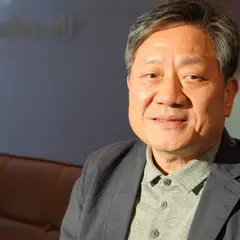
Eun-sun Kim, International Cooperation Chair of the Korean Society of Hospital Medicine (Associate Professor at Bundang Seoul National University Hospital)
〈Editor’s Note〉 A hospitalist is a physician who manages the care of hospitalized patients from admission to discharge. The South Korean hospitalist system began as a pilot in 2016 and became a full-scale project in 2021.
‘Hospitalist Diary’ is a weekly series sharing the "stories of living people" experienced within the ward—confessions from patients, guardians, and medical staff alike. This series is supported by the Korean Society of Hospital Medicine.