Actor Kim Byung-chul (51) revealed his weight management secrets that are no different from when he was in his 20s.
Kim Byung-chul recently attended the after-party of actor Lee Sang-yoon's play as a show of support on MBC's 'Knowing Bros'. He gained popularity for his roles as the ghost 'Pahguk' in the drama 'Goblin' and as the cheating husband Seo In-ho in 'Doctor Cha Jeong-sook'. On this day, Kim Byung-chul showcased his human charm with a serious yet warm and playful demeanor.
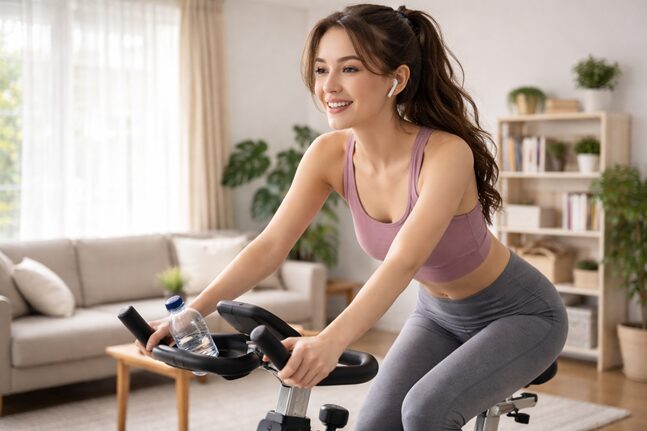
Kim Byung-chul also shared his self-management secrets. He mentioned that he has maintained a similar weight for over 30 years since his 20s, attributing this to "cycling indoors at home. I cycle standing up for a short time until I sweat." As a result, Kim Byung-chul has maintained a toned physique without any excess fat, just like in his 20s.
After building a solid foundation on the theater stage, Kim Byung-chul has been transitioning between dramas and films, recently starring as a super-powered lawyer in the Netflix series 'Cashier'. Let's take a look at how Kim Byung-chul manages both health and weight with his busy schedule.
Health and Diet Benefits of Indoor Cycling
Indoor cycling is a representative aerobic exercise that is effective for improving cardiovascular function, vascular health, and fat burning. It is considered a great exercise for long-term weight maintenance. Even for a short time, if you increase the intensity and focus, it becomes a high-intensity interval training (HIIT) format, leading to greater calorie burn and fitness improvement in less time.
Consistent indoor cycling improves heart function, blood pressure, blood sugar, cholesterol, and VO2max (maximum oxygen uptake, the ability to use oxygen during exercise), reducing the risk of cardiovascular diseases. Research shows that even moderate-intensity pedaling for about 20-30 minutes, five times a week, significantly improves cardiovascular health indicators. Compared to running, it puts less stress on the knees and ankles, making it recommended for those with osteoarthritis or knee pain.
Additionally, regular cycling aerobics positively affects memory and brain function, reduces stress and depression, and improves sleep quality. It helps stabilize mood and increase energy by boosting the secretion of feel-good hormones like endorphins.
The diet effect is outstanding. For a person weighing 70kg, cycling indoors at moderate intensity for 30 minutes can burn approximately 200-350 kcal. By increasing the intensity, it is possible to burn over 700 kcal per hour. A study combining indoor cycling for 45 minutes three times a week with a low-calorie diet (1200 kcal per day) showed reductions in weight, body fat, and triglycerides. Furthermore, consistently cycling at moderate intensity or higher increases fat oxidation and reduces body fat and waist circumference.
Especially since it continuously engages large muscles like the thighs and glutes, it is beneficial for maintaining basal metabolic rate, helping to prevent weight regain. Improved muscular endurance in the quadriceps (front thigh), hamstrings (back thigh), glutes (buttocks), and calves contributes to the elasticity of the lower body line. Thanks to muscle mass preservation, even with the same weight loss, it is advantageous for creating a "slimmer-looking body".
It can be done anytime regardless of the weather, and its short duration makes it a highly sustainable exercise, making it a realistic choice for long-term weight maintenance or fitness management.
Benefits of Short, Intense Standing Cycling
The method of cycling standing up for a short time until sweating, like Kim Byung-chul, can be understood as HIIT (High-Intensity Interval Training) + standing climb. Repeating 20-40 seconds of all-out pedaling + 20-60 seconds of recovery in HIIT can significantly boost endurance and cardiovascular capacity within 20-30 minutes. High-intensity intervals not only burn calories during exercise but also lead to additional calorie burn for a certain period after exercise (EPOC, afterburn effect), making fat loss efficiency better relative to time. Short and intense interval cycling quickly improves cardiovascular capacity and is effective for improving insulin sensitivity, blood pressure, and lipids.
Cycling while standing and leaning forward engages the glutes, hamstrings, and core, increasing the momentary output as more weight is applied to the pedals. In a standing position, balance maintenance and center of gravity movement increase, leading to greater core stabilization and use of lower body support muscles. However, the load on the knees and ankles may also increase, so those with existing pain should be cautious.
A recommended structure is 5 minutes of warm-up → 30 seconds of strong standing cycling + 60 seconds of slow seated cycling, repeated for 8-10 sets → cool down for 3-5 minutes, totaling 20-25 minutes. Mixing this high-intensity workout with running, walking, or Pilates 1-3 times a week, while keeping the rest at moderate intensity for longer durations, reduces the burden on joints and the heart. Additionally, if you create a diet that consumes about 300-500 kcal less than your usual intake, it can enhance the diet effect.