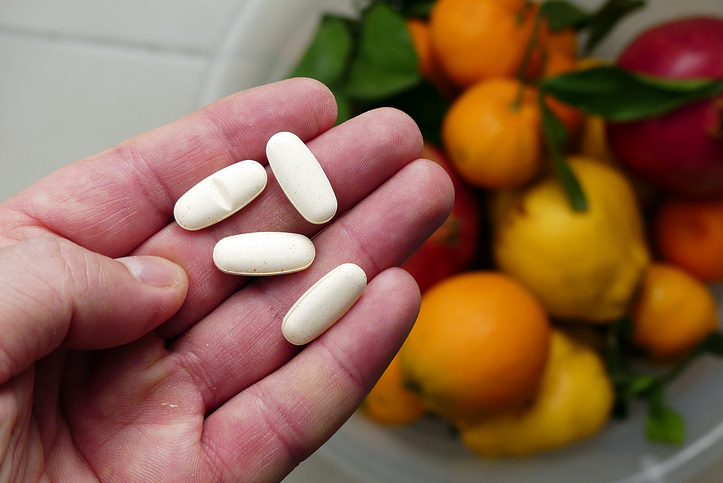
Vitamin C is an essential vitamin that is useful for immune function, skin health, iron absorption, and fatigue relief. Many people today prefer to consume thousands of mg of vitamin C daily, known as 'megadose therapy', under the belief that 'the more you consume, the healthier it is' (Note: The recommended daily amount of vitamin C is 100mg).
So, is it better to consume more vitamin C? Recently, surprising research results that may answer this question have been published.
In 2022, a study was conducted on about 9,900 adults who participated in the National Health and Nutrition Examination Survey (NHANES 2003–2006), measuring not just simple 'intake (surveys)' but 'serum vitamin C levels' to enhance reliability, and followed them for an average of over 10 years to investigate whether vitamin C could lower mortality rates [1].
"The More You Eat, The Longer You Live?"... The Data Said Otherwise
The key result of the study was unexpected. Higher serum vitamin C levels did not correlate with lower mortality risk. In fact, as serum levels increased, the risk of death also increased, showing a 'U-shaped curve' where both high and low levels were associated with increased mortality risk (see graph below).

The group that maintained an optimal level had the lowest mortality rate, while the group with the highest serum levels (estimated excess intake) had a total mortality rate 33% higher and a cardiovascular disease mortality rate 60% higher compared to the optimal group.
Since this study is observational, causality cannot be definitively established. However, it shows that the statements 'the more vitamin C you consume, the healthier it is' or 'it is not harmful to consume a lot' are not truths.
Vitamin C Serum Levels: Higher or Lower, Risks Increased
Vitamin C is undoubtedly a necessary nutrient for our bodies. Studies have repeatedly reported that adequate vitamin C intake lowers mortality rates from cardiovascular diseases [2, 3].
However, the message of this study is that 'adequacy' and 'excess' are different. In other words, data has proven that just because you add more when you already have enough does not mean it will be better.
A simple example is that when a smartphone battery is at 1%, plugging in the charger can prevent the smartphone from turning off (reducing mortality). However, if the battery is already at 100% and you keep it plugged in, it will not become 200% or perform twice as fast; rather, it risks battery damage (shortened lifespan), which is not good.
Vitamin C in our bodies is similar. Filling a deficiency is beneficial, but excess can be toxic.
Increased Risk of 'Kidney Stones'
Concerns about high-dose vitamin C therapy have been raised multiple times. A notable issue is the increased risk of 'kidney stones' due to elevated oxalate levels from high intake.
Vitamin C is metabolized in the body, with some converting to oxalate. When this oxalate meets calcium in urine, it forms a crystalline substance called calcium oxalate, which is a major component of stones. Increased oxalate in urine from high-dose vitamin C intake raises the risk of kidney stones [4, 5].
In the largest study on vitamin C and kidney stones, which followed about 150,000 women in the Nurses' Health Study (NHS) and about 40,000 men in the Health Professionals Follow-Up Study (HPFS) for over 11 years, it was found that those who consumed 500mg or more daily had a 29% higher incidence of kidney stones compared to those who consumed 90mg or less (the U.S. daily recommended amount of 90mg), and those consuming 1,000mg or more had a 43% higher incidence. Interestingly, this result only applied to men and not women, which was presumed to be due to metabolic differences by gender [6].
Like a Smartphone Battery... 'Filling' and 'Overflowing' Are Different
Of course, not everyone experiences the same risks. There are certainly individuals who can take high doses for a long time without any issues and remain healthy. However, personal experiences do not prove safety for everyone.
Medicine looks at how risks change across the entire population based on data, not on 'some were fine'. We need to reconsider whether there is a need for long-term high-dose vitamin C intake without clear proven benefits.
For reference, the human body contains about 1.5g of vitamin C (20mg/kg) in cells and blood, with about 3% lost daily. Consuming about 10mg of vitamin C daily is sufficient to prevent scurvy, easily met by drinking 15cc of lemon juice [7].
Symptoms of scurvy appear only after 1-3 months of complete cessation of vitamin C supply [8]. Nutrients are not beneficial in excess.
Dr. Song Mu-ho, Specialist in Orthopedics and Lifestyle Medicine
References
1. T Tian, J Shao, Z Shen, et al. Association of serum vitamin C with all-cause and cause-specific death: Data from National Health and Nutrition Examination Survey (NHANES 2003-2006). Nutrition 2022;101:111696.
2. A Jayedi, A Rashidy-Pour, M Parohan, et al. Dietary and circulating vitamin C, vitamin E, β-carotene and risk of total cardiovascular mortality: a systematic review and dose-response meta-analysis of prospective observational studies. Public Health Nutr 2019;22(10):1872-1887.
3. D Aune, N Keum, E Giovannucci, et al. Dietary intake and blood concentrations of antioxidants and the risk of cardiovascular disease, total cancer, and all-cause mortality: a systematic review and dose-response meta-analysis of prospective studies. Am J Clin Nutr 2018;108(5):1069-1091. 4. O Traxer, B Huet, J Poindexter, et al. Effect of ascorbic acid consumption on urinary stone risk factors. J Urol 2003;170(2 Pt 1):397-401.
5. Hi News https://www.hinews.co.kr/news/articleView.html?idxno=40303
6. PM Ferraro, GC Curhan, G Gambaro, EN Taylor. Total, dietary, and supplemental vitamin C intake and risk of incident kidney stones. American Journal of Kidney Diseases 2016;67(3):400-407.
7. AC Grădinaru, S Popa. Vitamin C: From Self-Sufficiency to Dietary Dependence in the Framework of Its Biological Functions and Medical Implications. Life 2025;15(2):238.
8. K Hayashino, Y Meguri, A Komura, et al. An Unbalanced Diet Limited to the Consumption of Boiled Vegetables Led to the Onset of Scurvy. Intern Med 2022;61(11):1795-1798.