A newborn baby girl born with her heart outside her body underwent extremely complex surgery and survived against the odds. This is the story of Park Serin, who was born in April at Asan Medical Center in Seoul.
Asan Medical Center in Seoul announced on the 17th that it successfully performed a highly complex reconstructive procedure to place Serin’s heart—located outside her body at birth due to ectopia cordis—into the thoracic cavity and to cover the chest area with cultured skin.
Ectopia cordis, a condition in which the heart is located outside the body, is an extremely rare congenital disorder of unknown cause, occurring in about 5 to 8 out of every 1 million people. More than 90% of affected babies are known to die before birth, and even if born, many do not survive beyond three days. Serin was an exception—thanks to the team at Asan Medical Center in Seoul, who worked together with a single goal: “save her no matter what.”
Serin was a long-awaited baby conceived after 14 rounds of IVF. However, at 12 weeks of pregnancy, she was diagnosed with ectopia cordis through a detailed ultrasound at the first clinic her parents visited. Although they were told that “even if she is born, the chance of survival is slim,” her parents could not give up and went to Asan Medical Center in Seoul to seek help.
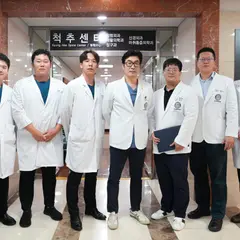
Specialists from multiple departments at Asan Medical Center in Seoul—including Pediatric Cardiology, Cardiothoracic Surgery, Plastic Surgery, Pediatric Cardiac Surgery, Obstetrics and Gynecology, and the Department of Convergence Medicine—discussed a treatment plan to help Serin survive. They decided on a staged approach: first, securing space within the thoracic cavity to place the heart inside, and then reconstructing the chest by covering it with cultured skin grown in advance.
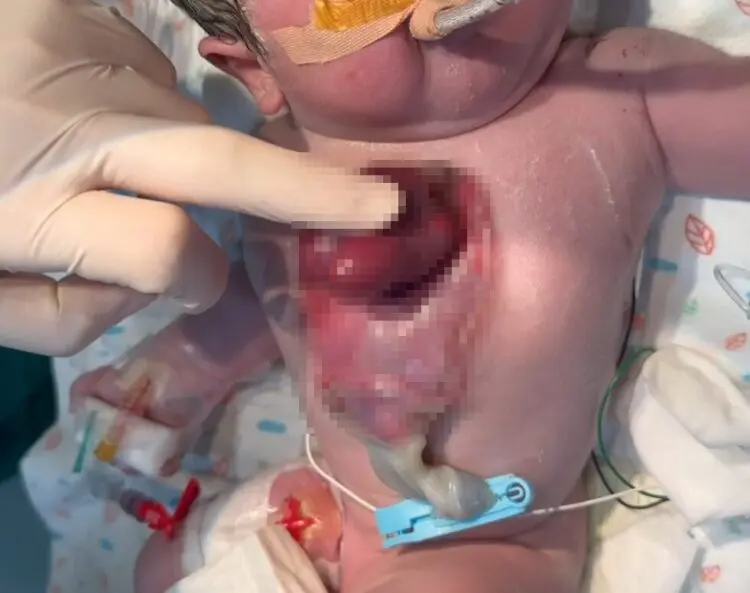
After Serin was born on April 10, a series of extremely complex surgeries continued over three months. Although this was the first case in Korea of a newborn born with the heart completely exposed outside the body, the medical team responded calmly.
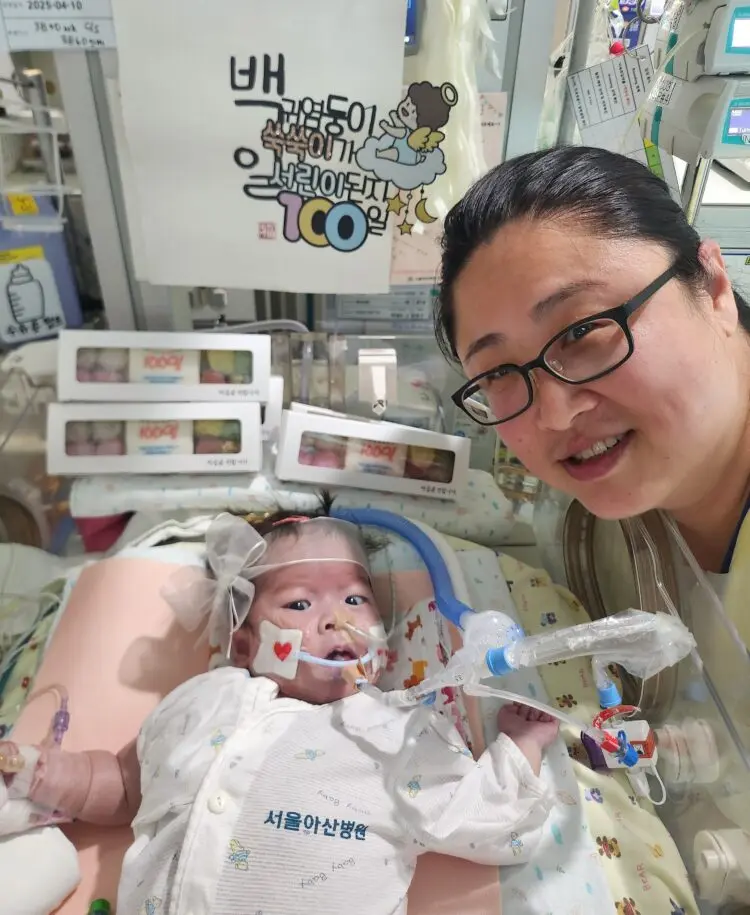
As a result, Serin’s heart was gradually returned to its proper position. After surgery, the team created a customized chest protective brace that brings both sides of the rib cage together to support safe recovery, and they also provided rehabilitation therapy. Then, around the time she reached 100 days of age, Serin smiled at her parents for the first time.
Serin has now recovered to the point that she has been discharged and is doing well enough to attend regular outpatient follow-up visits. For final correction, the medical team plans an additional surgery once Serin grows to at least three years of age.
Serin’s mother said, “At first, it felt hopeless because there were so few treatment cases and so little information about ectopia cordis,” adding, “But thanks to the medical team at Asan Medical Center in Seoul, who never gave up and supported us to the very end, we were able to find hope again,” expressing her gratitude.
Professor Choi Se-hoon of the Department of Cardiothoracic Surgery at Asan Medical Center in Seoul said, “Saving a baby with ectopia cordis, an extremely rare congenital disorder, cannot be achieved through the efforts of a single physician alone,” adding, “We were able to save Serin thanks to close multidisciplinary collaboration with experts in each field who have extensive clinical experience.”