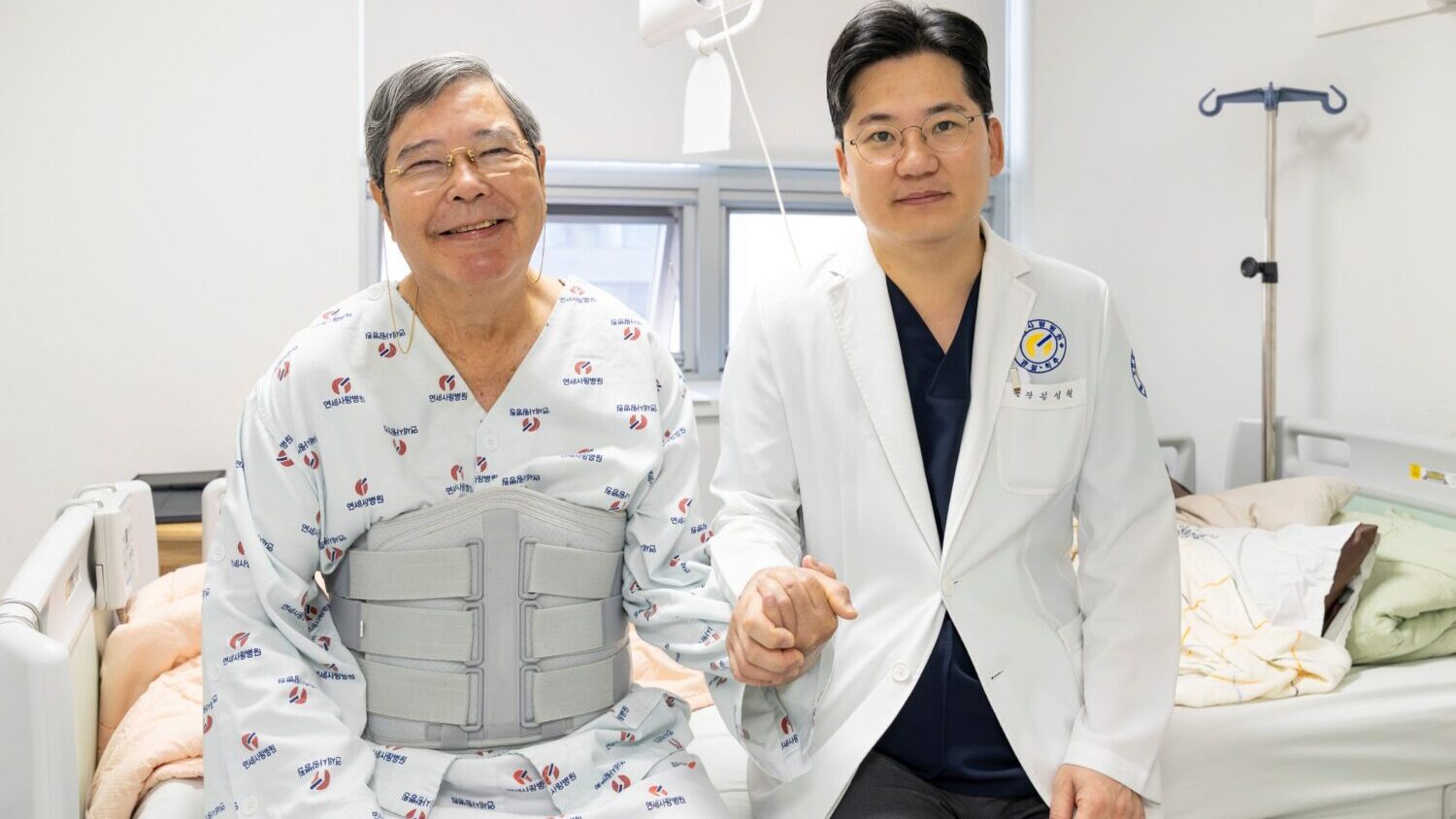
A 71-year-old American physician who had long managed chronic back pain underwent emergency spinal surgery shortly after arriving in South Korea. Following a long-haul flight, he developed acute bilateral leg paralysis and saddle anesthesia—a loss of sensation in the perineum and feet—prompting urgent medical intervention.
Diagnostic imaging confirmed cauda equina syndrome, a critical medical emergency caused by severe compression of the spinal nerve bundle. Thanks to rapid surgical decompression at Yonsei Sarang Hospital, the patient achieved full recovery and was discharged without permanent neurological deficits.
According to Yonsei Sarang Hospital on the 13th, Dr. Young Hiram, an internal medicine physician practicing in Hawaii, traveled to South Korea to attend a friend’s wedding and vacation. Having boarded an eight-hour flight with pre-existing back pain, he experienced acute, radiating pain down both legs shortly after landing, alongside severe numbness that impaired his ability to walk.
By the time he arrived at Yonsei Sarang Hospital on a friend's recommendation, his symptoms had rapidly progressed. Intense pain radiated through both lower extremities, accompanied by progressive sensory loss across his feet and saddle area. Magnetic resonance imaging (MRI) revealed severe spinal stenosis spanning the L3 to L5 vertebrae.
"This was not standard spinal stenosis; it was accompanied by acute cauda equina syndrome requiring immediate surgical intervention," said Dr. Kim Sung-chul, director of the Spine Center at Yonsei Sarang Hospital.
Recognizing the Red Flags of Cauda Equina Syndrome
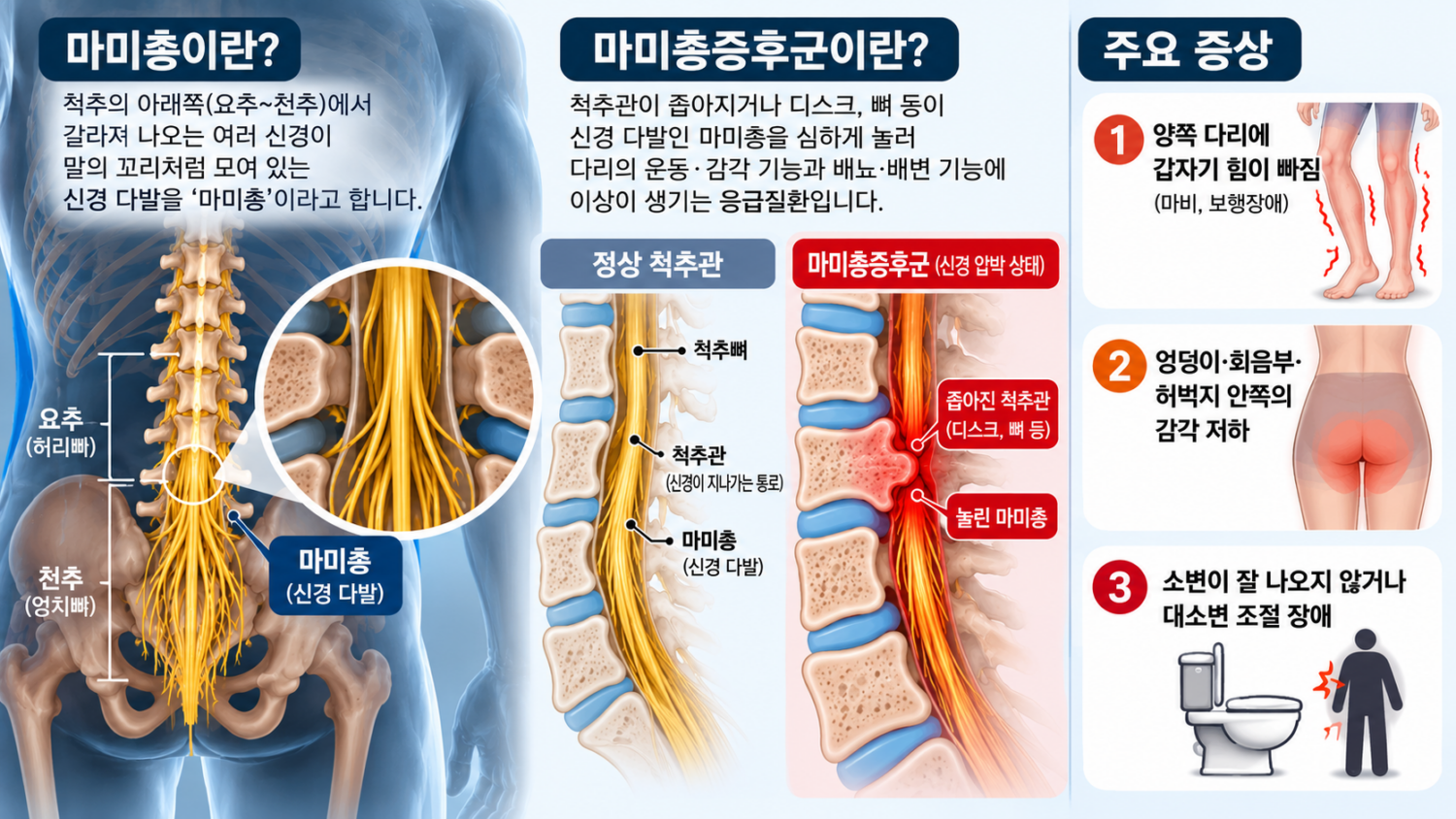
Spinal stenosis occurs when the spinal canal narrows, compressing traversing nerve roots and causing back pain, leg numbness, or neurogenic claudication. However, severe compression at the base of the spinal cord—where nerve roots cluster into the "cauda equina" (Latin for horse's tail)—constitutes a neurosurgical emergency.
Cauda equina syndrome severely disrupts motor function, sensory perception, and bowel/bladder control. Delayed treatment can result in permanent lower-limb paralysis, chronic numbness, or irreversible sphincter dysfunction. Classic warning signs include acute bilateral leg weakness, loss of sensation in the perineum, buttocks, or inner thighs (saddle anesthesia), and acute urinary retention. Patients exhibiting these symptoms should seek immediate emergency medical evaluation rather than relying on analgesics or physical therapy.
Rapid Decompression and Spinal Fusion
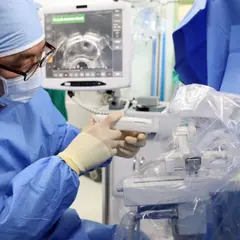
Recognizing the gravity of his diagnosis, Dr. Hiram consented to immediate surgery in South Korea. On Oct. 1, Dr. Kim’s surgical team performed emergency decompression across the L3–L5 levels. The team executed a laminectomy and foraminotomy to relieve pressure on the compressed nerve roots, followed by pedicle screw fixation and spinal fusion to stabilize the lumbar spine.
"Sudden lower-limb paralysis and sensory deficits signal active, progressive nerve damage, making immediate testing and surgical relief vital," explained Dr. Kim. "Given the patient's age and the extensive nature of the operation, the procedure was complex, but he tolerated it exceptionally well and the surgery was completed safely."
Recovery and Praise for Korean Healthcare
Following the procedure, Dr. Hiram demonstrated rapid neurological recovery, showing significant improvement in gait stability and sensory function. He was discharged on the 12th without major neurological sequelae.
"My condition deteriorated suddenly after arriving in Korea, but I was fortunate to receive swift and expert surgical care," Dr. Hiram noted upon discharge. "My posture feels straighter, and I even feel a bit taller."
Reflecting on his experience as a medical professional, Dr. Hiram commended South Korea's healthcare infrastructure. "In the United States, a complex spinal surgery of this scale typically costs $60,000 to $70,000 (approximately 80 million to 94 million KRW), whereas in South Korea, it cost roughly one-half to one-third of that amount," he said, expressing deep gratitude for the surgical outcome and the efficiency of the medical staff.