When a patient with massive bleeding arrives in the emergency room, medical staff must prepare blood transfusion equipment within minutes. Yet the specialized devices required in life-or-death situations are used so infrequently in routine care that, when an emergency strikes, staff often struggle to recall complex operating steps accurately.
A new study shows that augmented reality (AR) training can sharply reduce that critical preparation time. Emergency room nurses who learned from a conventional paper manual took nearly 10 minutes to set up rapid transfusion equipment, whereas nurses who received AR-based training completed the task in under four minutes.
A research team led by Prof. Son Myung-hee of Samsung Medical Center’s Department of Emergency Medicine and the hospital’s emergency nursing unit released the findings from a randomized controlled trial evaluating nurse performance with the Level-1 rapid infusion system. The results were published in the international journal JMIR Medical Education.
Critical Support in Hypovolemic Shock
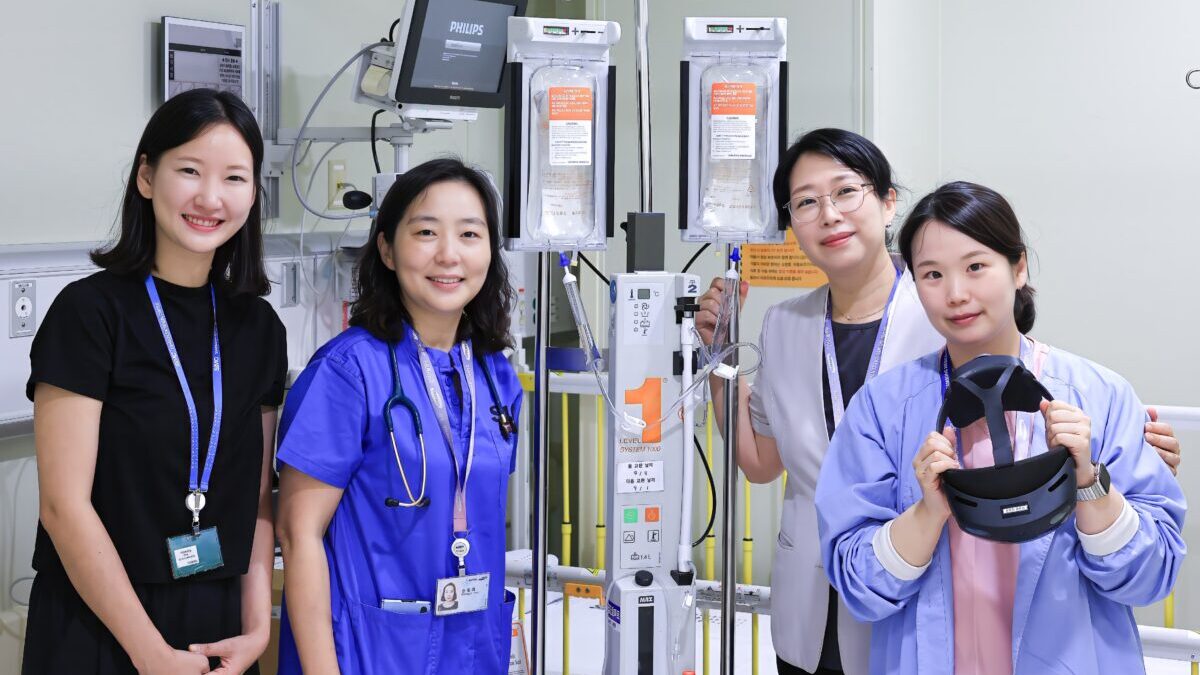
The Level-1 rapid infusion system is deployed when large volumes of blood or intravenous fluids must be delivered rapidly, such as during severe trauma or massive surgical bleeding. The device rapidly infuses fluids while warming them close to body temperature to treat conditions like hypovolemic shock—a life-threatening state where severe blood loss prevents vital organs from receiving adequate oxygen.
Because rapid infusion systems are not operated daily, maintaining procedural proficiency through routine practice is difficult. Traditional hands-on training with physical devices is also challenging to schedule regularly due to equipment availability, instructor requirements, and time constraints.
To bridge this training gap, the research team evaluated AR technology, which overlays digital information directly onto real-world objects. Wearing Microsoft’s HoloLens 2 headset while interacting with an actual Level-1 device, nurses saw step-by-step visual prompts, touchpoint indicators, and brief demonstration videos positioned directly over the physical equipment. Samsung Medical Center has incorporated AR technology into real-device medical training—including ventilators and extracorporeal membrane oxygenation (ECMO) systems—since 2022.
Slower Initial Learning, Dramatically Faster Real-World Execution
The trial recruited 42 emergency room nurses at Samsung Medical Center with no prior experience operating the Level-1 device, randomly assigning them to either an AR training group or a self-directed paper manual group (21 participants each).
Initial instruction took longer in the AR group, with a median training duration of 18.20 minutes compared to 8.98 minutes for the manual group. However, when nurses were subsequently tested on the physical device, the performance outcomes reversed.
The median setup time was 9.85 minutes in the conventional group compared to 3.67 minutes in the AR group—a 62 percent reduction of 6 minutes and 11 seconds. Total operational time, spanning initial device setup through fluid infusion, reached 13.63 minutes in the control group versus 5.83 minutes in the AR group.
The AR group also demonstrated higher procedural accuracy. Evaluated on a 100-point scale, the median operational score was 90 for the AR group versus 70 for the conventional group. Across a 22-step checklist, AR-trained nurses correctly performed a median of 20 steps, compared to 16 in the manual group. Additionally, participants in the AR group required zero assistance from other medical staff during performance testing, whereas the control group requested help a median of two times.
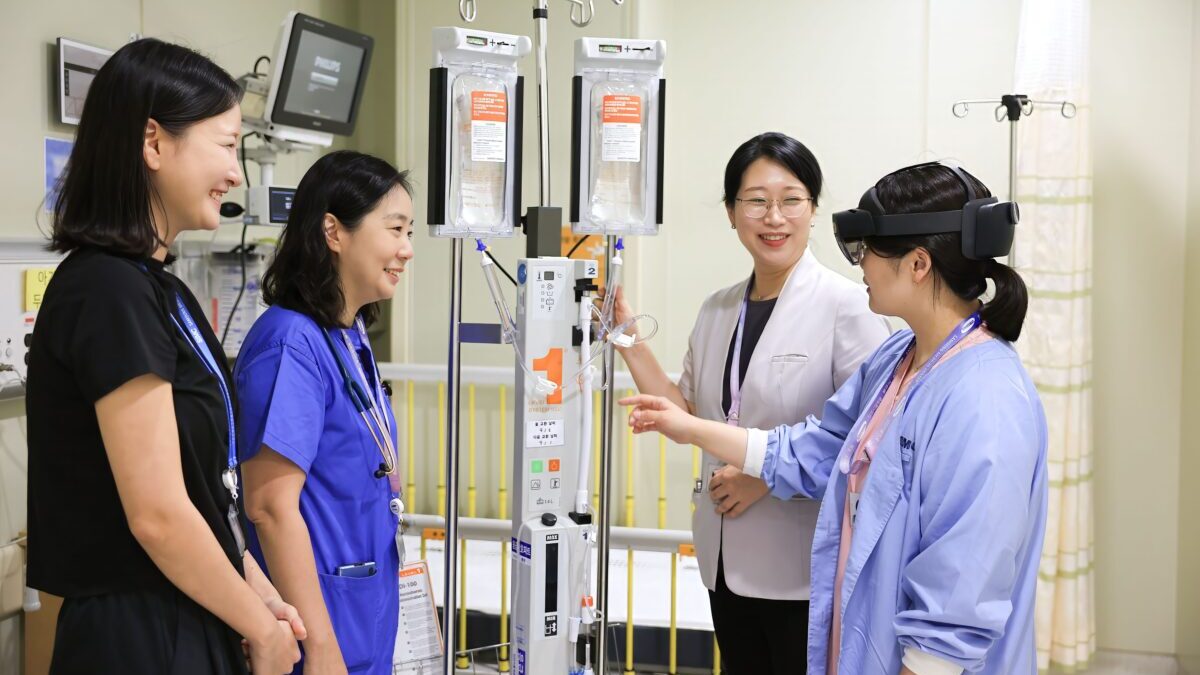
Reducing Cognitive Load in High-Stress Environments
Researchers attributed the performance gap to reduced cognitive load. Learning from a paper manual forces trainees to alternate continually between reading instructions, memorizing steps, and locating controls on the physical device. In contrast, AR provides real-time spatial guidance directly on the equipment, converting a "read, remember, and execute" workflow into immediate visual execution.
While following step-by-step visual prompts required more time during initial training, physically practicing hand movements and sequence steps directly on the device led to superior speed and recall during evaluation.
The authors emphasized several study parameters. The trial measured device preparation speed and accuracy among first-time users rather than direct patient transfusion start times, clinical outcomes, or survival rates. Furthermore, the control group relied on self-directed manual reading rather than instructor-led training, and hardware limitations—such as the 566-gram weight and two-to-three-hour battery life of the HoloLens 2—present practical challenges for continuous clinical use.

"Emergency care requires accurate and rapid responses in complex and diverse situations," said Son Myung-hee. "Repeatedly training medical staff through augmented reality on critical, infrequently used medical devices can strengthen clinical capabilities and ensure systematic emergency preparedness. As lighter and more ergonomic next-generation hardware emerges, AR integration will expand naturally across both training and active clinical practice."
The study was supported by the Health and Medical Technology Research and Development Program through the Korea Health Industry Development Institute, funded by the Ministry of Health and Welfare.