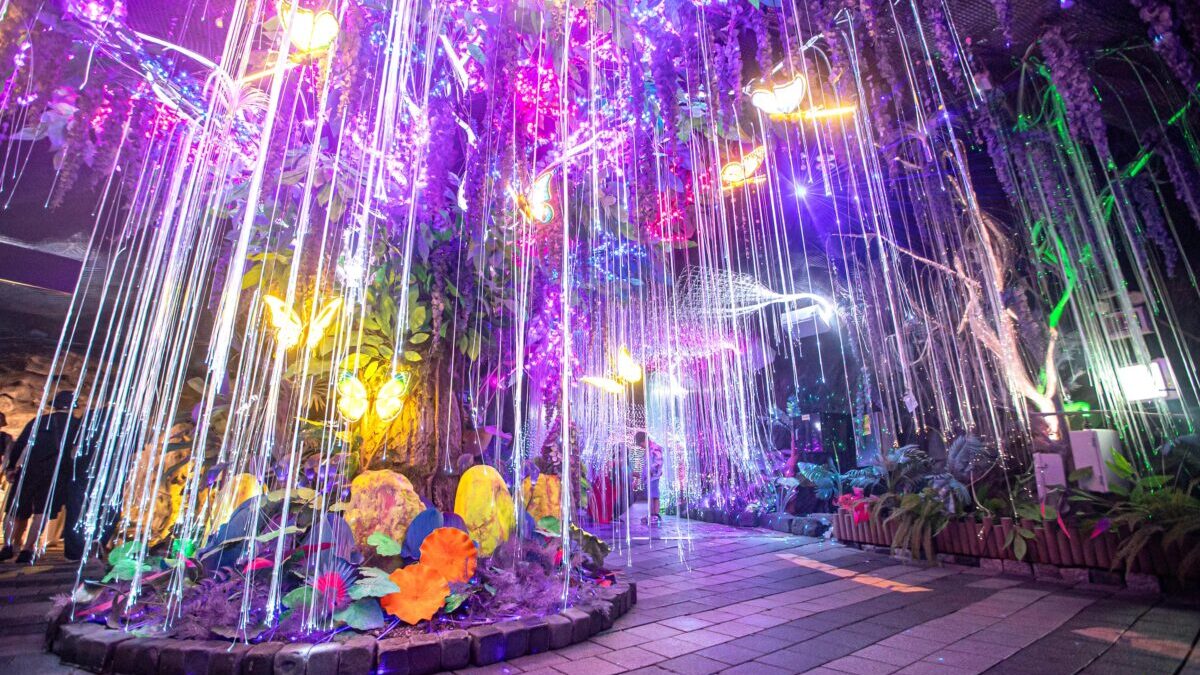
As summer winds down, brief cooler breezes across South Korea are expected to give way to another wave of high temperatures. According to the Korea Meteorological Administration, heat index temperatures are projected to climb back to around 33 degrees Celsius alongside returning tropical nights. For travelers seeking a unique alternative to traditional summer escapes, subterranean cave tours offer both an immediate retreat from the heat and a compelling journey through the nation's industrial and geological history.
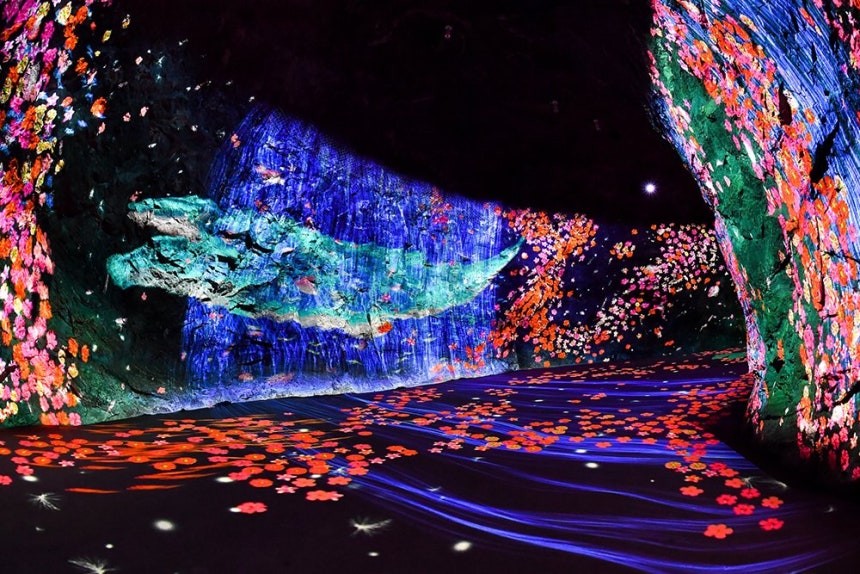
At Gwangmyeong Cave in Gyeonggi Province, vibrant light installations and digital media art transform dark rock walls into an ethereal visual stage. Further east, at Jeongseon Hwaam Cave in Gangwon Province, massive stalactites and speleothems display nature’s slow artistry. Both sites trace their origins back to 20th-century mining operations, demonstrating how former industrial sites can be redeveloped into major cultural destinations.
Gwangmyeong Cave: Illuminating a Colonial-Era Mine with Modern Art
Gwangmyeong Cave was originally established in 1912 as the Siheung Mine under Japanese colonial rule to extract mineral resources for war efforts. The site carries significant historical weight as a venue of forced labor during the colonial era, as well as an enduring artifact of South Korea's rapid post-liberation industrialization.
Maintaining a constant year-round ambient temperature of approximately 12 degrees Celsius, the abandoned mine found a second life after its formal closure in 1972. For nearly four decades, local vendors utilized its low temperatures and high humidity to store salted shrimp (saeujeot). In 2011, the municipal government of Gwangmyeong purchased the site, launching an ambitious redevelopment that converted the subterranean shafts into a multi-purpose cultural, artistic, and historical hub.
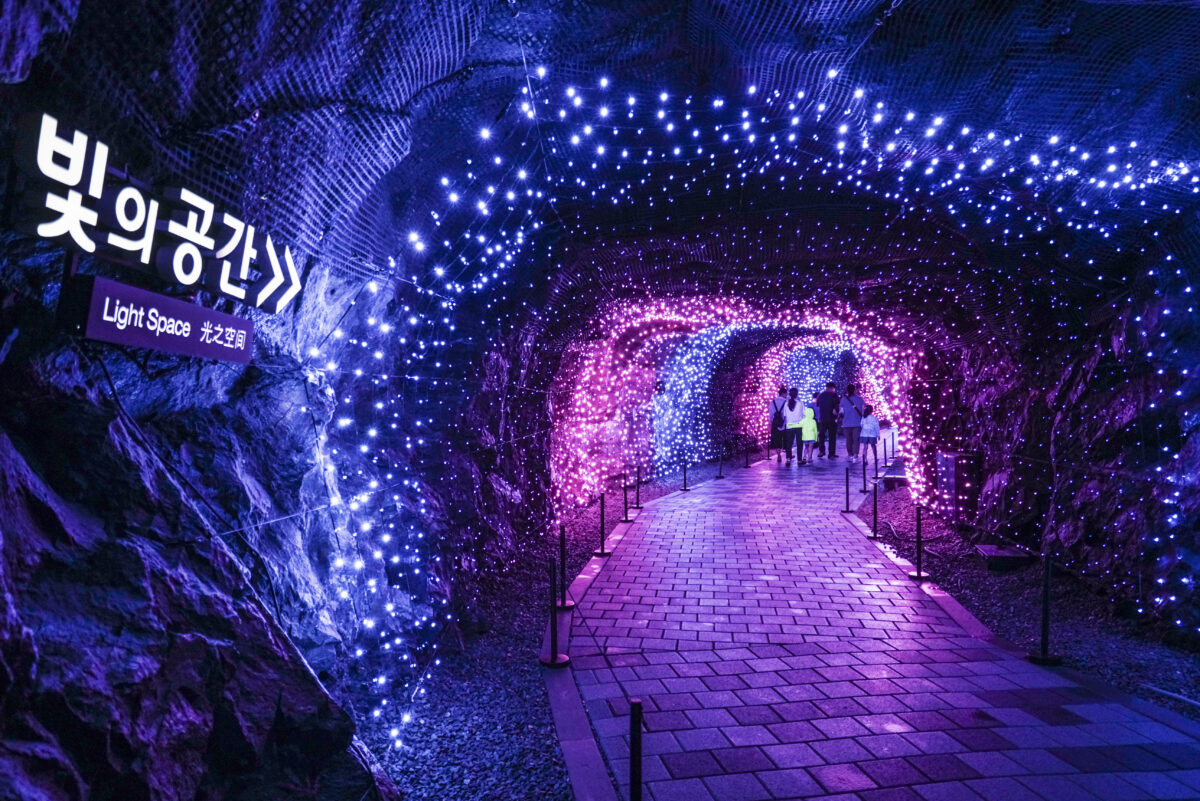
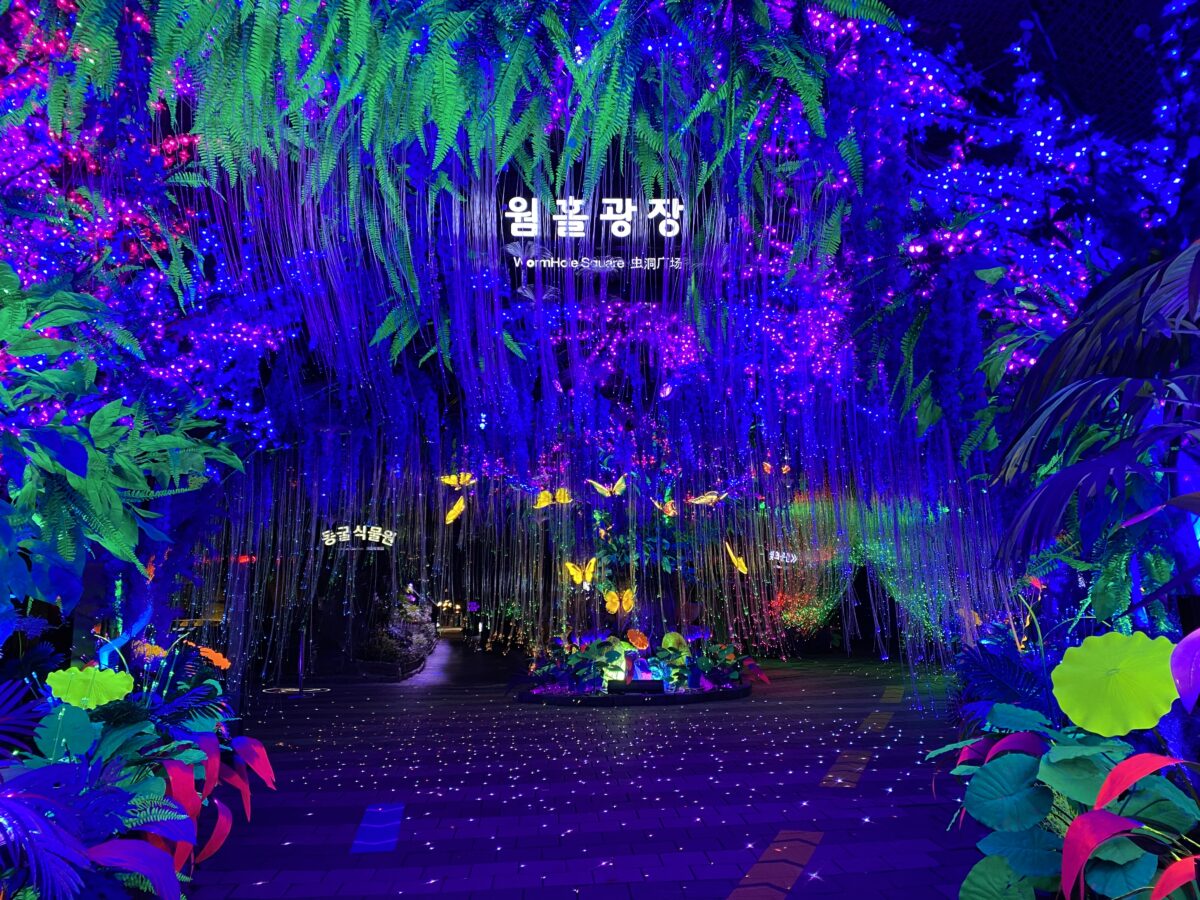
Navigating Gwangmyeong Cave takes between 30 and 90 minutes. The tour route begins at Wormhole Plaza, where four main underground corridors intersect. Visitors then proceed into the "Space of Light," the cave's signature photo location, where LED installations cast colorful reflections across rugged rock faces. In the "Cave Arts Hall," a high-tech media-facade performance projects dynamic digital artwork onto soaring stone walls, converting the dark void into an immersive theater. Other highlights include the "Golden Path," displaying historic gold-mining heritage, and the "Golden Waterfall," where underground bedrock water cascades down stone precipices.
Deeper along the route past the Golden Palace, visitors are greeted by the "King of the Cave," a 41-meter-long dragon sculpture created by the New Zealand special-effects studio renowned for its work on The Lord of the Rings film trilogy. Resembling a scene from a fantasy film, the massive installation is particularly popular with children. Contrastingly, the Modern History Hall provides a solemn look at the daily working conditions of wartime miners, alongside preserved exhibits from the cave's era as a food storage facility.
Jeongseon Hwaam Cave: Where Gold Mining Tunnels Meet Geological Wonders
Located in Jeongseon County, Gangwon Province, Jeongseon Hwaam Cave offers a rare dual experience: a man-made gold mine directly integrated into a vast natural limestone cavern. The site originally operated as the Cheonpo Mine, a major gold extraction site from 1922 through 1945. In 1934, while miners were blasting tunnels through the rock to follow gold veins, they broke through into a massive, hidden natural cavern. Reborn as South Korea's first theme-based cave showcasing both mining heritage and natural cave formations, Hwaam Cave was designated Natural Monument No. 557 in 2019 in recognition of its extraordinary geological value..
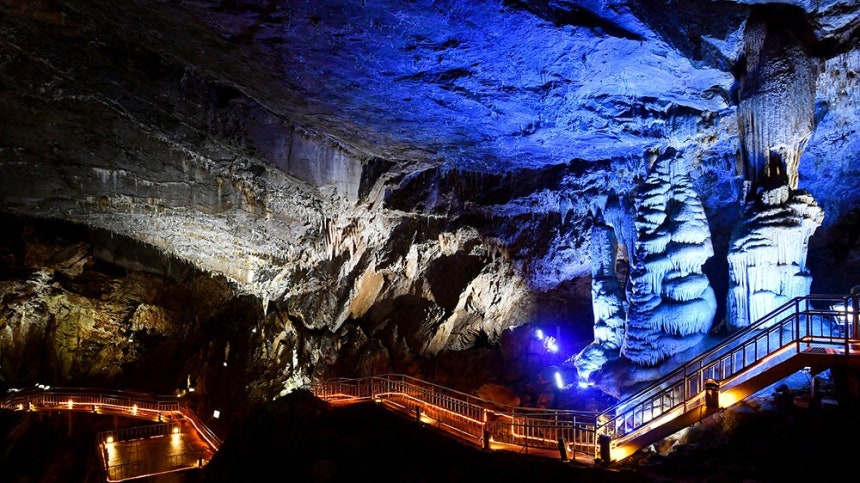
Upon entering, visitors walk through the original gold-mining tunnels, where authentic gold veins and visible drill marks left on stone walls remain preserved. Historical displays depict the harsh working conditions endured by miners operating in narrow, dark spaces. Descending a series of steep staircases brings visitors to a lower-tunnel exhibition zone featuring the "Palace of Dreams," an area illuminated by vivid media art that serves as a popular photo spot.
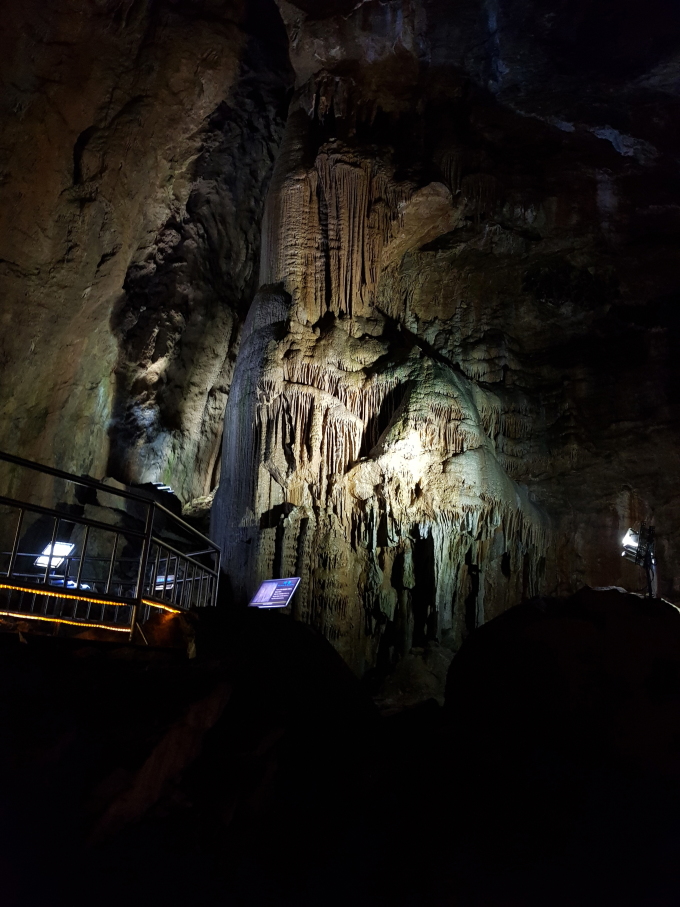
Beyond the man-made passages, the atmosphere shifts dramatically as a narrow human-carved corridor opens into a vast natural limestone chamber. Centuries of mineral-rich groundwater dripping from the ceiling have created impressive geological formations, including massive "flowstones" that resemble frozen, cascading waterfalls, delicate "cave flowers" (anthodites), and spiraling "helictites" that grow in irregular, curved patterns defying gravity.
A complete tour of Hwaam Cave takes about 90 minutes. A monorail is available to transport visitors up the steep incline from the ticket office to the cave entrance. However, the monorail terminates at the entrance, and the interior tour involves navigating steep staircases and extended downhill pathways. Families traveling with young children, elderly visitors, or individuals with joint difficulties should carefully evaluate the physical demands of the internal walking route before visiting.
Essential Preparation for Subterranean Trips
Subterranean temperatures remain low year-round—averaging 12 degrees Celsius at Gwangmyeong Cave and 14 degrees Celsius at Hwaam Cave—with consistently high humidity. Because ambient moisture and cool air can cause body temperatures to drop quickly after sweating outside, visitors are advised to bring a light jacket, cardigan, or windbreaker to wear over short-sleeved clothing.
Footwear requires careful consideration. High humidity causes moisture to collect on walkways and staircases, creating slippery conditions. Visitors should wear sturdy sneakers with non-slip soles rather than sandals, slippers, or heels, and utilize handrails when navigating steps. Additionally, visitors should secure their footing before taking photos and refrain from touching fragile cave formations, which require centuries to form and are virtually impossible to restore once damaged.