As part of a broader push to integrate caregiver costs into National Health Insurance, the Ministry of Health and Welfare announced plans to prioritize coverage for medically focused nursing hospitals with at least 100 beds that directly employ their caregiving staff.
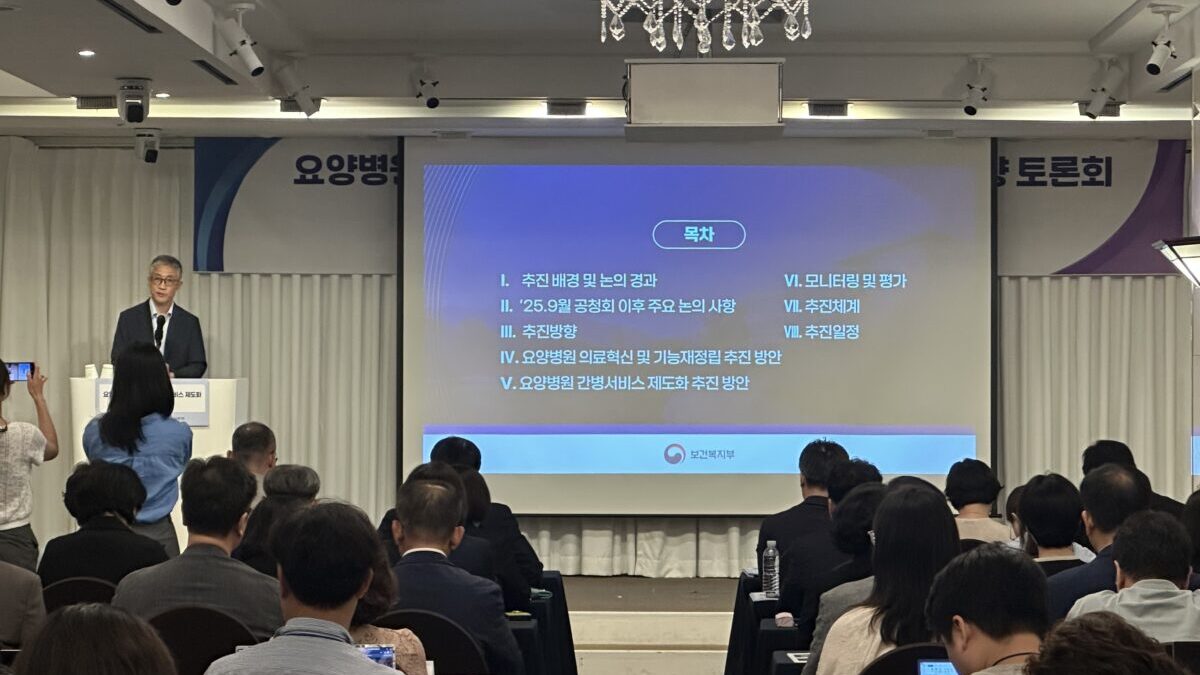
During a public forum titled "Medical Innovation in Nursing Hospitals and the Direction for Institutionalizing Caregiver Services," held on the morning of July 28 at the Royal Hotel Seoul, ministry officials presented details on the selection criteria and roll-out schedule for the initiative.
The reimbursement initiative has been a core national policy agenda item since last year. The ministry plans to select approximately 500 medically focused nursing hospitals for a pilot program launching in the first half of next year. Under the plan, out-of-pocket caregiver expenses for patients with high medical and caregiving needs will drop from 100% to approximately 30%.
Facility Requirements and Priority Patient Criteria
To qualify for the program, nursing hospitals must meet five primary criteria: institutional medical accreditation, a qualifying score on the inpatient benefit adequacy assessment, a minimum capacity of 100 beds, appropriate physician- and nurse-to-patient ratios, and direct employment of caregiving personnel. To prevent regional disparities and patient overcrowding in specific facilities, the government will grant conditional one-year exemptions to select regional hospitals that do not yet satisfy all requirements.
Currently, patients and their families often pay over 3 million won per month in caregiver fees, yet service quality remains poorly regulated. Most caregivers are placed through private dispatch agencies without receiving the formal training necessary for clinical care. Speaking at the forum, Jang Seok-yong, a professor at Yonsei University’s Graduate School of Public Health, noted that the caregiving workforce is rapidly aging and increasingly reliant on foreign labor. He stressed that direct employment by hospitals is essential to maintain proper management and standards of care.
Reimbursement will initially target patients with severe medical conditions and intensive caregiving requirements, including individuals categorized under Long-Term Care Levels 1–2, patients with rare and intractable diseases, and those with severe illnesses. Coverage is expected to expand to additional patient groups in phases over time.