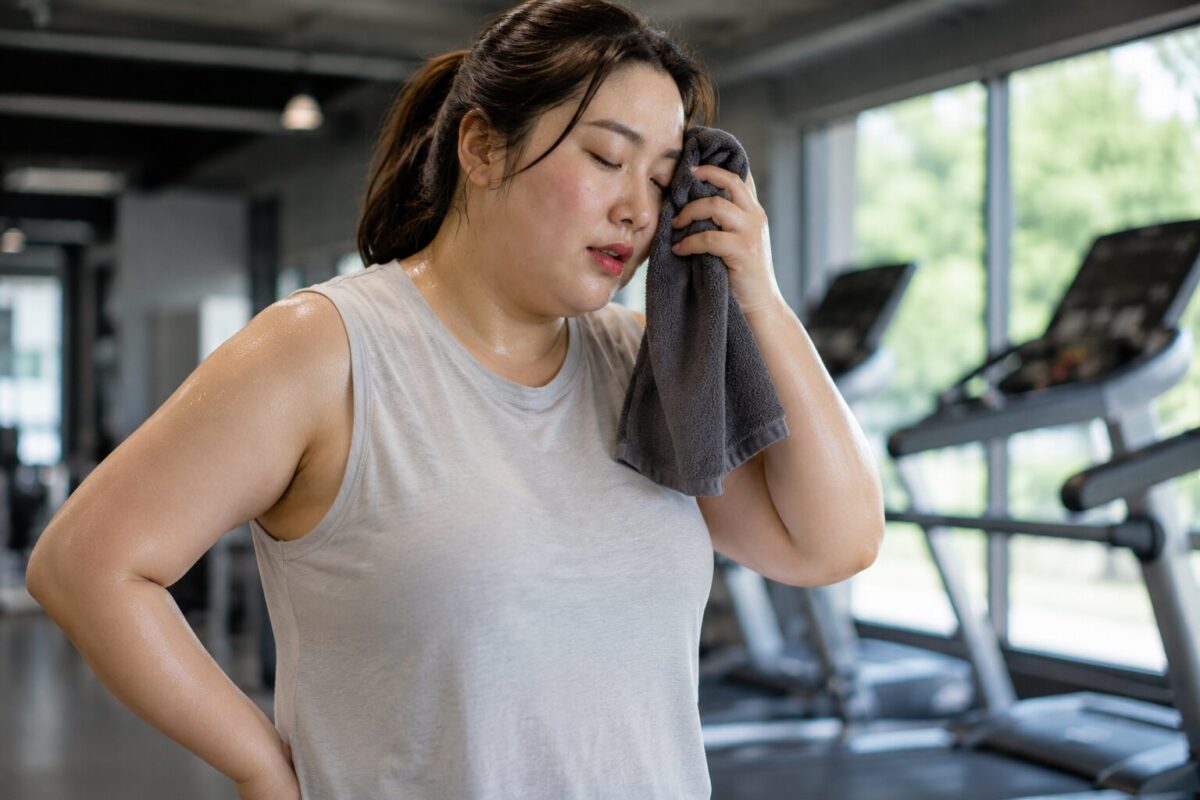
In the summer, many people feel deeply deflated when they finish a workout with clothes thoroughly soaked in sweat, only to find the number on the scale completely unchanged. However, sweating profusely and losing body fat are two entirely different physiological processes. The reason summer dieting often proves harder than expected typically has less to do with how much you sweat and far more to do with your post-workout habits and overall lifestyle.
Sweat Equals Fluid Loss, Not Fat Burn
Most of the weight dropped immediately after a workout is simply water weight, which is why the scale ticks right back up once you rehydrate. Body fat, by contrast, decreases only when a sustained energy deficit accumulates over time. Because it requires burning approximately 7,700 kcal to eliminate a single kilogram of fat, heavy sweating does not mean fat is melting away. In high summer temperatures and humidity, your body naturally sweats more to regulate its internal temperature. This is a purely physiological cooling response and bears no direct relationship to actual lipid metabolism (fat burning). To maximize your fitness results, your primary focus should be on workout duration, intensity, and consistency, rather than the volume of sweat produced.
The Pitfalls of Post-Workout 'Reward Psychology'
Compounding this issue is the "reward psychology" that frequently sets in after a grueling session. A brisk hour-long walk or light run typically burns between 250 and 500 kcal. If you treat yourself to fried chicken, pastries, or sugary beverages afterward out of a sense of accomplishment, you can easily replace—and quickly exceed—the calories you just burned. Routinely reaching for sports drinks or iced coffees to quench your thirst can also silently introduce far more calories than anticipated. Instead, a post-workout snack combining clean protein with a moderate amount of carbohydrates is far more beneficial for muscle recovery and fat management.
Preserving Muscle to Avoid the Weight-Loss Plateau
When trying to lean down, maintaining muscle mass is far more critical than pushing for extreme workout intensity. Relying strictly on aerobic exercises like walking or running may yield initial weight loss, but over time, it can cause muscle tissue to decline and your basal metabolic rate (BMR) to drop. Once your metabolism slows, your weight loss will inevitably hit a plateau. Integrating resistance training—such as squats, lunges, or stair climbing—two to three times a week helps mitigate muscle loss and keeps your BMR elevated. Ultimately, long-term summer weight management depends far less on how much you sweated and far more on how much muscle you preserved.
Tracking Body Composition and Daily Activity
Furthermore, tracking progress solely by body weight can be incredibly discouraging. When you adopt a healthier routine, body fat may decrease while muscle mass increases, leaving the scale entirely unchanged. A more accurate gauge of progress is body composition; if your waistline is shrinking and your clothes fit more loosely, your body is moving in a positive direction. Finally, your daily activity level outside of your dedicated workout hour plays a massive role in your success. Incorporating small movements throughout the day—such as taking a 10-to-20-minute walk after meals, choosing the stairs over the elevator, and avoiding prolonged sitting—steadily boosts your total daily energy expenditure. True weight management is a holistic equation balancing consistent exercise, a mindful diet, and active daily habits.