Knee replacement surgery is far more complex than simply swapping out a worn joint. Because every patient possesses a unique leg axis, bone morphology, and degree of joint deformity, surgical outcomes can vary significantly. The precise angle and positioning of an implant dictate postoperative pain, mobility, and the overall trajectory of recovery.
The Indang Medical Foundation (Chairman Chung Heung-tae) announced on May 28 that its flagship institution, Bumin Hospital, has reached a cumulative total of 5,500 robot-assisted joint replacement surgeries. This milestone reflects the combined clinical operations of the foundation's three specialized orthopedic hubs: Seoul Bumin Hospital, Busan Bumin Hospital, and Haeundae Bumin Hospital.
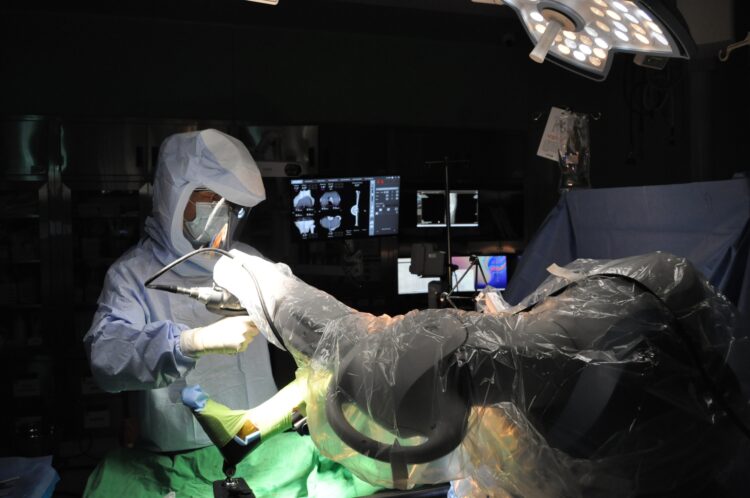
Bumin Hospital’s rapid scaling of robotic orthopedics began in September 2020 following a strategic agreement with Stryker Korea to introduce the Mako surgical system. The hospital group subsequently expanded its technological ecosystem by integrating the domestically developed CUVIS platform alongside Smith+Nephew’s CORI system.
This multi-platform approach triggered an accelerated growth in case volume. After surpassing 3,000 cases in November 2024, the hospital network achieved the 5,500-case milestone in just 18 months. "By leveraging multiple types of advanced robotic equipment alongside our deep clinical experience, we have strengthened a customized system capable of establishing surgical plans tailored to each patient's specific anatomy," a hospital representative stated.
The core value of robot-assisted joint replacement lies in its dual capacity for meticulous planning and exact execution. Utilizing preoperative imaging, surgeons map out a patient’s unique bone structure and joint degradation. During the procedure, the digital interface allows real-time verification of the planned bone resection and implant positioning. While the robot serves as an ultra-precise execution tool, the physician's clinical judgment and surgical skill remain the foundation of the operation.
Building on its success in knee arthroplasty, Bumin Hospital has recently expanded its robotic capabilities to total hip arthroplasty (THA). Like the knee, the hip is a critical, weight-bearing joint. However, hip replacements demand exceptional orientation precision; improper implant alignment directly increases the risks of dislocation, leg-length discrepancy, and gait instability.
By operating distinct robotic systems across its three regional hospitals, Bumin Hospital has established a highly flexible treatment ecosystem. Medical teams select the optimal robotic platform based on the patient's joint condition, the specific surgical site, and clinical indications. However, hospital experts emphasize that robotic surgery is not a universal necessity. Decisions must be made collaboratively, weighing factors such as bone quality, age, underlying comorbidities, and individual rehabilitation goals.
Postoperative recovery also remains highly individualized. Although robotic precision minimizes unnecessary bone resection and shields surrounding soft tissues from trauma, the overall timeline for rehabilitation depends heavily on a patient’s baseline muscle strength, preexisting conditions, and preoperative activity levels. Ultimately, successful outcomes rely on the entire continuum of care—from comprehensive preoperative evaluation to exact implant positioning and structured physical therapy.
To maintain its clinical edge, Bumin Hospital regularly collaborates with the Hospital for Special Surgery (HSS), a world-renowned orthopedic institution in the United States, to standardize robotic techniques and elevate surgical accuracy. Furthermore, the hospital hosts an annual Robot Joint Replacement Symposium, bringing together international orthopedic specialists from countries including the United States, Japan, India, and Singapore to share cutting-edge clinical insights.
As part of these ongoing academic contributions, the hospital group participated in the 5th Korean Society of Computer-Assisted Orthopaedic Surgery Symposium, held on May 30 at the Paradise City Hotel in Incheon. Attendees exchanged data on the latest clinical workflows for robotic knee and hip surgeries, with a particular focus on navigating complex revision procedures.
"When a surgeon's seasoned technique is amplified by robotic precision, we can consistently deliver superior patient outcomes," said Chung Heung-tae, chairman of the Indang Medical Foundation. "Reaching 5,500 cases is far more than a numerical milestone—it represents a proven record built on the trust of patients who count on us for a safer, swifter return to their daily lives."
Mini FAQ
How does robot-assisted joint replacement differ from conventional surgery? Robotic systems allow surgeons to align the actual procedure more closely with the digital preoperative plan, ensuring highly precise bone cuts and implant placement. However, the robot is strictly a tool; the final surgical decisions and ultimate responsibility rest entirely with the medical team.
Does robotic surgery guarantee a faster recovery? Not automatically. While the technology helps minimize soft-tissue damage and trauma, an individual's recovery velocity depends heavily on age, baseline muscle strength, comorbidities, the severity of the joint deformity, and adherence to postoperative rehabilitation.
Can robotic assistance be utilized for hip surgeries as well as knees? Yes, it is increasingly utilized in total hip arthroplasty (THA). Because correct positioning and angular alignment are paramount to preventing complications in the hip, robotic assistance provides significant advantages. Suitability is determined after a comprehensive evaluation of the patient's specific condition.