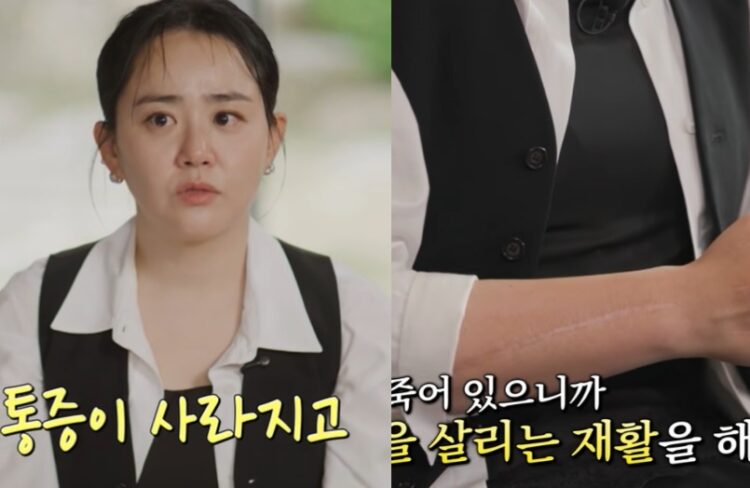
Actress Moon Geun-young recently appeared on tvN’s You Quiz on the Block, where she reflected on her 2017 battle with "acute compartment syndrome." This medical emergency struck suddenly, requiring multiple surgeries and a lengthy hiatus from the industry.
Moon Geun-young recalled slipping on an icy road and spraining her wrist. "The next day my arm was swollen, but I didn't think it was a big deal and left it alone for a day," she shared. By the time she reached a university hospital, she was told the critical window had passed and necrosis might have already begun. She underwent emergency surgery followed by three additional procedures and a full year of rehabilitation.
"At first, even the slightest touch on my arm made my skin hurt," Moon Geun-young noted. However, after seven months of intensive rehab, her fingers began to move, and she eventually regained full use of her nerves and muscles.
What is Acute Compartment Syndrome?
Acute compartment syndrome is a surgical emergency that occurs when pressure builds up abnormally within a "compartment"—a closed space surrounded by fascia that contains muscles, nerves, and blood vessels. When this pressure rises, it collapses microcirculation, cutting off the blood supply. Without immediate intervention, this leads to rapid muscle and nerve necrosis (tissue death).
Common Causes and Warning Signs
While trauma is the most common trigger, the condition is relatively rare, affecting approximately 7.3 per 100,000 men and 0.7 per 100,000 women annually. Typical causes include:
Fractures and crush injuries
Severe contusions or soft-tissue damage
Vascular injuries and burns
Overly tight casts or bandages
The hallmark symptom is pain that is disproportionately severe compared to the visible injury. Other signs include a tight "squeezing" sensation, swelling, numbness, or a burning feeling. A key diagnostic feature is that pain intensifies significantly when the affected muscle is passively stretched.
The Race Against the Clock
Time is the most critical factor in treatment. According to materials from Johns Hopkins Medicine, tissue necrosis can occur within just eight hours. If decompression surgery is delayed, the consequences can be permanent, including muscle contracture, sensory loss, infection, and, in severe cases, amputation.
Notably, this condition can occur even without a clear fracture on an X-ray. It should never be dismissed as a simple sprain if the pain worsens over time or fails to respond to pain relievers. The American Academy of Orthopaedic Surgeons (AAOS) emphasizes that there is no effective nonsurgical treatment; the standard of care is an emergency fasciotomy, where the fascia is cut to relieve the internal pressure.
The Path to Recovery
Emergency surgery is only the beginning. Post-operative challenges often include persistent swelling, joint stiffness, and decreased function. Comprehensive rehabilitation is essential to restore range of motion and strength.
Recovery typically starts with elevating the limb and performing gentle joint exercises. As the surgical wound heals, therapy expands to include scar management, sensory retraining, and strengthening exercises. As Moon Geun-young's experience demonstrates, dedicated rehabilitation is the bridge that allows patients to return to their daily lives and work.