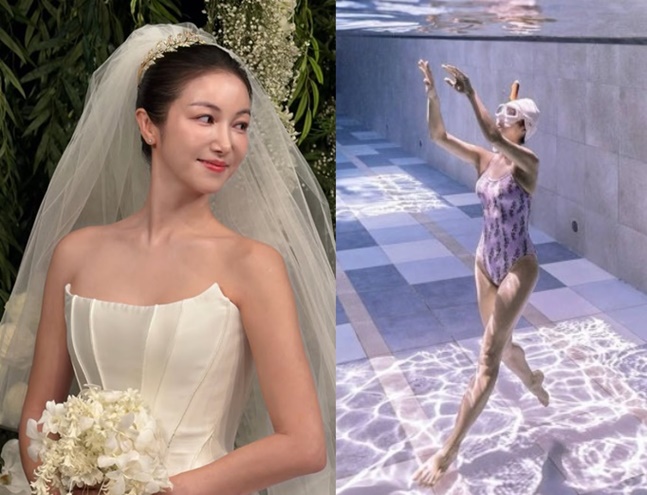
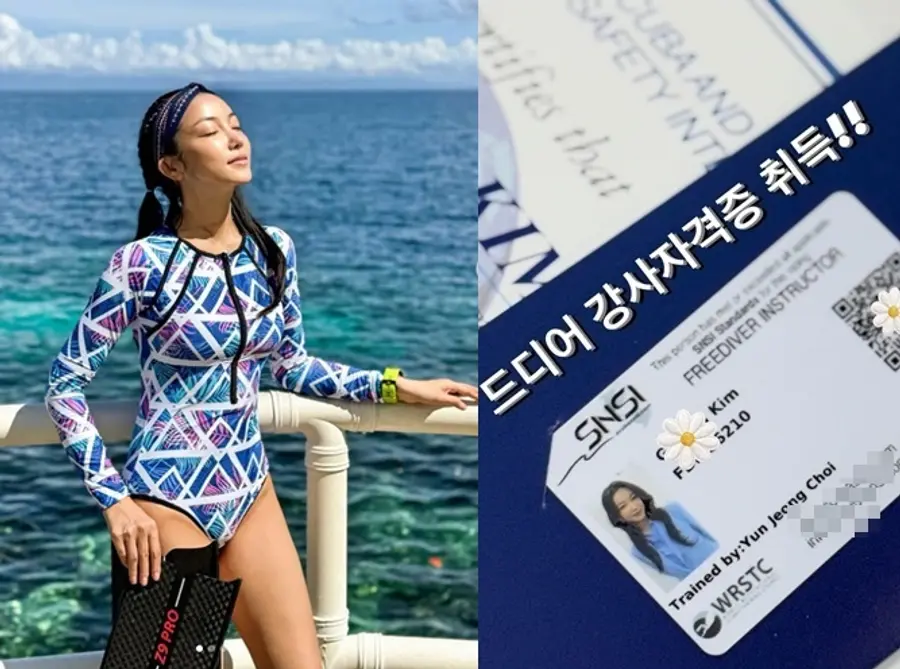
Actress Kim Ok-bin is proving that her commitment to physical excellence extends far beyond the film set. The 39-year-old star recently revealed that she has officially become a certified freediving instructor.
Kim Ok-bin shared the news on social media, posting a photo of her new certificate with the caption: "Freediving instructor certification acquired—complete." Known for her intense roles in films like Thirst and The Villainess, as well as the series Arthdal Chronicles, the actress has a long history of athletic pursuits, including horseback riding.
"Freediving is a sport where you absolutely need a buddy, so I started because I wanted to expand my circle," Kim Ok-bin explained. "It ended up taking me all the way to certification. I began this challenge because I wanted to gift the freedom of the ocean to the people I love. Now, I’ll be teaching my friends myself!"
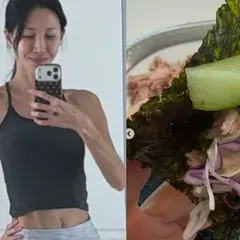
Even after her marriage to a non-celebrity last November, Kim Ok-bin maintained a rigorous training schedule. Her latest appearance shows a noticeably slimmer and more toned silhouette, sparking interest in the fitness benefits of her favorite underwater sport.
Health and weight-loss benefits of freediving
Freediving involves diving underwater on a single breath without the aid of an oxygen tank. Using minimal gear—a mask, long fins, and a wetsuit—divers engage in vertical or horizontal movements. While typical training begins in specialized pools at least 5m deep, the sport eventually progresses to the open ocean.
The workout is exceptionally effective for weight loss because it engages the entire body's musculature, leading to high calorie expenditure. In the ocean, the body burns additional fat simply to maintain its core temperature in colder water. Furthermore, the breath-holding nature of the sport can help regulate the nervous system, potentially curbing overeating. Because water provides buoyancy, it allows for sustainable weight loss with minimal stress on the joints.
Beyond aesthetics, breathing training increases lung capacity and improves cardiopulmonary endurance. While primarily an anaerobic activity, consistent practice promotes more efficient oxygen use and healthy circulation. The mental discipline required to relax during a breath-hold also offers meditative effects, reducing stress and promoting a calm state of mind.
Freediving vs. swimming
While both are aquatic, they offer different metabolic advantages. Swimming is a classic aerobic exercise that builds endurance through continuous breathing. Freediving, however, acts as a high-intensity workout for the heart and lungs, toning muscles through the physiological demands of apnea.
While swimming skills provide a helpful foundation for water control and kicking, one does not need to be an advanced swimmer to start. The priority in freediving is learning safe breath-hold adaptation under the guidance of a qualified instructor like Kim Ok-bin.
What to eat before and after
To maximize the benefits of a dive, timing and nutrition are essential. Experts recommend a light, carbohydrate-focused meal—such as a banana, oatmeal, or a chicken breast salad with brown rice—two to three hours before entering the water. Greasy foods, dairy, and caffeine should be avoided to prevent digestive discomfort under pressure.
Following a session, the focus shifts to recovery. Within an hour of training, consuming protein and electrolytes—such as a salmon bowl or coconut water—helps replenish glycogen and support muscle repair. Mineral-rich foods like seaweed soup or nuts are also recommended to replace what was lost during the physical exertion of the dive.