
A recent inquiry posted in an online physician community has sparked a significant conversation among specialists. A doctor, seeking the best for his daughter, asked his colleagues for a recommendation: "I'm planning rhinoplasty for my daughter; please recommend a plastic surgeon."
Among the flurry of expert responses, one piece of advice resonated most deeply with the plastic surgery community: "Avoid clinics that suggest using rib cartilage for a first-time rhinoplasty."
This consensus among board-certified surgeons highlights a growing concern in the field. While rib cartilage is a powerful tool, most experts agree it is rarely a necessity for a primary surgery.
The Allure and Overuse of Rib Cartilage
Rib cartilage is an exceptionally useful material for revision surgeries because it is abundant and structurally robust. However, cases that require such heavy-duty support for an initial procedure are exceedingly rare.
In recent years, it has become increasingly common to see "surgical-looking" noses that are excessively raised or unnaturally elongated. The trend toward using rib cartilage in primary surgeries is a major driver of this aesthetic. Often, this is a result of a "perfect storm": patients demanding extreme height and hospitals seeking the higher surgical fees associated with complex cartilage harvesting. Unfortunately, rib cartilage is often marketed to the public as a "high-end" or "premium" surgical option.
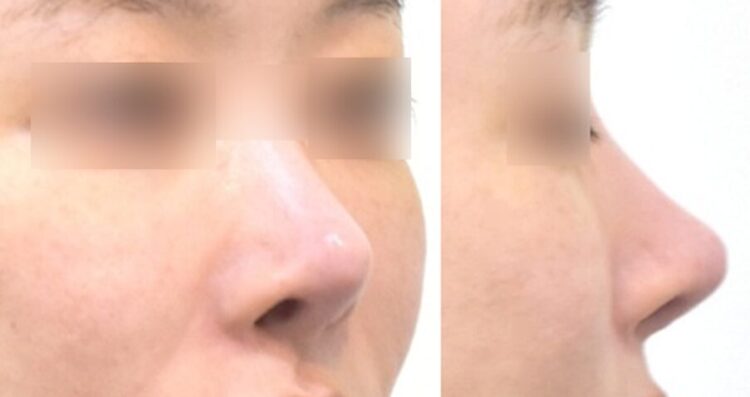
The Paradox of Skill: Septal vs. Rib Cartilage
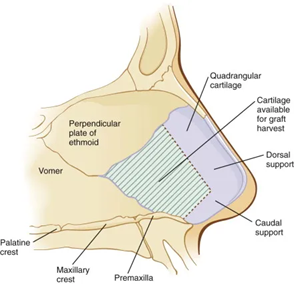
Paradoxically, the surgeons most respected by their peers are often those who avoid rib cartilage for initial cases. A surgeon who can achieve a patient’s desired profile using only septal cartilage—the material naturally found inside the nose—often demonstrates superior skill.
Septal cartilage provides the most natural look and feel, but its supply is limited. Harvesting enough of this precious material while maintaining the nose's structural integrity and creating a refined aesthetic requires a high level of technical mastery. The soft, natural "give" of a nose built with septal cartilage is a quality that rigid rib cartilage simply cannot replicate.
Material | Primary Use Case | Pros | Cons |
Septal Cartilage | First-time Surgery | Most natural look/feel; no extra incision. | Limited quantity; requires high skill. |
Rib Cartilage | Revision Surgery | Abundant; very strong support. | Can look artificial; requires chest incision; expensive. |
Valuing Craftsmanship Over Material
The tragedy of modern rhinoplasty is that septal surgery, despite its difficulty and the advanced technique required, is often dismissed as "standard" and billed at lower rates. Conversely, rib cartilage surgery, which uses bulkier material to easily force a higher shape, is marketed as a "luxury" procedure with a matching price tag.
It is a bizarre market reality where the "flashy accessory" is valued more than the "seasoned artisan’s craftsmanship." Plastic surgery is not a competition to see who can achieve the greatest height; it is about harmony, facial balance, and long-term stability.
The reason plastic surgeons advise their peers to steer clear of rib cartilage for a first surgery is simple: it is the most honest advice for the patient. Before being swayed by the promise of "premium" materials, I recommend seeking the "essence of skill"—a surgeon who knows how to use the precious natural materials already in your nose to their highest value.