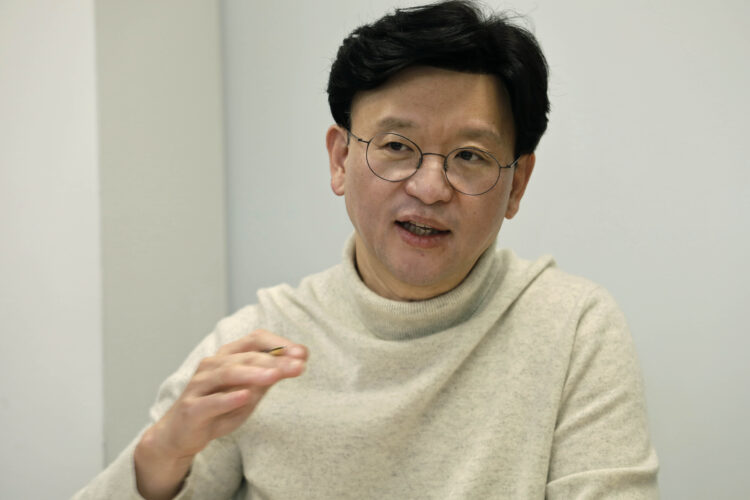
"Doctors may wait for you, but the heart does not wait." This is the urgent warning from Director Park Jin-sik, chairman of the Hyewon Medical Foundation and head of the world-renowned Sejong Hospital. While patients often hesitate to visit the hospital during the holidays—thinking they will wait until the festivities end or until they return home—Director Park warns that the heart sends warning signals for a reason, and ignoring them can be fatal.
"There are many people who call the emergency room at night, ignore the medical staff's advice, and say, 'I know my body well. I'll go tomorrow,'" Director Park warns. "And then they never come back."
A Legacy of Saving Lives
Director Park’s commitment to cardiology is deeply personal. The son of Dr. Park Young-kwan, the founder of Sejong Hospital, he chose the path of a doctor to save lives, even though his mother—who was often too busy saving others to care for her own health—had hoped he would become an engineer.
After serving as a professor of cardiology and emergency medicine at Seoul National University Hospital, he moved to Sejong Hospital. Having seen the immense stress of surgery on his father, he chose cardiology for its logical reasoning, though he maintains that logic alone is not enough. "Communication between the doctor and the patient is crucial," he asserts, noting that a patient’s own thoughts and actions are just as decisive in life-or-death outcomes as the doctor’s skill.
The Danger of "Reasoning Away" the Alarm
Director Park emphasizes that while cancer treatments may not change significantly based on a single day’s delay, brain and cardiovascular diseases are measured in seconds. He warns against the "Boy Who Cried Wolf" syndrome—where a patient visits the hospital once and finds nothing wrong, then assumes they are "fine" when the next signal appears.
"If the heart cannot hold on and arrhythmia occurs, it is often too late," he explains. Especially during holidays, the tendency to "reason" away a symptom as minor indigestion can lead to tragedy.
Identifying the Signals: Heart vs. Digestion
Q: Aren't the signals from the heart ambiguous? Chest pain can be so varied. "Chest pain can arise from the esophagus or stomach, but there is a key difference. Generally, pain from digestive diseases worsens when you are at rest. Heart disease symptoms, however, typically appear when you are moving. If you experience severe chest pain that makes it hard to move, along with tightness and cold sweat, you must call 119 immediately."
Q: Why 119 specifically? Taxi services are very convenient now. "You must call 119. If symptoms worsen in a taxi or bus, there is no way to help. An ambulance allows emergency personnel to perform CPR and use a defibrillator to restart the heart in transit."
Prevention and Modern Tools
Q: As a specialist, how should we prevent these issues before they start? "Manage your risk factors—high blood pressure, diabetes, and high cholesterol—regularly. These conditions are often fatal once symptoms finally appear. Do not be afraid of medication, and maintain a balanced diet and exercise to prevent obesity."
Q: How reliable are smartwatch notifications for arrhythmia? "They have passed the stage of questioning their reliability; they are very useful. Arrhythmia occurs intermittently and is hard to catch in a clinic. If your smartwatch indicates an abnormal finding, even without symptoms, consult a specialist."
Q: Should heart patients rest or exercise? "I recommend starting exercise at a level that makes you sweat slightly within five minutes. Use your smartwatch to track your heart rate. Your maximum heart rate is 220 minus your age; aim for 70-80% of that. If you are just starting, keep the intensity low and increase it gradually."
A Warning Against "YouTube Medicine"
In a final plea for patient safety, Director Park urges people to avoid self-diagnosis via social media. "Please do not rely on YouTube. Algorithms show you what you want to believe, not necessarily what is helpful. Many self-proclaimed experts are quacks, and some content is even AI-generated. Doctors may wait for you, but the heart does not wait."