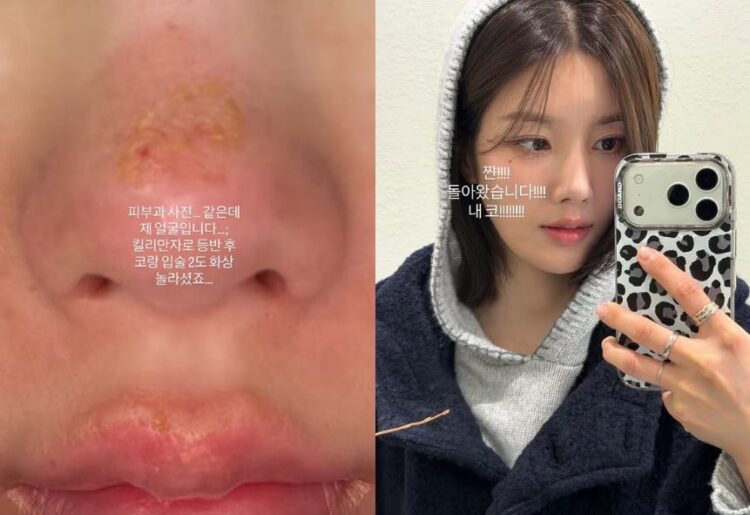
Singer Kwon Eun-bi recently revealed she suffered second-degree burns on her face following an expedition to Mount Kilimanjaro in Tanzania, which she climbed alongside celebrities Ro Hong-chul and Lee Si-young.
Kwon shared photos of her injuries on social media, commenting, "This looks like a clinical photo from a dermatology textbook, but it’s actually my face. These are second-degree burns on my nose and lips from Kilimanjaro. Surprised, right?"
The images showed her nose and lips appearing significantly red and swollen. "I applied ointment every single day and kept the area covered. Time has passed, but the skin has darkened, spots have appeared, and it’s still red. However, it is healing," she added. Fans were later relieved when she posted updates showing a successful recovery.
The Hidden Danger of High-Altitude UV Exposure
Mount Kilimanjaro’s proximity to the equator means UV intensity is exceptionally high. As altitude increases, the atmosphere becomes thinner and provides less protection, leading to a rapid spike in UV radiation. Furthermore, UV rays reflect off snow and bright rock surfaces. Combined with low temperatures and biting winds, these factors can compromise the skin barrier, resulting in second-degree burns characterized by blisters, oozing (exudate), and intense pain.
Burns are medically classified by depth:
First-degree: Affects only the epidermis (outer layer).
Second-degree: Damages the epidermis and part of the dermis (underlying layer).
Third-degree: Destroys the entire dermis and affects subcutaneous fat.
Fourth-degree: Extends to the muscle or bone.
Immediate Care: Cool the Area and Protect Blisters
If a burn occurs, the priority is to dissipate heat. Cool the area with clean, cold water or a cold compress for 10–20 minutes to limit inflammation. Avoid applying ice directly to the skin, as this can cause frostbite or further tissue damage.
If blisters form, they should never be popped. An intact blister acts as a natural sterile bandage; breaking it significantly increases the risk of infection. For facial burns, especially on sensitive areas like the nose and lips, there is a high risk of scarring and post-inflammatory hyperpigmentation (PIH). It is highly recommended to seek dermatological care for professional treatments, such as topical steroids, antibiotics, and hydrocolloid (moist) dressings.
During recovery, keep the skin hydrated and let scabs fall off naturally. Rigorous sun protection is required for several months after healing to prevent permanent dark spots.
Essential Gear for High-Altitude Hiking
When tackling peaks like Kilimanjaro, standard sun protection is insufficient.
Sunscreen: Use SPF 50+ and PA++++ or higher. Reapply every 2–3 hours, as sweat and wind quickly strip the product away.
Barrier Protection: Apply a thick layer of high-moisture cream or ointment over sunscreen to prevent windburn caused by dry, cold air.
Physical Blocks: Use UV-rated lip balm, wide-brimmed hats, face masks, and sunglasses.