There is a toxic substance in our bodies known as reactive oxygen species (ROS). Just as a car uses gasoline and oxygen to generate power, our bodies use glucose and oxygen within the mitochondria to produce energy.
As a byproduct of this process, cars emit exhaust, while the human body produces ROS. Therefore, as long as we are alive, the production of these species is unavoidable. From a molecular biology perspective, ROS are often referred to as free radicals. In stable cellular molecules, electrons exist in pairs; however, when an electron loses its partner, it becomes an unstable free radical. These radicals tend to "steal" electrons from other molecules to stabilize themselves, attacking and damaging surrounding cells in the process [1].
The Dual Nature of ROS
ROS are not inherently "bad." They play a vital role in our immune system; for instance, white blood cells utilize ROS for oxidative bursting to sterilize and kill invading bacteria or viruses [2]. ROS also act as signaling molecules that induce apoptosis (programmed cell death) in damaged or mutated cells [3]. In short, a moderate amount of ROS is essential for survival.
The problem lies in oxidative stress—an excess of ROS. When ROS levels are too high, our cells undergo oxidation, much like iron rusting in the air. This damages the mitochondria and causes structural changes in cell membranes, proteins, lipids, and DNA [4]. Consequently, this can trigger a range of conditions, including cardiovascular disease, diabetes, respiratory illness, neurodegenerative disorders (such as dementia), liver and kidney disease, skin aging, and cancer [5, 6, 7].
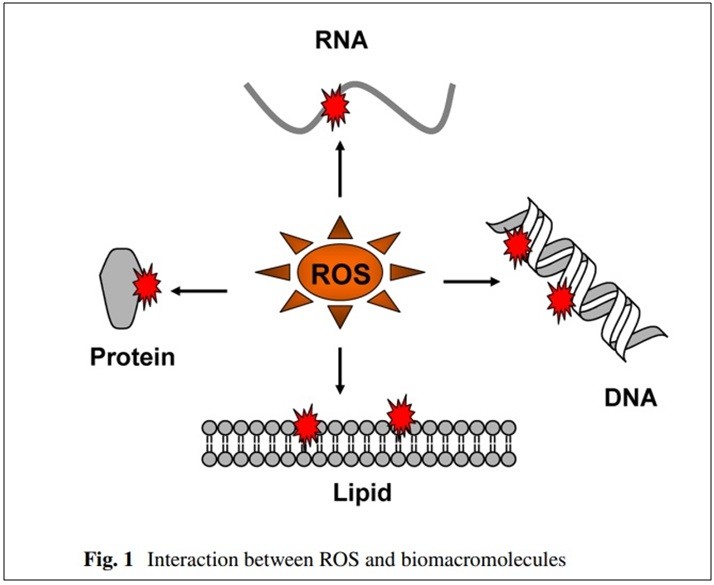
Our Natural Defense: Antioxidants
Fortunately, our bodies have built-in defense mechanisms. Just as lemon juice prevents a peeled apple from turning brown (oxidizing), antioxidants neutralize ROS.
Antioxidants include endogenous enzymes (produced by the body) and exogenous nutrients (ingested through food).
Endogenous Enzymes: Superoxide dismutase (SOD), catalase, glutathione, and coenzyme Q10.
Nutrients from Food: Vitamin C (ascorbic acid), Vitamin E (tocopherol), carotenoids (beta-carotene, lutein, lycopene), polyphenols (catechins, resveratrol, isoflavones, anthocyanins, quercetin), and trace elements like selenium and zinc [8].
These substances neutralize free radicals, converting them into harmless water and oxygen while aiding in tissue recovery [9].
The Rise and Fall of the "Supplement Myth"
In 1969, a research team led by McCord and Fridovich at Duke University discovered superoxide dismutase (SOD), marking the beginning of serious research into treating diseases and suppressing aging through antioxidants [10]. SOD is a powerful enzyme that provides the missing electron to ROS, turning them into hydrogen peroxide (H2O2), which is then broken down by catalase and glutathione into water (H2O). A research team at Johns Hopkins University famously stated, "More than 90% of all chronic diseases are caused by reactive oxygen species" [11].
Humanity hoped to achieve longevity by eliminating ROS with antioxidant pills. However, a series of studies published in the 1990s threw cold water on this enthusiasm. The ATBC (Alpha-Tocopherol, Beta-Carotene) Cancer Prevention Study, published in 1994, remains one of the most significant and shocking landmarks in medical history.
At the time, scientists believed that antioxidants found in fruits and vegetables—such as beta-carotene (a precursor to Vitamin A) and alpha-tocopherol (Vitamin E)—could prevent cancer. There were particularly high hopes that these antioxidant supplements would protect heavy smokers, whose bodies carry high levels of harmful reactive oxygen species (ROS). To test this hypothesis, the Finnish National Public Health Institute and the U.S. National Cancer Institute launched the largest lung cancer prevention study ever conducted [12].
From 1985 to 1993, a large-scale, double-blind study was carried out involving approximately 29,000 male smokers, aged 50 to 69, who smoked at least five cigarettes a day (averaging one pack). To ensure total objectivity, neither the participants taking the daily pills nor the doctors administering them knew who was receiving the actual supplements and who was receiving a placebo.
The results, spanning an average of 6.1 years, were devastating. Contrary to the expectation that antioxidant supplements would reduce the incidence of lung cancer, alpha-tocopherol had no measurable effect. Even more shocking, the group taking beta-carotene showed an 18% higher incidence of lung cancer, sending shockwaves through the global medical community. (As shown in the graph below, those taking beta-carotene [solid line] experienced higher rates of lung cancer over time compared to the control group [dashed line]) [13].
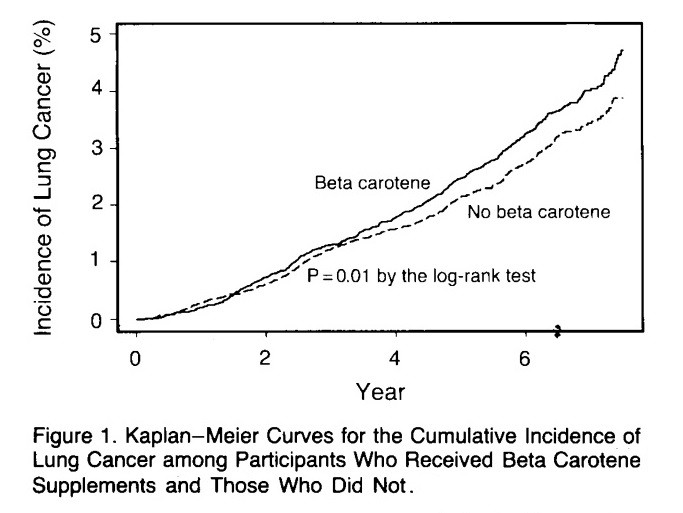
The study’s conclusion—effectively shifting the narrative from "vitamins prevent cancer" to the sobering reality that smokers taking beta-carotene pills were actually more susceptible to lung cancer—became a landmark moment in modern history. It underscored the critical importance of evidence-based medicine, proving that vitamins in supplement form do not replicate the protective effects of those found naturally in whole fruits and vegetables.
Song Mu-ho, M.D. Specialist in Orthopedic Surgery and Lifestyle Medicine
References
1. Sciencedirect https://www.sciencedirect.com/topics/neuroscience/free-radical
2. JA Knight. Free radicals, antioxidants, and the immune system. Annals of clinical & laboratory science 2000;30(2):145-158.
3. M Redza-Dutordoir, DA Averill-Bates. Activation of apoptosis signalling pathways by reactive oxygen species. Biochim Biophys Acta 2016;1863(12):2977-2992.
4. Z Zou, H Chang, H Li, et al. Induction of reactive oxygen species: an emerging approach for cancer therapy. Apoptosis 2017;22:1321–1335.
5. YA Hajam, R Rani, SY Ganie, et al. Oxidative Stress in Human Pathology and Aging: Molecular Mechanisms and Perspectives. Cells 2022;11(3):552.
6. YA Hajam, R Rani, SY Ganie, et al. Oxidative Stress in Human Pathology and Aging: Molecular Mechanisms and Perspectives. Cells 2022;11(3):552.
7. MI Anik, N Mahmud, AA Masud, et al. Role of reactive oxygen species in aging and age-related diseases: a review. ACS applied bio materials 2022;5(9):4028-4054.
8. S Sen, R Chakraborty. The role of antioxidants in human health. In Oxidative stress: diagnostics, prevention, and therapy (pp. 1-37). American Chemical Society 2011.
9. V Lobo, A Patil, A Phatak, N Chandra. Free radicals, antioxidants and functional foods: Impact on human health. Pharmacogn Rev 2010;4(8):118-26.
10. JM McCord, I Fridovich. Superoxide Dismutase, An Enzymic Function for Erythrocuprein (Hemocuprein). Journal of Biological Chemistry 1969;244(22):6049–6055.
11. Health Chosun https://m.health.chosun.com/svc/news_view.html?contid=2017052801010
12. ATBC Cancer Prevention Study Group. The alpha-tocopherol, beta-carotene lung cancer prevention study: design, methods, participant characteristics, and compliance. Annals of epidemiology 1994;4(1):1-10.
13. Alpha-Tocopherol Beta Carotene Cancer Prevention Study Group. The effect of vitamin E and beta carotene on the incidence of lung cancer and other cancers in male smokers. NEJM 1994;330(15);1029-1035.