The corridors of the ward are always bathed in a similar brightness, making the boundary between day and night appear blurred. The seasons change outside the window, but a day inside the hospital room is always similar. Here, I greet the patients as an internal medicine hospitalist, spend the day with them, and then quietly bring it to a close.
In fact, when I obtained my internal medicine specialist qualification ten years ago, I did not initially intend to become a hospitalist. There are many specialized fields in internal medicine, such as cardiology, pulmonology, nephrology, gastroenterology, oncology, and infectious diseases, but I wanted to care for a wide range of patients rather than be confined to a single subspecialty. My desire to stay by the patients' side a little longer and a little deeper gradually grew. I came to feel that enduring patients’ pale morning faces and weary evening gazes was closer to the essence of internal medicine than the brief encounters of opening and closing the outpatient clinic door.
The outpatient clinic of a university hospital is always bustling. Even after waiting for months to finally receive treatment, the actual consultation time is only about 3 to 5 minutes. The doctor must listen to the symptoms, decide on tests, and complete prescriptions all within that short moment. It felt like working a vending machine that spits out prescriptions one by one as patient information is entered.
"Doctor, why did I get this illness? How can I treat it to fully recover? Is it really possible to get better?"
Every time I hear such questions, it feels like being asked to explain an entire life in three minutes. Rather than being someone who can pour out all the answers in a few minutes, I thought I should be someone who shares time with the patients and endures their recovery process together. So I chose the path of a hospitalist, a doctor who stays by the side of hospitalized patients. On the ward, a hospitalist sees treatment as a long, unfolding process.
Some patients quietly recover according to the treatment plan set at the beginning of their hospitalization, while others may experience unexpected developments from seemingly minor symptoms. By observing small fluctuations in blood pressure, temperature, respiration, and mental status throughout the day, we adjust the course and direction of treatment. It is our job to be responsible for the treatment process that is created by connecting countless moments of change.
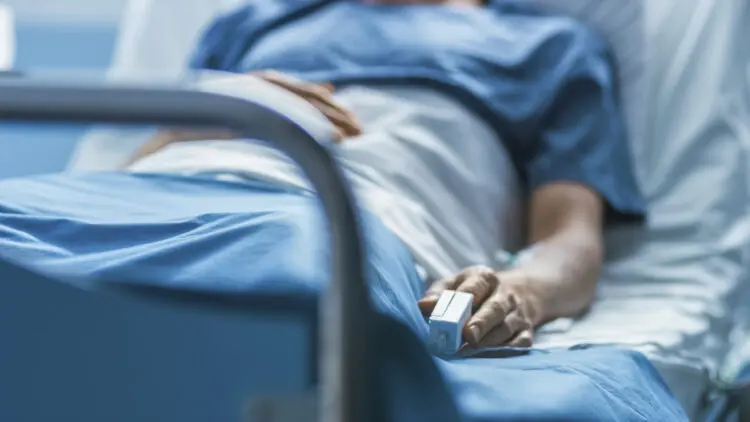
Recently, I cared for a 67-year-old man who was hospitalized with severe pneumonia. Although he had no fever and his blood pressure and respiration were stable, the initial treatment plan was relatively simple. It was a typical plan: administering antibiotics, monitoring oxygen saturation (a measure of whether the body has enough oxygen), and taking daily chest X-rays to check if the pneumonia was improving.
However, this patient did not follow that routine smoothly. The morning after admission, his oxygen saturation dropped from 93% to 89% and then rose back to 93%. Usually, a saturation of around 93% indicates that there are no significant issues with heart or lung function, but something subtle was beginning to change. Tension filled the air in the room.
I stayed by his side all day. I had to quickly determine whether this small change would recover or lead to a negative outcome. I checked his temperature and blood pressure frequently and listened with a stethoscope as his breath sounds weakened. Upon checking the X-ray, I found fluid around the right lung.
A sense of anxiety washed over me, fearing that he might develop a fever soon. Although bacteria had not yet grown in the blood culture, it seemed he was progressing towards sepsis. Sepsis is a severe infectious state in which bacteria spread throughout the body via the bloodstream. I decided to switch to a more potent broad-spectrum antibiotic.
As expected, by the afternoon, he developed a high fever and his blood pressure suddenly dropped. He had entered septic shock. Although he was still conscious, his skin was damp and his lips were pale. I administered vasopressors to raise his blood pressure, and while increasing the oxygen concentration seemed to stabilize his blood pressure, this time he was unable to urinate. Even a single day without adequate urine output can quickly become life‑threatening.
I quickly contacted the cardiology, infectious disease, nephrology, and critical care teams. Everyone gathered by the patient's bedside to assess his condition and discuss the treatment plan. It was concluded that the pneumonia had led to severe septic shock, damaging heart and kidney function, and that dialysis would be necessary. The patient was transferred to the intensive care unit to begin emergency dialysis. Fortunately, a few days later, his inflammation levels, kidney function, lung function, and heart function all began to show signs of recovery.
If I had missed or overlooked the small change in oxygen saturation that morning, what would have happened? If I had failed to respond to this subtle change in the flow of the day, what would have happened to the patient? That day, I was reminded once again that what defines a true expert in caring for hospitalized patients is the density of time spent at the patient’s side.
Patients are broadly divided into outpatients and inpatients. Outpatients can return home the same day after tests or simple procedures, even if there are some abnormalities in their condition. In contrast, inpatients are those who need to stay in the hospital for more than 24 hours due to serious illnesses or injuries, requiring continuous observation, treatment, or surgery.
When treating these two groups of patients, the doctor's approach and expertise inevitably differ. In countries such as the United States, the specialty dedicated to caring for hospitalized patients has been established as hospital medicine since the 1990s. Hospitalists in our country, including myself, have only just begun to take our first steps.
Watching patients who may suddenly deteriorate, sharing every moment of their treatment, and resolving all the issues that arise along the way is the core domain of a hospitalist.
The words I hear most often from patients on the ward are expressions of regret and worry.
"I wish I hadn't overdone it back then. I should have gotten tested without delay."
Regret over the past quickly leads to fear of the approaching future.
"Is the treatment going well right now? What if my condition worsens?"
In painful moments, people's minds endlessly travel between the past and the future. However, worry, regret, fear, or anxiety do not heal illness. Instead, they exhaust the mind long before the body. What we can do is acknowledge the current pain and take one step at a time, entrusting ourselves to the reality of the treatment process.
"From this moment on, we can only proceed in a sequential and logical way, and what matters most is doing our best at each step."
When I gently turn my mind in a different direction, I often feel that life begins to move again from that very moment as I walk alongside the patient’s treatment process.
Today, I walk the corridors again. Some patients may be recovering according to routine, but others may be experiencing dangerous changes that are not visible. So as not to miss those signals, I keep watch over the ward as a hospitalist.
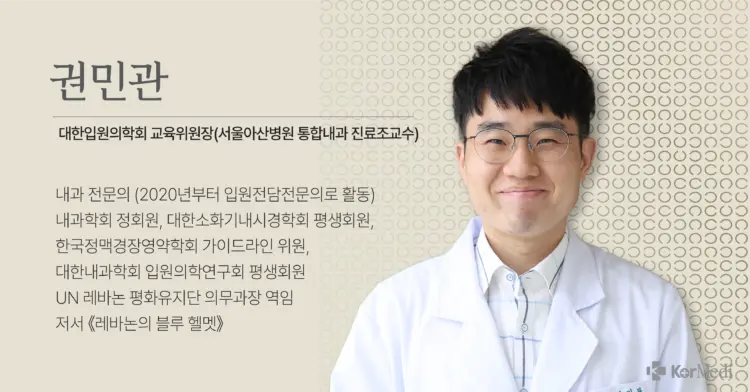
Kwon Min-kwan
Chair of the Education Committee of the Korean Association of Hospital Medicine(Clinical Assistant Professor of Integrated Internal Medicine at Asan Medical Center), board-certified internist (serving as a hospitalist since 2020), and author of Blue Helmets of Lebanon.
<Editor's Note>
A hospitalist is a physician who works primarily on the ward and provides close, continuous care for hospitalized patients. The hospitalist system in Korea began as a pilot project in 2016 and expanded nationwide in 2021; this year marks its 10th anniversary. Hospitalist Diary records the small moments that hospitalists accumulate as they meet, treat, and discharge patients on the ward each day. Through this series, we hope to share the human stories that unfold inside the hospital with patients, caregivers, other medical staff, and even offer honest reflections from the hospitalists themselves. Supported by the Korean Association of Hospital Medicine.
hospital. With support from the Korean Society of Hospital Medicine.