
While controlling blood pressure and cholesterol is traditionally considered the top priority after a heart attack or stroke, a landmark study suggests that patients must also closely monitor their long-term mental health. An analysis of South Korea's National Health Insurance Service (NHIS) data revealed that individuals with a history of myocardial infarction (heart attack) or stroke face a significantly higher risk of death by suicide compared to a healthy cohort of identical age and sex.
A research team led by Prof. Bae Nan-young of the Division of Cardiology at Seoul National University Hospital Gangnam Center investigated this correlation by tracking a massive population scale. The study analyzed 227,472 adults who underwent national health screenings in 2009. Within this group, 37,912 patients had a documented history of atherosclerotic cardiovascular disease—specifically a heart attack, stroke, or both—while the remaining 189,560 individuals served as the age- and sex-matched control group.
Elevated Risks Across Over a Decade of Tracking
The research team monitored the participants for over a decade, spanning from 2009 through 2021. Over this 11-year follow-up period, a total of 1,250 deaths by suicide were recorded across the entire study population.
The data revealed that the overall risk of suicide was 43% higher among individuals who had survived a heart attack or stroke compared to the control group. This upward trend remained consistent even for patients who had experienced only one of the two acute conditions. However, the risk peaked drastically among the subset of patients who had survived both a heart attack and a stroke, exhibiting an 85% higher suicide risk than their healthy counterparts..
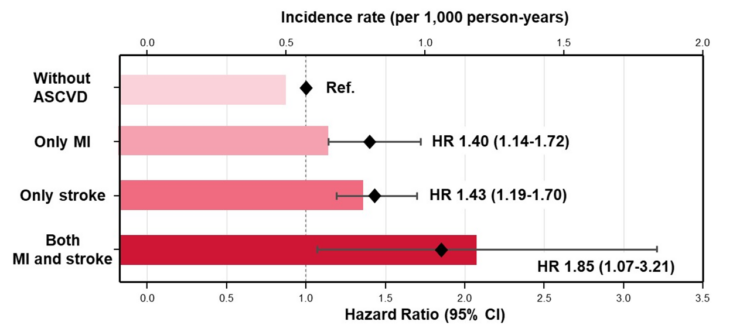
Psychological Vulnerability Extends Beyond Clinical Depression
Notably, this statistical pattern persisted even among patients who had no previous history or clinical diagnosis of depression. The findings indicate that the psychological toll of surviving an acute, life-threatening cardiovascular event exists independently of preexisting mental health conditions, meaning healthcare providers and families must remain vigilant regardless of a patient's psychiatric history.
Heart attacks and strokes are sudden, catastrophic medical crises. Even when a patient successfully undergoes treatment and stabilizes, the aftermath often brings a sudden decline in physical function, pervasive anxiety regarding potential recurrence, newfound limitations on daily independence, financial strain, and social isolation. These compounding factors can heavily degrade a patient's overall quality of life, rapidly intertwining with hidden psychological distress, anxiety, and a sense of hopelessness.
In particular, middle-aged and older adults frequently struggle to regain their baseline physical stamina and former routines after being discharged from the hospital, even if their clinical charts indicate they are fully recovered. While family members often meticulously manage medication schedules, physical rehabilitation routines, and outpatient appointments, it is incredibly easy to overlook early behavioral warning signs such as disrupted sleep patterns, withdrawal from social interactions, and profound lethargy.

Integrating Mental Care into Physical Rehabilitation
The research team emphasized that the clinical management of cardiovascular diseases must expand to include routine screenings for depression, anxiety, and suicidal ideation.
"Heart attacks and strokes are not only acute diseases that threaten immediate survival, but they can also exert profound, long-term impacts on a patient's mental well-being," Prof. Bae Nan-young stated. "The significance of this study lies in confirming a clear association between atherosclerotic cardiovascular disease and an increased risk of suicide through nationwide, long-term follow-up data."
As an observational study, the researchers noted that the findings demonstrate a strong correlation rather than proving direct causation. Additionally, because the study focused strictly on South Korean citizens, further research is required to determine if the exact metrics apply uniformly to other global populations.
Ultimately, comprehensive post-stroke and post-infarction care should extend far beyond tracking blood pressure numbers and lipid profiles. Clinical attention must actively encompass sleep health, psychological anxiety, and social support structures. True recovery from a major medical event does not occur solely within the physical body, and mental rehabilitation should be prioritized as a core component of the overarching treatment process.
The study was published in the European Journal of Preventive Cardiology, the official peer-reviewed medical journal of the European Society of Cardiology.