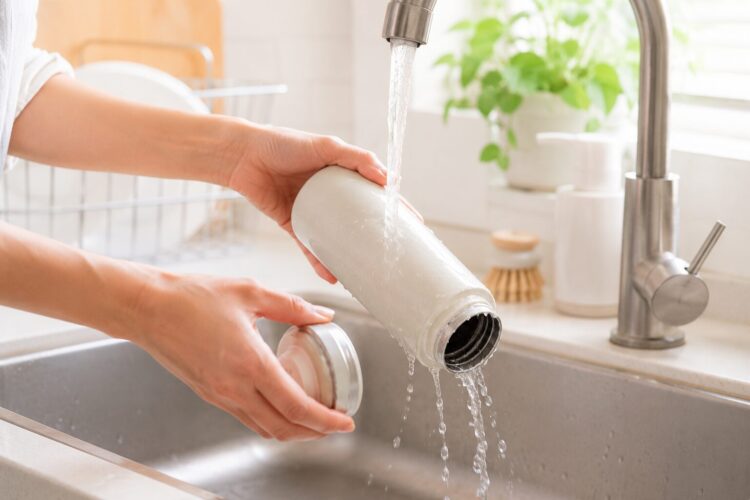
Many people use a reusable tumbler every day, often giving it a quick rinse with water or a hasty wash before calling it clean. However, hygiene experts warn that the inside of the lid and the rubber gasket require far more attention than the cup itself, as these specific areas are highly prone to trapping moisture and beverage residue.
The Hidden Breeding Ground: The Rubber Gasket
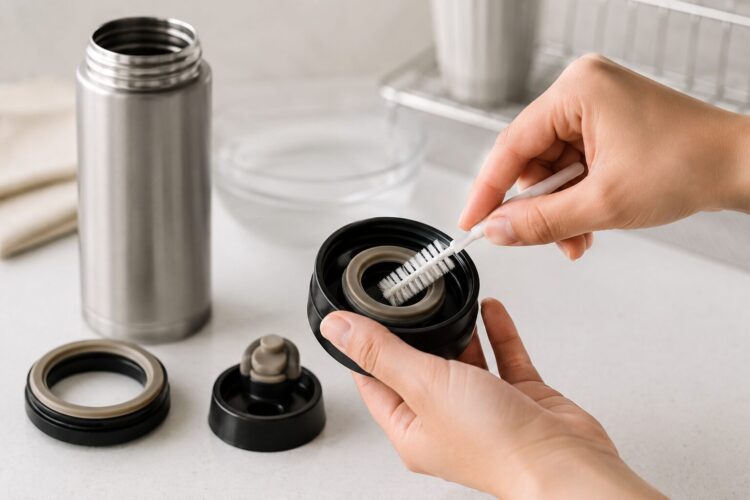
The components most vulnerable to contamination are the rubber gasket inside the lid and the area surrounding the drinking spout. Because the structural design allows moisture and leftover fluids to linger, these spots quickly become ideal environments for bacteria and mold to thrive. Washing a tumbler without removing the gasket often leaves contaminants trapped in microscopic, hard-to-see gaps.
Experts recommend removing and thoroughly washing the rubber gasket at least once a week, utilizing a small dedicated crevice brush or a soft toothbrush to clear out buildup from narrow crevices. For those who frequently fill their tumblers with milk, protein shakes, or sugary coffee, a meticulous daily wash is strongly advised.
Why Hot Water Alone Fails
While many assume a quick rinse with hot water finishes the job, oily components and sugars frequently remain behind. Coffee, lattes, and protein drinks contain fats and proteins that are incredibly difficult to remove completely with water alone.
As a baseline standard, experts recommend washing the tumbler body, lid, and gasket with a mild, neutral dish soap after every use. For stainless-steel models, baking soda can effectively eliminate stubborn odors; however, users should strictly avoid chlorine-based bleach, which can easily corrode the metal. After washing, ensure all components are completely dry before storing them away.
The Mold Risk of Trapped Moisture
Even if you only fill your tumbler with plain bottled water, you should not let your guard down. Closing the lid while moisture is still trapped inside creates a sealed environment where microorganisms multiply rapidly—a problem heavily exacerbated by summer heat and humidity.
To prevent mold and odor issues, experts recommend separating the lid from the body after washing, allowing both pieces to air-dry completely before reassembly. Tumblers should never be left for long periods inside a bag or a vehicle while still damp. If a silicone gasket becomes permanently discolored or retains a persistent odor, it is a clear sign that it needs to be replaced.
Tracking the Lifespan of Tumbler Parts
While a stainless-steel container can last for years, silicone gaskets and drinking-spout components are consumables with a limited lifespan. Repeated washing and exposure to heat gradually reduce their elasticity, creating tiny cracks where contaminants can lodge themselves. Once buildup accumulates in these fractures, standard washing may no longer be effective.
Experts recommend inspecting and replacing the rubber gasket every six months to a year, provided the manufacturer offers replacement parts. Properly maintaining a clean tumbler is just as critical as choosing a durable one; when it comes to everyday hygiene, a single unwashed crevice can determine the safety of your drink.