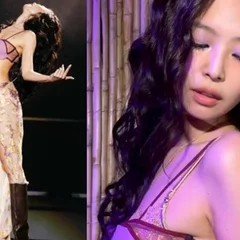

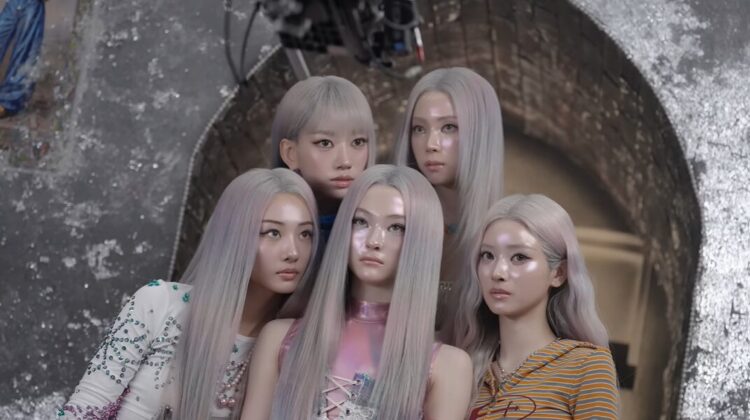
Rookie girl group MEOVV recently dropped their new tracks “DDI RO RI” and “Hit Em,” blending powerful choreography with an addictive sound. The music video for “DDI RO RI,” in particular, captivated audiences with the members’ striking visuals and distinctive cinematography.
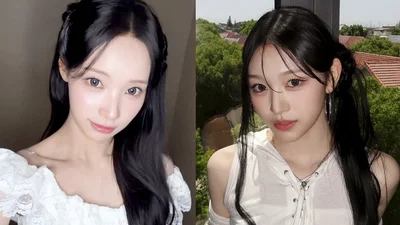
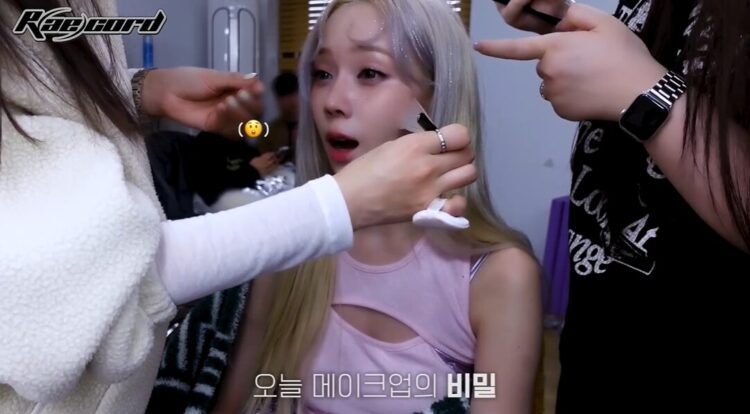
One detail that immediately caught viewers' attention was the members’ flawless, doll-like skin. In a behind-the-scenes video on MEOVV’s YouTube channel, the members were filmed continuing their shoot while sporting what they dubbed “AI makeup.” Looking at the camera, Anna remarked, “I can’t talk too loudly right now because I’m wearing AI makeup,” while Ella explained, “Our faces are completely fixed right now.”
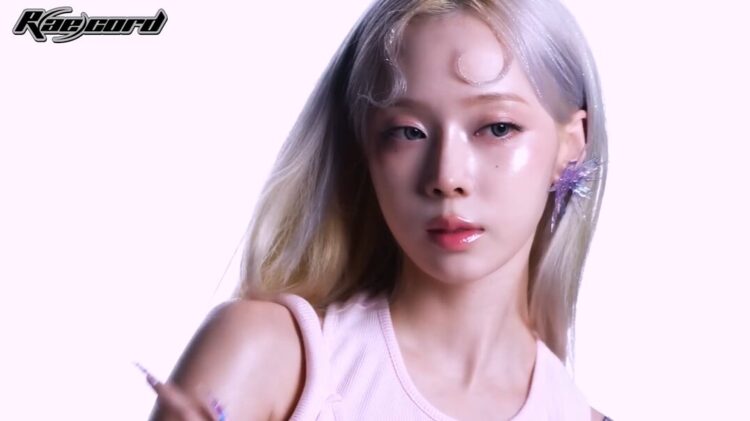
Beauty communities and social media users soon identified the technique as a variation of “wrapping mask pack” makeup. This method involves applying a peel-off wrapping mask as a pre-makeup primer, or forming a thin film over a completed base to amplify shine and smooth out skin texture. The technique previously went viral online as one of the signature glass-skin secrets of aespa member Winter (Kim Min-jeong).
A Glass-Like Sheen: Achieving 'Peeled-Egg Skin' With a Wrapping Film
A wrapping mask is traditionally a skincare product that forms a thin, liquid film to moisturize and soothe the skin. While most users peel or rinse it off after a designated time, this trend incorporates the dried film directly into the cosmetics application.
The steps are straightforward, though flawless execution requires precision. First, the wrapping mask is applied and left to dry completely until it forms a transparent film on the surface. This film blurs minor skin imperfections and creates a uniform, coated appearance across the face.
The key is building it up in thin, multiple layers. If applied too thickly, the film will fail to dry evenly and can easily pill. Once a uniform layer has dried, foundation is gently layered over it. However, the process is far more finicky than it sounds, making the overall makeup routine difficult to manage. Some individuals apply the wrapping pack as a final setting step after finishing their makeup, but this requires even more delicate control, as the underlying base can easily shift or turn patchy.
Built for the Camera: Why It Shines in Photo Shoots and Short-Form Videos
Wrapping makeup is highly effective under intense studio lighting. When the skin surface reflects light uniformly, pores and textures are softened, creating a striking, glass-like radiance. For this reason, the technique is widely used to maximize on-camera polish during concept photo shoots and stage performances.
While the dramatic effect translates beautifully on camera and under stage lights, it also aligns perfectly with contemporary short-form video trends. Across platforms like Instagram Reels and TikTok, videos showcasing smooth skin achieved through wrapping masks—or dramatic clips peeling the film away—have garnered massive popularity. Captivated by the visible transformation, viewers have left comments such as, “It literally looks like AI skin,” “She looks like a doll,” and “It's like a peeled egg.”
Flawless When Expressionless, But Prone to Cracking When You Smile
Nevertheless, this makeup style is notoriously difficult to wear for extended periods, making it better suited for special occasions rather than daily wear. While a neutral expression maintains the smooth finish, talking or smiling can cause the base to crack as creases form around the mouth and nasolabial folds. High-movement zones—such as the sides of the nose, the lips, and the jawline—are particularly prone to lifting.
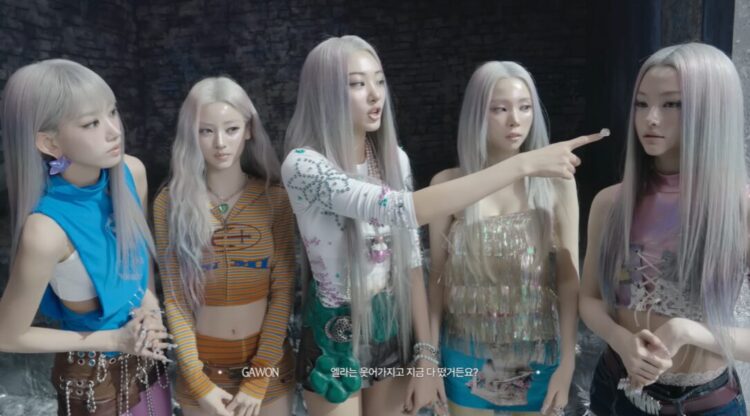
The MEOVV members experienced these exact limitations during their video shoot. "We can't smile," they agreed, with Narin adding, "I’m a literal AI right now. I have no expression." Observing her, Gawon chimed in, "Narin’s makeup hasn’t lifted at all," before adding, "But Ella smiled, so everything around her nose lifted."
Tips for Trying the Trend: Focus on Targeted Areas Rather Than the Whole Face
For those eager to test the look, the key lies in a thin, localized application. Instead of spreading a thick layer of the product across the entire face, it is far better to apply a thin layer exclusively to the center of the cheeks or the forehead, where facial movement is minimal and the luminous glow is most prominent.
Limiting the product to these zones minimizes the heavy, suffocating sensation on the skin while still preserving the texture-smoothing benefits. It also yields a more natural, "filtered" skin effect that catches the light beautifully.
Conversely, it is best to avoid applying the wrapping film to highly expressive areas, such as around the mouth and the nasolabial folds, where creases form naturally.
Furthermore, applying too much foundation at once can cause the underlying film to lift. To keep the wrapping film secure, apply small amounts of foundation with a brush or puff, gently patting it into place. Stippling or pressing the product lightly, rather than rubbing it across the face, prevents the film from pilling.
Concealing Pimples With the Film Can Aggravate Acne
Some social media influencers have showcased the wrapping mask technique as a way to cover up pimples and blemishes. While it can temporarily smooth over the skin surface and dim the appearance of redness, individuals with inflamed acne or pustular blemishes should exercise extreme caution.
Sealing the skin with a dense wrapping mask and cosmetic layers traps sebum, sweat, and heat underneath. This added irritation can easily exacerbate breakouts, particularly during the hot summer months when skin temperatures rise and sweating increases. Proper cleansing afterward is equally critical; if wrapping mask residue and foundation are left behind, they will clog pores. On days this makeup is worn, a thorough and meticulous double-cleansing routine is absolutely essential.