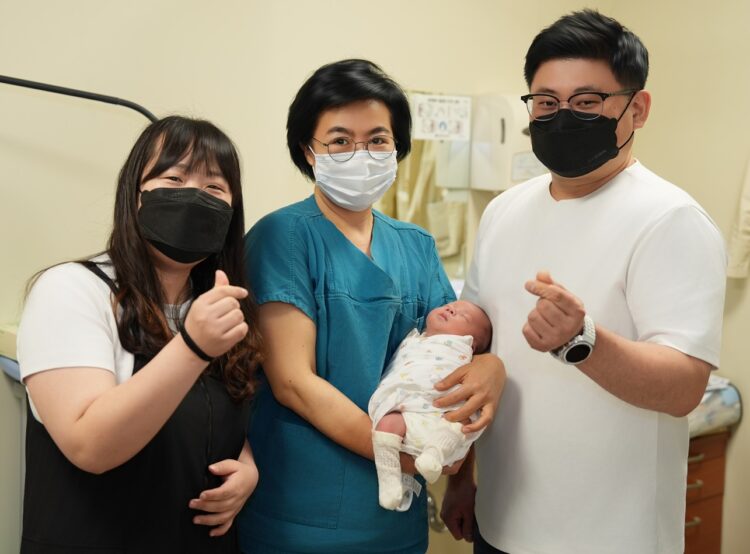
A South Korean mother has safely delivered a healthy baby girl nearly 22 weeks after miscarrying her first twin, setting a new national record for the longest delayed-interval delivery.
The pregnancy was hard-won, coming after nine years of marriage. In the womb, the twins were affectionately nicknamed “Tiki-Taka,” reflecting the parents’ deep hope that the long-awaited children would be born safely and grow up closely bonded.
However, disaster struck at approximately 15 weeks into the pregnancy when the mother’s water suddenly broke. She was rushed to a local obstetrics and gynecology clinic, which quickly recognized the emergency and transferred her to the Regional Maternal and Child Medical Center at Seoul St. Mary’s Hospital. Upon arrival, examinations revealed that her cervix was already dilated, and the first fetus was ultimately lost to a premature miscarriage.
Meticulous Medical Intervention to Save the Remaining Twin
The medical team moved immediately to protect the remaining fetus. Seoul St. Mary’s Hospital announced on June 8 that by carefully monitoring the conditions of both the mother and the surviving fetus—while accounting for multiple clinical variables and the mother’s advanced maternal age in her late 30s—a healthy baby girl was safely delivered via vaginal birth at dawn on the 19th of last month.
Immediately after the miscarriage of the first twin, physicians performed an emergency cervical cerclage (stitching the cervix closed) and initiated intensive management. This included administering antibiotic treatment to prevent infection and tocolytic therapy to suppress uterine contractions. The medical staff then focused entirely on prolonging the pregnancy, continuously screening for signs of infection, uterine contractions, hemorrhaging, and fetal distress.
Extending a pregnancy after a partial miscarriage requires exceptionally precise care. Ko Hyun-sun, the attending physician and head of the Maternal-Fetal Center at Seoul St. Mary’s Hospital, noted, “After the preterm premature rupture of membranes and a subsequent miscarriage occur, many cases progress to the delivery of the second fetus within just a few days. In the early stages, every single day was a period of intense anxiety.”
As the pregnancy stabilized, the mother was transitioned to outpatient follow-up care. However, immediately after the cerclage suture was removed at 37 weeks, doctors observed further cervical dilation and signs of amniotic fluid leakage, prompting immediate re-hospitalization. Balancing the mother's age and health indicators, the medical team closely monitored the situation until she successfully gave birth.
A New Milestone in High-Risk Obstetrics
This specialized procedure—where one fetus in a multiple pregnancy is unavoidably delivered or lost early, and the remaining fetus is maintained in the uterus to maximize gestational age—is known as a “delayed-interval delivery.” Because the process carries severe risks of maternal infection, sudden preterm labor, and dangerous bleeding, it is a highly complex treatment restricted to specialized facilities equipped for high-risk pregnancies.
According to Seoul St. Mary’s Hospital, this successful delayed-interval delivery was achieved 21 weeks and 5 days (152 days) after the first miscarriage, marking the longest recorded delay period in South Korea. Prior domestic cases reported a maximum delay of 128 days, while the international record stands at 153 days.
“I extend my deepest gratitude and congratulations to the mother, the baby, and the family who endured this incredibly difficult and lengthy process,” said Professor Ko Hyun-sun. “The Regional Maternal and Child Medical Center at Seoul St. Mary’s Hospital will continue to do its utmost to provide a safe childbirth environment through our specialized care systems for high-risk mothers and newborns.”
The mother also expressed her appreciation, stating, “Thanks to the dedicated doctors and nurses in the high-risk maternity ward, I was able to endure a very challenging time. I truly hope that other high-risk mothers going through similar hardships will not lose hope.”