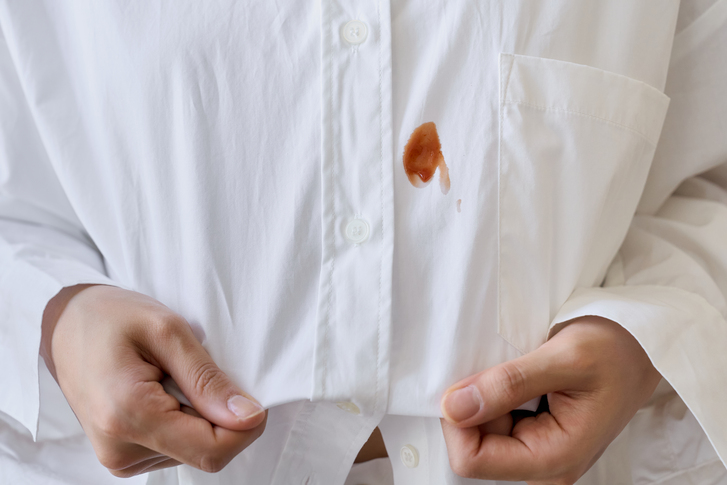
Stains on clothing should be treated individually before being placed in a washing machine. To remove them effectively, one must consider the specific substance involved. Using the wrong approach can inadvertently set a stain, making it nearly impossible to lift.
While water temperature is often chosen based on fabric type, the nature of the stain is equally important. In fact, for the same garment, the ideal temperature for stain removal can vary significantly.
Cold Water for Blood; Hot Water for Oils
It is a well-established rule that bloodstains should be rinsed in cold water. Warm water causes the proteins in blood to coagulate and bind permanently to the fibers. For better results, applying two to three drops of hydrogen peroxide before rinsing with cold water can lift the stain more efficiently. This logic also applies to other protein-based substances, such as dairy products and eggs.
Conversely, greasy substances like cooking oil or butter are best treated with hot water. Since butter has a melting point of 28–33°C, it remains semi-solid at room temperature and will not dissolve in cold water. Using a pH-neutral detergent combined with hot water is the most effective way to break down these oily residues.
Removing Beverage, Cosmetic, and Ink Stains
For beverage stains like coffee or green tea, a combination of vinegar and baking soda is highly effective. Mix water and baking soda in a 1:2 ratio, apply it to the area, and sprinkle vinegar on top. Gently rubbing the spot with warm water will help the stain lift. For carbonated drinks or fruit juice, soaking the garment in salt water can provide a mild, natural bleaching effect.
When dealing with foundation or other makeup stains, mayonnaise can be a surprising ally. Rubbing a small amount onto the stain before hand-washing with a pH-neutral detergent helps absorb the cosmetic oils. For lipstick or shaving cream, cleansing oil is a better alternative for removal.
Ink stains from ballpoint pens can be treated by dabbing the area with a liquid roll-on pain reliever followed by a lukewarm rinse. The volatile ingredients in the roll-on help dissolve the ink. To prevent the ink from spreading, place a tissue or towel behind the fabric while dabbing. If a roll-on is unavailable, rubbing alcohol applied to a soft cloth serves the same purpose.
Sanitizing for Hygiene
For items where hygiene is the primary concern, such as bedding or dishcloths, high-temperature washing is essential. According to the U.S. Centers for Disease Control and Prevention (CDC), bacteria like E. coli and Salmonella are neutralized at temperatures of 60°C or higher. More resilient pathogens, such as norovirus, require temperatures of at least 71°C for effective sanitization.