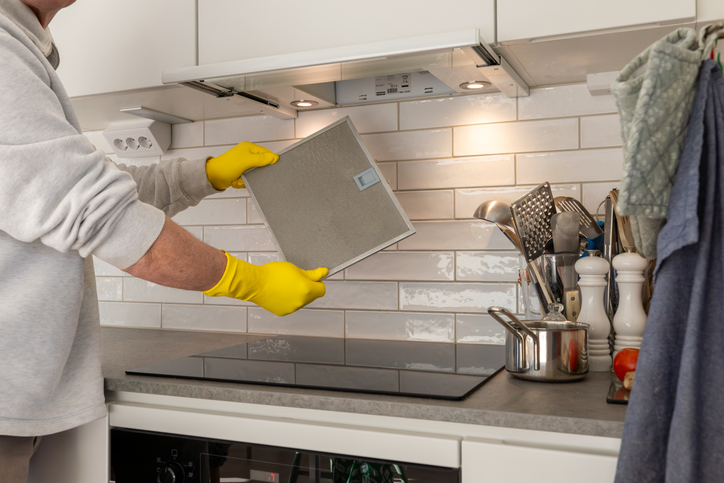
Because a gas range hood filter is often tucked out of sight, it is easy to neglect. Many homeowners postpone cleaning because the sticky, solidified grease feels nearly impossible to remove. However, allowing grease to accumulate inside the filter and ductwork creates a serious fire hazard.
In February 2024, a fire at a restaurant in Jung-gu, Seoul, was traced back to grease buildup inside a kitchen exhaust duct. During cooking, flames reached the residue, causing the fire to spread rapidly. This type of accident is not limited to commercial kitchens; it can happen in any home where maintenance is ignored.
Why Surface Wiping Isn’t Enough
Most hood filters feature a tightly woven mesh designed to trap oil particles. Over time, these particles travel into the tiny gaps of the mesh and solidify. Simply wiping the surface does little to clear the buildup clogging the interior holes. To truly deep-clean the filter, you need a chemical reaction that breaks down organic contaminants.
The Power of Sodium Percarbonate
One of the most effective ways to dissolve stubborn grease is using sodium percarbonate. When dissolved in water, this compound breaks down into hydrogen peroxide and sodium carbonate. The resulting oxidation reaction helps lift organic matter, while the alkaline nature of the sodium carbonate neutralizes and loosens the oily residue.
How to Clean:
Place the filter in a large zipper bag or a heavy-duty plastic bag.
Add a spoonful of sodium percarbonate and fill the bag with hot water.
Let the filter soak for 10–20 minutes. The reaction is more active at higher temperatures.
After soaking, use a soft brush and mild detergent to scrub away any remaining residue.
Note: Use caution with aluminum or coated filters. Soaking them for too long in sodium percarbonate can lead to corrosion or discoloration. Always ensure the area is well-ventilated during the process.
An Alternative: Baking Soda and Dish Soap
If you don't have sodium percarbonate on hand, a mixture of baking soda and dish soap is an effective substitute.
Baking Soda: Weakens the bond of the grease, making it easier to detach from the mesh.
Dish Soap: Emulsifies the loosened oil so it can be rinsed away.
Simply follow the same soaking method using a large bag and hot water. The heat is essential, as grease separates significantly faster in hot water than in cold.
The Final Step: Complete Drying
After cleaning, rinse the filter thoroughly under running water. It is vital to let the filter dry completely before reinstalling it. If the filter is still damp when the hood is turned on, new oil particles will cling to the moisture, causing grease to build up twice as fast. Regular maintenance not only keeps your kitchen smelling fresher but also ensures your home remains safe from grease fires.