As the 2026 Milan-Cortina d'Ampezzo Winter Olympics continue, the world of sports is once again focused on the thin line between medical treatment and illegal enhancement. Italian biathlete Rebecca Passler recently made headlines after a doping controversy involving the substance letrozole. While she was initially at risk of expulsion, a retest confirmed her eligibility, allowing her to return to competition on February 18. This case underscores the high stakes of substance management for world-class athletes.
To maintain the integrity of the Games, the International Olympic Committee (IOC) and the World Anti-Doping Agency (WADA) enforce a rigorous and ever-evolving list of prohibited substances and methods.
The Forbidden List: Why Even Obesity Drugs Are Banned
WADA, established in 1999, updates its list of prohibited substances every October 1st. While classic Anabolic Androgenic Steroids (AAS)—like the testosterone-mimicking stanozolol—remain the most well-known violations, the list has expanded significantly to include:
Hormones and Growth Factors: Erythropoietin (EPO) for endurance and various growth-related analogs.
Masking Agents: Diuretics that help flush banned substances from the system.
Metabolic Modulators: Anti-estrogens and beta-2 agonists.
Obesity Medications: High-profile weight-loss drugs like Wegovy (semaglutide) and Zepbound (tirzepatide) are strictly prohibited for Olympic athletes.
In recent years, WADA has also moved to ban gene and cell doping. This includes any gene-editing therapy intended to alter gene expression levels or the injection of genetically modified cells to enhance athletic performance.
Detection Technology: The Battle of Urine and Blood
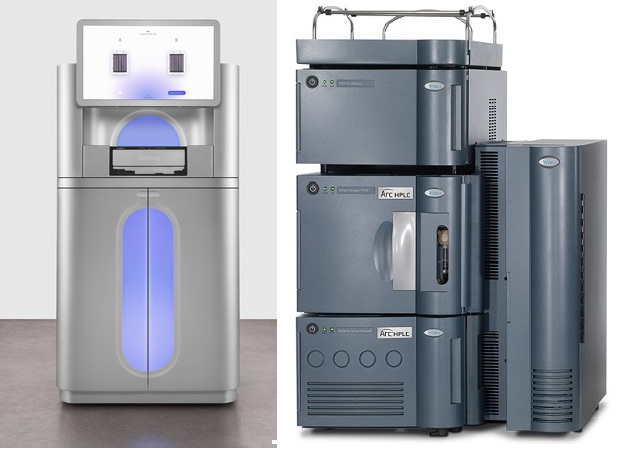
To catch trace amounts of these substances, laboratories rely on sophisticaIllumina’s next-generation sequencing (NGS) platform "NovaSeq" (left) from the U.S. and BGI’s "BGISeq" from China. (Photo: Courtesy of each company)ted analytical equipment dominated by U.S. and Chinese technology firms.
Chemical Detection: Testing facilities use high-performance liquid chromatography-mass spectrometry to identify minute drug components. Systems like the Waters Arc HPLC are industry standards for separating and identifying mixed chemical components in blood and urine samples.
Gene and Cell Analysis: Detecting foreign genes or modified cells requires Next-Generation Sequencing (NGS).
U.S. Leaders: Illumina dominates with its NovaSeq series, while 10x Genomics provides the Chromium system, the global standard for analyzing gene expression at the cellular level.
Chinese Leaders: BGI Group competes globally with its BGISeq series of genomic testing equipment.
Industry experts note that while these technologies are currently being used to safeguard the 2026 Winter Games, they are also evolving rapidly through the integration of Artificial Intelligence (AI). These advancements are not only catching dopers but are simultaneously revolutionizing early disease diagnosis and prognosis for the general public.