
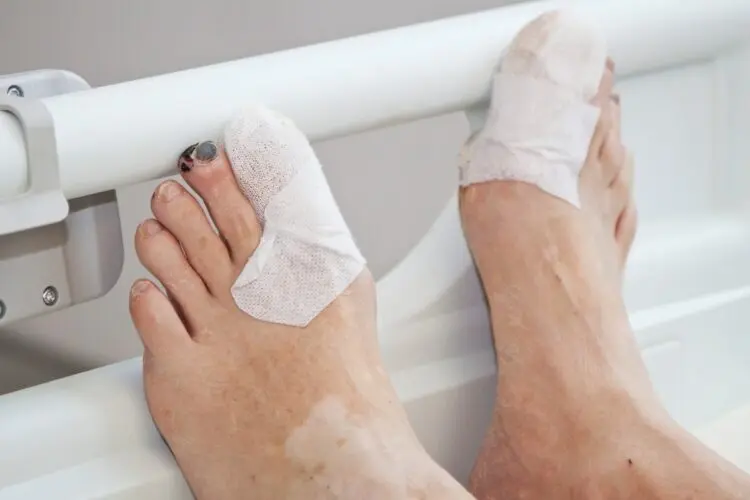
A small wound on the foot. For diabetic patients, this wound lasts longer than expected. They apply ointment, use antibiotics, and manage their blood sugar, but the wound does not heal easily.
As time passes, the pain intensifies, and the hospital mentions, "Amputation may need to be considered." Many patients only realize the seriousness of 'diabetic foot' at this moment.
Diabetic foot (diabetic foot ulcer) is commonly understood as an 'infected foot' or a 'wounded foot.' Therefore, treatment is also focused on medication, disinfection, and dressing. However, depending on the situation, the focus may change. "Is the blood flowing properly to the foot?"
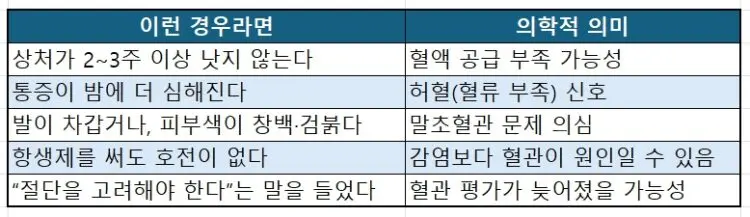
In fact, many patients who have undergone amputation due to diabetic foot say they were unaware that "vascular issues could be checked first." While treating the wound with medication, another problem arises due to insufficient blood flow to the foot.
Is the reason the wound is not healing really just 'infection'?
When diabetes persists, the blood vessels leading to the feet and legs often narrow or become blocked. When blood supply decreases, oxygen and nutrients cannot reach the wound area, resulting in even small wounds not healing well. This leads to repeated infections and necrosis, increasing the risk of amputation.
In such cases, medication alone has clear limitations. Even with good blood sugar control and antibiotics, if there is a lack of blood flow, wound healing will inevitably be slow or stop altogether. This is why 'vascular' treatment is important in recent diabetic foot care.
When medication alone is insufficient, the focus shifts to the blood vessels
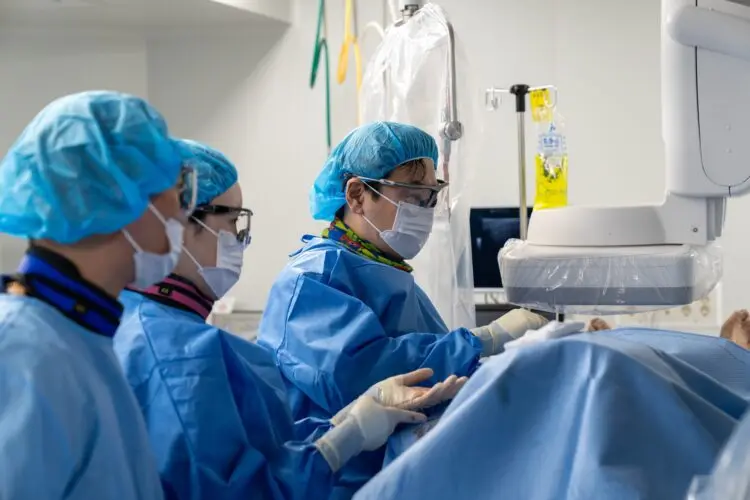
Some diabetic foot patients may consider treatments that widen the narrowed or blocked blood vessels in the legs and feet. This includes balloon therapy (angioplasty, PTA) that uses a thin tube (catheter) to widen the blood vessels, or inserting a stent to maintain blood flow (stent placement).
The goal of such 'peripheral vascular interventions' is clear. It is to ensure that blood flows back to the toes, creating conditions for the wound to heal.
This is not a new attempt. It has established itself as a key part of peripheral vascular disease treatment. For diabetic foot patients where insufficient blood flow is the main cause, it has been widely used as an option to reduce the risk of amputation.
Some studies have reported that the risk of amputation decreased by up to 70% in diabetic foot patients who received appropriate vascular treatment. However, it was relatively less known among patients.
Not all diabetic feet are candidates for this
In Busan, there is a growing movement to apply this approach more actively. Busan Bummin Hospital has recently strengthened its treatment flow to evaluate not only wounds and infections but also vascular conditions in diabetic foot patients.
The director of the hospital's intervention center, Jeon Woong-bae, stated, "Not all diabetic foot patients need vascular treatment, but if the wound is not healing well, it is essential to check whether there is sufficient blood flow to the foot." If vascular issues are not resolved, all treatments are likely to remain stagnant.
Treatment does not end with 'vascular'
Treating the blood vessels is just the beginning. Afterward, wound care, infection control, and diabetes management must be carried out together to maintain treatment effectiveness.
Busan Bummin Hospital has also started operating a 'Diabetic Foot Clinic' with a multidisciplinary collaboration system that focuses on intensive treatment for patients involving the intervention center, joint center (focused on foot specialists), and internal medicine (gastroenterology, nephrology, etc.).
Furthermore, through mutual cooperation with Haeundae Bummin Hospital, which is also part of the same medical foundation, a system has been established that continues from vascular treatment to follow-up care. For patients, this means they can receive diagnosis, treatment, and follow-up care locally without having to travel to Seoul for treatment.
Nevertheless, diabetic foot remains a complication that requires caution. Vascular procedures do not solve everything in every case. Still, the direction of treatment is clearly changing little by little. There is not only one path leading to amputation when a wound occurs.
In addition to medication and wound care, there are certainly cases where treatments that preserve blood vessels are beneficial. Director Jeon Woong-bae stated, "The goal of diabetic foot treatment is to protect the patient's foot beyond just wound healing," and added, "In that process, examining the blood vessels is becoming increasingly important."