In 2008, medical leaders from across the globe gathered in Seoul to issue a unified call for professional autonomy and clinical independence. The resulting "Seoul Declaration"—a landmark 12-point document—established a foundational principle: physicians must be empowered to make sound medical judgments for their patients, free from undue pressure by governments, hospital administrators, or healthcare payers.
Eighteen years later, regional medical leaders are returning to the South Korean capital to revisit that very mission. The central dialogue will focus on defining the boundaries of doctors' clinical discretion and examining the societal responsibilities tied to that professional judgment.
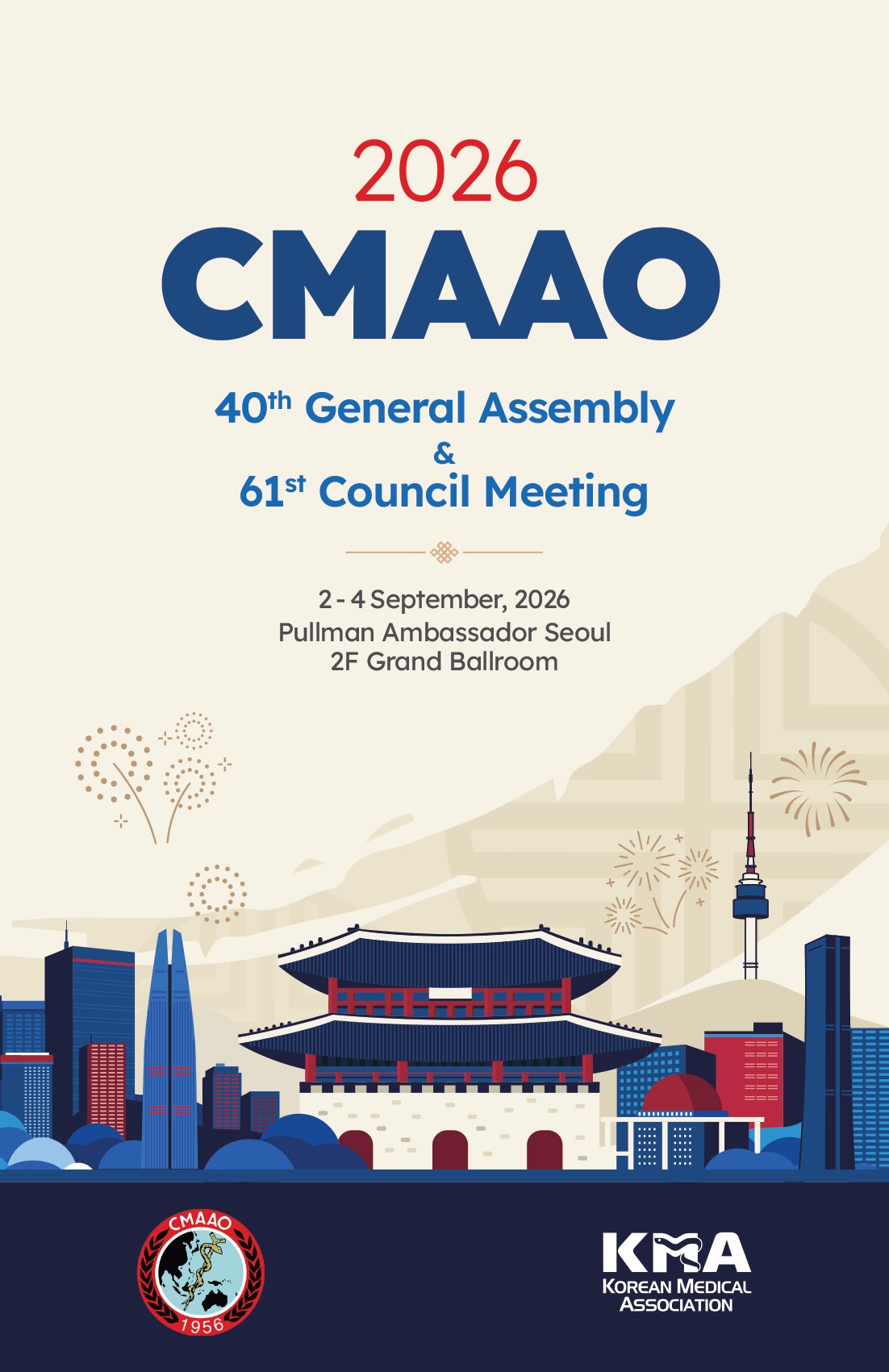
The Korean Medical Association (KMA) announced on Aug. 26 that it will host the 2026 Confederation of Medical Associations in Asia and Oceania (CMAAO) Seoul General Assembly from Sept. 2 to 4 at the Ambassador Seoul Pullman Hotel in Jung-gu, Seoul. Approximately 80 representatives from 11 member national medical associations are slated to attend.
This year’s overarching theme is "Professional Autonomy in Medicine."
Clinical Autonomy: Safeguarding Patients, Not Unchecked Authority
Medical professional autonomy is frequently misunderstood as an absolute right for doctors to practice without oversight.
In reality, the concept guarantees that medical decision-making remains uncompromised by financial or political interference. It ensures that treatments are dictated solely by a patient’s unique health condition and objective clinical evidence.
The World Medical Association (WMA) codified these ideals into the "Seoul Declaration on Professional Autonomy and Clinical Independence" during its 2008 assembly in Seoul. The overarching consensus was clear: healthcare quality and patient trust can only endure when doctors are permitted to make medically necessary decisions without external coercion.
However, clinical autonomy is not unlimited. As reaffirmed in the WMA’s 2018 revision of the declaration, professional judgment must adhere to evidence-based medicine, established care standards, and strict ethical guidelines—while fully respecting patient self-determination. Medical autonomy is therefore not about expanding physician power, but ensuring that decisions about patient care are grounded in medical science and ethics.
Assessing Medical Autonomy Across Asia and Oceania
The 2026 CMAAO Assembly will evaluate how these standards are applied across diverse healthcare environments in Asia and Oceania.
During a dedicated symposium on Sept. 3, delegate associations will present the current state of clinical independence in their respective countries, highlighting key legal, operational, and ethical challenges. Given the varying national insurance frameworks and hospital systems across the region, conflicts over medical judgment—and their practical solutions—differ significantly by jurisdiction.
Following these discussions, assembly delegates will adopt a joint resolution on medical professional autonomy on Sept. 4.
CMAAO: Bridging Regional Priorities and Global Medicine
Founded as a distinct regional forum, CMAAO operates independently of the WMA, though the two organizations maintain a close collaborative partnership. The WMA officially recognizes CMAAO as one of its key regional medical partners.
By consolidating the perspectives of member associations across Asia and Oceania, CMAAO brings regional healthcare challenges to the forefront of the global medical community, serving as a vital conduit to the WMA.

KMA President Kim Taek-woo to Take the Helm
At this year’s assembly, KMA President Kim Taek-woo will officially assume office as the 43rd president of CMAAO.
According to official CMAAO records, Kim will be the fourth Korean medical leader to head the organization, following former KMA presidents Myung Joo-wan (1969–1971), Moon Tae-joon (1981–1983), and Kim Jae-jung (2005–2007). This marks the first time in 21 years that a Korean medical leader has assumed the presidency since Kim Jae-jung’s tenure in 2005.
The KMA is also sponsoring the participation of junior doctors from member nations to foster international dialogue and expose the next generation of medical leaders to global health policy.
"The CMAAO General Assembly in Seoul will mark a pivotal moment in elevating the international standing and leadership of Korea’s medical community," said Kim Taek-woo. "Anchored by the core value of professional autonomy, we will foster open communication with member associations and take a proactive role in shaping global healthcare policy and international cooperation."