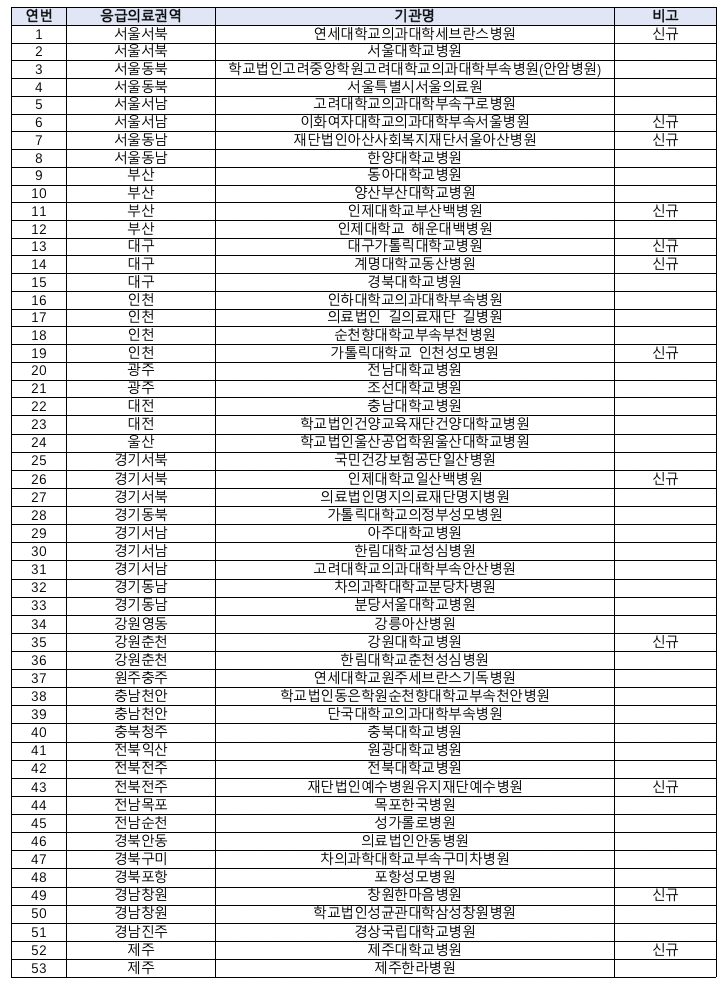
The number of regional emergency medical centers in South Korea will expand from 44 to 53, marked by a targeted effort to boost critical care capacity both inside and outside the capital region. Under the new expansion, the number of centers in the Seoul metropolitan area will rise from 18 to 21, while those in other provinces will increase from 26 to 32. As part of the reshuffle, Ewha Womans University Mokdong Hospital, Kyung Hee University Hospital at Gangdong, and Yeungnam University Hospital have been removed from the designation, while 12 new institutions—including Seoul's Severance Hospital and Asan Medical Center—have been added to the roster.
Overhauling Emergency Delivery Around Definitive Care
The Ministry of Health and Welfare announced on July 15 that it has finalized the selection of the 53 regional emergency medical centers, a move aimed at establishing a more resilient response system for high-acuity emergency patients. The designated medical institutions will be responsible for prioritizing critical care, managing patient intake, and coordinating regional emergency services for a three-year term running from November 2026 through October 2029.
In overhauling the national emergency medical delivery system, the ministry placed heavy emphasis on evaluating each institution's actual capacity for "definitive treatment"—the final, specialized medical or surgical intervention required to resolve a life-threatening condition—rather than focusing solely on basic emergency room infrastructure, equipment, and staffing levels.
In addition to delivering immediate medical care and training within their respective communities, the selected centers will actively anchor local cooperative networks. This includes establishing and operating regional transfer guidelines in close coordination with municipal governments, 119 emergency services, and neighboring medical facilities to streamline patient transport and secure the critical "golden hour."
The government plans to tie each center's performance in these collaborative roles directly to their annual evaluations and future redesignation reviews. To ensure these medical centers fully carry out their localized responsibilities, the ministry noted that it will consider revoking designations for any institutions found to be falling short of the standards.
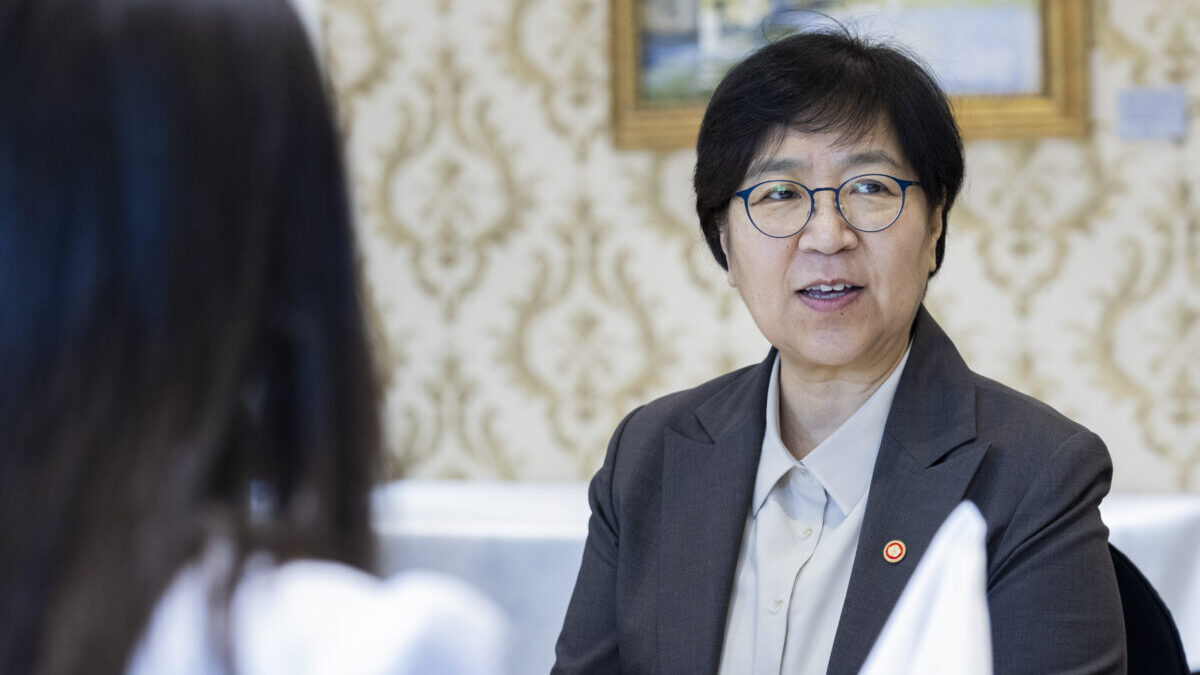
"With this selection, we expect to significantly reinforce our nationwide response system for critical emergency care," said Minister of Health and Welfare Jeong Eun-kyeong. "We will continue to strengthen the national emergency medical infrastructure with an unwavering focus on definitive-care capacity."
The list of the 53 regional emergency medical centers selected this time is as follows.