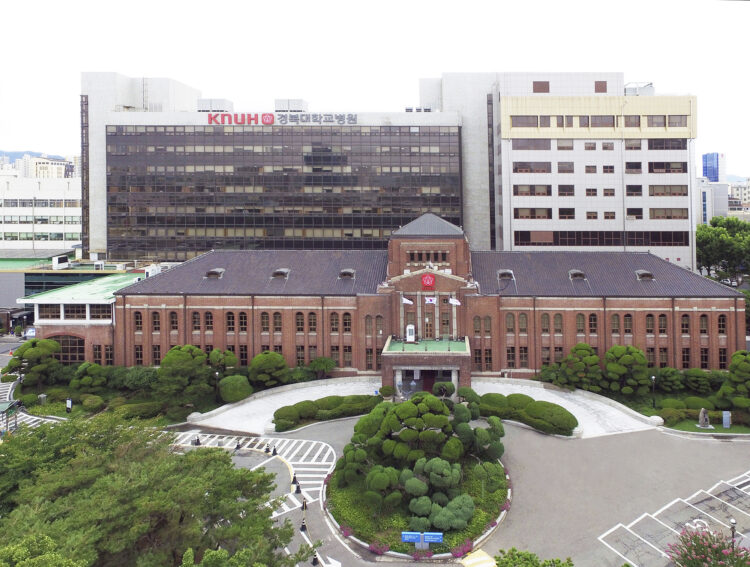
Kyungpook National University Hospital is building an advanced research infrastructure capable of profiling thousands of proteins simultaneously from a single drop of blood, a significant milestone expected to accelerate the institution's transition toward comprehensive, personalized precision medicine.
The Multi-Omics Core Facility at the hospital's Biomedical Research Institute held a specialized seminar titled “Olink Platform (Olink Explore HT) for Human Proteome Analysis.” According to hospital officials, the event was organized to announce the integration of this state-of-the-art bio-research equipment, which is poised to elevate regional healthcare research capacity to a world-class level, and to outline its strategic operational roadmap.
Unlocking Ultra-Precise Biomarkers Through Proteomics
The Olink system highlighted during the seminar is a globally recognized research platform engineered to precisely analyze thousands of proteins concurrently using minimal blood sample volumes. By mapping the human proteome, investigators can discover critical biomarkers—cellular markers that predict the onset risk or developmental progression of complex diseases such as cancer and chronic illnesses.
With this new infrastructure, Kyungpook National University Hospital intends to fortify its multi-omics research capabilities, which integrate and evaluate interconnected genetic and proteomic datasets. Multi-omics is widely regarded as a foundational pillar of next-generation medicine; it moves past isolated genomic data to provide a multi-dimensional analysis of cellular and protein variations, allowing clinicians to determine the most effective, tailored therapeutic interventions for individual patients. The hospital plans to launch full-scale platform operations during the second half of this year.
A Hub for Regional Medical Collaboration and Commercialization
The seminar, conducted in a hybrid format that accommodated both online and in-person attendees, introduced the latest methodologies in protein mapping powered by Proximity Extension Assay (PEA) technology. Alongside investigators from Kyungpook National University, prominent representatives from major clinical and research institutions across the Yeongnam region participated in the discussions, further strengthening the collaborative medical research networks across the territory.
The Multi-Omics Core Facility operates as an integrated hub supporting high-end research methodologies within the Biomedical Research Institute. Its portfolio includes spatial transcriptomics, which captures the exact positional data of cells within tissue, alongside advanced proteomics and bioinformatics analysis. The facility was established after being selected for the Regional Healthcare Research Capacity Strengthening Project, a national initiative overseen by the Ministry of Health and Welfare and the Korea Health Industry Development Institute, with comprehensive administrative and financial backing from Daegu Metropolitan City.
External researchers seeking analytical support can receive tailored expert consulting—spanning from initial research design to experimental execution—through the dedicated Research Clinic portal on the Kyungpook National University Hospital Biomedical Research Institute website (https://bmri.knuh.kr).
Lee Won-joo, director of the Biomedical Research Institute at Kyungpook National University Hospital, stated, “We hope this seminar acts as a catalyst to energize regional medical research collaboration. By providing an internationally competitive research environment, we aim to build a virtuous cycle where basic laboratory discovery seamlessly translates into active clinical application and bio-industrial commercialization, ultimately driving sustained growth across the regional bio-health sector.”