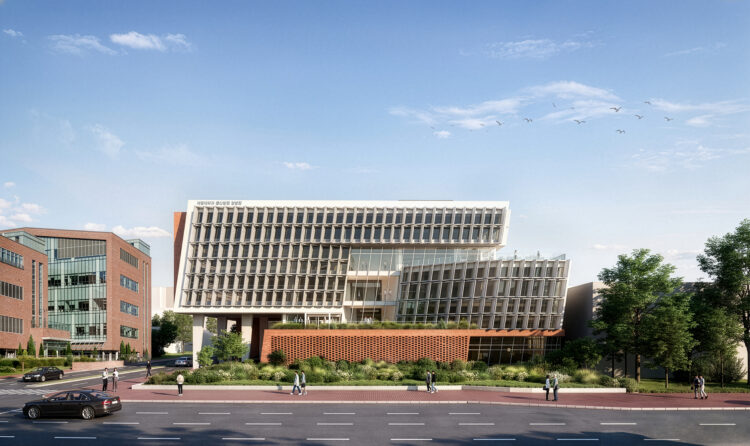
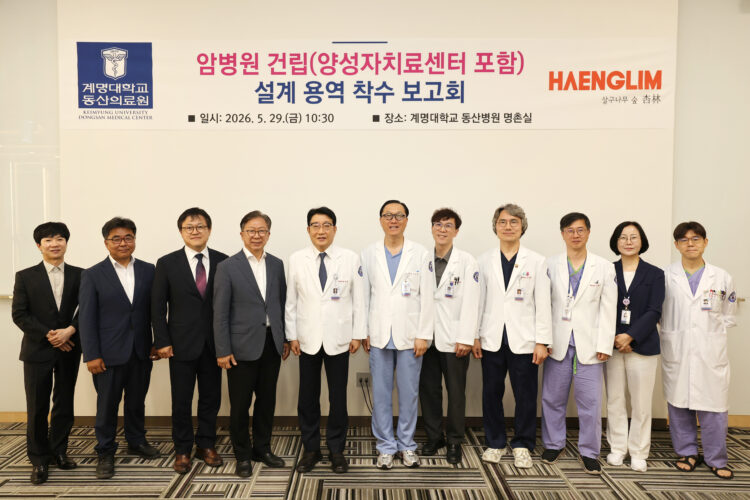
Keimyung University Dongsan Medical Center’s planned new cancer hospital is officially beginning to take shape. The medical center, led by Director Bae Jae-hoon, held a kickoff briefing on the 29th for its architectural design contract, unveiling new renderings and a detailed construction blueprint for the facility, which will feature an advanced proton therapy center.
The project is being spearheaded as part of the institution's "7·7 Plan," an ambitious initiative designed to ease the heavy concentration of advanced medical resources in the Seoul metropolitan area. Through this plan, the center aims to elevate itself into one of South Korea's top seven medical institutions and establish one of the nation's seven leading specialized cancer hospitals by the end of 2029.
The new cancer hospital will be built at the main gate site facing Dalgubeol-daero, a major 12-lane boulevard. The structure will span five basement levels and five above-ground floors, covering a total floor area of 22,485 square meters (approximately 6,800 pyeong).
At the core of the facility is a cutting-edge proton therapy system—the "ProTom Radiance 330"—marking the first time this next-generation technology will be available outside the Greater Seoul area. The system utilizes the unique "Bragg Peak" phenomenon, where a proton beam releases its maximum destructive energy precisely at the depth of a tumor and then rapidly dissipates. This creates a "zero exit dose" condition that drastically minimizes radiation damage to vital surrounding organs like the heart and liver. This level of precision provides a critical treatment alternative for pediatric cancer patients, for whom secondary side effects from radiation exposure are a paramount concern.
Currently, only two facilities in South Korea operate proton therapy systems, both concentrated in the capital region. This geographical disparity forces cancer patients living in other provinces to endure the physical and financial burden of traveling long distances for advanced care. To bridge this gap, Dongsan Medical Center is moving forward with construction, aiming to begin equipment installation in 2028 and treat its first patients in December 2029.
The new facility will house dedicated centers for seven major cancers—including stomach, colorectal, and hepatobiliary-pancreatic cancers—all built around the central proton therapy system. The institution has already secured and trained specialized radiation oncology teams to ensure they are fully prepared for seamless clinical deployment.
Architecturally, the hospital centers on the design concept of "Luminous Resonance." The plan incorporates the strategic use of natural light throughout the entire patient experience—from arrival to treatment—to promote psychological peace. In a symbolic shift, the site of the existing funeral hall (Baekhabwon) will be completely transformed into a space dedicated to life and healing. Additionally, a "healing community zone" will be created to offer comfort, open communication, and respite for patients and caregivers.
The layout prioritizes patient-centered innovation by integrating nature-oriented biophilic elements and strictly separating the circulation paths of patients, medical staff, and equipment to maximize clinical efficiency. The exterior will feature a blend of red brick and glass—materials that honor the medical center’s historical identity while projecting a high-tech image—creating what designers describe as a "healing facade etched with light, time, and faith."
Using the new cancer hospital as a catalyst, Dongsan Medical Center will comprehensively restructure its existing center-based system into a network of highly specialized, disease-specific hospitals. The High-Risk Maternal and Neonatal Integrated Care Center (Regional Mother-and-Child Medical Center), which currently boasts a remarkable 95.5% survival rate for extremely premature infants, will be elevated to a standalone "Mother-and-Child Hospital." Meanwhile, the Cardiovascular Center, recognized nationwide for its expertise in complex cardiac procedures, will be upgraded to a dedicated "Heart Hospital."
Together with the proton cancer hospital, the medical center plans to intensively foster this three-pillar specialized system to complete a regionally self-sufficient healthcare ecosystem capable of handling everything from initial diagnosis to complex surgery and rehabilitation.
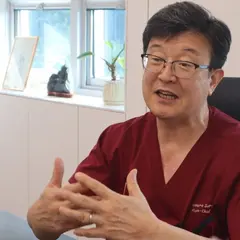
"The new cancer hospital will be a genuine healing space where advanced technology, nature, and humanity connect," said Director Bae Jae-hoon. "By introducing the nation’s first synchrotron-based proton therapy equipment and implementing an innovative, patient-centered design, we will eliminate the hardship of traveling to Seoul for care and provide local residents with a world-class environment for cancer treatment."