
BTS member Jungkook recently sent waves through his fanbase by revealing a new addition to his collection: a striking red motorcycle. On the 13th, Jungkook shared a photo of the bike on social media with the simple caption, “It’s here.” The model, from a prestigious Italian luxury brand, carries a list price of approximately 61 million won in the Korean market.
Jungkook’s passion for riding is well-documented. He has showcased his skills on various reality programs and recently drew attention for the "motorcycle challenge" associated with the track “Hooligan” from the new BTS album, Arirang. Acknowledging the inevitable safety concerns from fans, Jungkook reassured them via social media, stating, “I ride safely, so please don’t worry too much.”
While the thrill of the open road is often described as addictive, experts emphasize that motorcycling can only remain a sustainable hobby if safety is prioritized.
Essential Safety Protocols for Riders
Because a rider is significantly more exposed than a driver in a car, the impact of an accident is far more severe. According to the World Health Organization (WHO), head trauma is a leading cause of motorcycle-related fatalities.

The Helmet is Non-Negotiable: A safety-certified helmet must fit snugly and the chin strap must be securely fastened. Experts warn that any helmet involved in a significant impact should be replaced immediately, even if no external damage is visible.
Full Protective Gear: Beyond the head, riders should utilize specialized jackets, gloves, knee guards, and boots to prevent fractures and skin injuries. Brightly colored gear is recommended for night riding to increase visibility to other motorists.
Adherence to Speed Limits: High speeds drastically increase stopping distances. In Korea, riders must adhere to standard limits: 50 km/h in urban areas, 80 km/h on national highways, and up to 110 km/h on expressways.
Defensive Driving: Motorcycles often fall into a car driver’s blind spot. Riders are advised to avoid traveling alongside vehicles for extended periods and to maintain a following distance of at least three to four seconds..
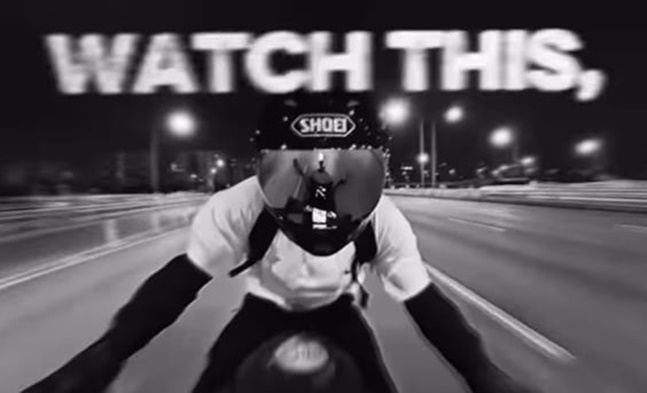
Is Riding Actually Exercise?
A common misconception is that riding a motorcycle is a passive activity. In reality, it is a full-body engagement that requires constant physical input. Maintaining balance and navigating curves engages the core, abdomen, lower back, thighs, and shoulders.
Medical experts often compare the physical demand of riding to "isometric exercise," where muscles remain under tension even without large ranges of motion. While a 70 kg adult might burn between 100 and 220 kcal per hour during a standard city ride, more intensive sport or off-road riding can see that number climb to 600 kcal per hour.
While the aerobic intensity of casual city riding is relatively low, the hobby contributes to improved focus, better physical balance, and significant stress relief. For those looking for weight loss, experts suggest pairing the enjoyment of riding with supplemental strength training or running.