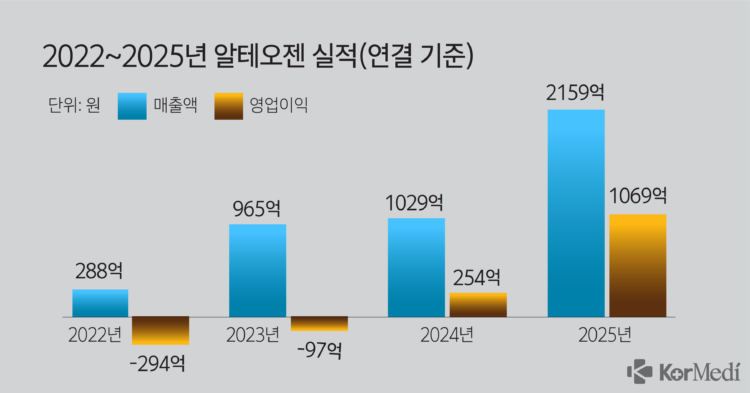
Alteogen is set to accelerate its financial growth this year, driven by a surge in milestone payments and royalty revenues following a record-breaking performance in 2024. Industry analysts and securities firms suggest the company’s operating profit could reach as high as 300 billion won as its strategic partnerships and biosimilar pipeline reach critical commercial stages.
According to pharmaceutical and biotech industry sources on March 3, Alteogen has maintained a steady upward trajectory since the successful development of drugs utilizing its proprietary Hybrozyme (ALT-B4) formulation change platform. The company’s confidence in its future performance is anchored by the anticipated market expansion of Keytruda Qlex, the subcutaneous (SC) formulation of pembrolizumab, alongside royalty streams from its Herceptin biosimilar currently marketed in China.
Last year marked a historic milestone for Alteogen. After returning to profitability in 2024, the company saw its operating profit skyrocket by over 300%. For the 2025 fiscal year, Alteogen reported consolidated revenue of 215.9 billion won and an operating profit of 106.9 billion won—increases of 110% and 321%, respectively, year-over-year. Net profit also reached 144.3 billion won, a 138% increase from the previous year’s 60.6 billion won.
The primary catalyst for this growth has been the commercialization progress of partners using the Hybrozyme technology. A standout contributor is Merck’s (MSD) immuno-oncology blockbuster, Keytruda Qlex. Following regulatory approvals in the United States and the European Union last year, Alteogen secured a total of 56.9 billion won in royalties.
Moving forward, the company expects to sustain this momentum through tiered milestones and sales royalties, complemented by the commercial launch of its internally developed aflibercept biosimilar, Eyluxvi (ALT-L9).
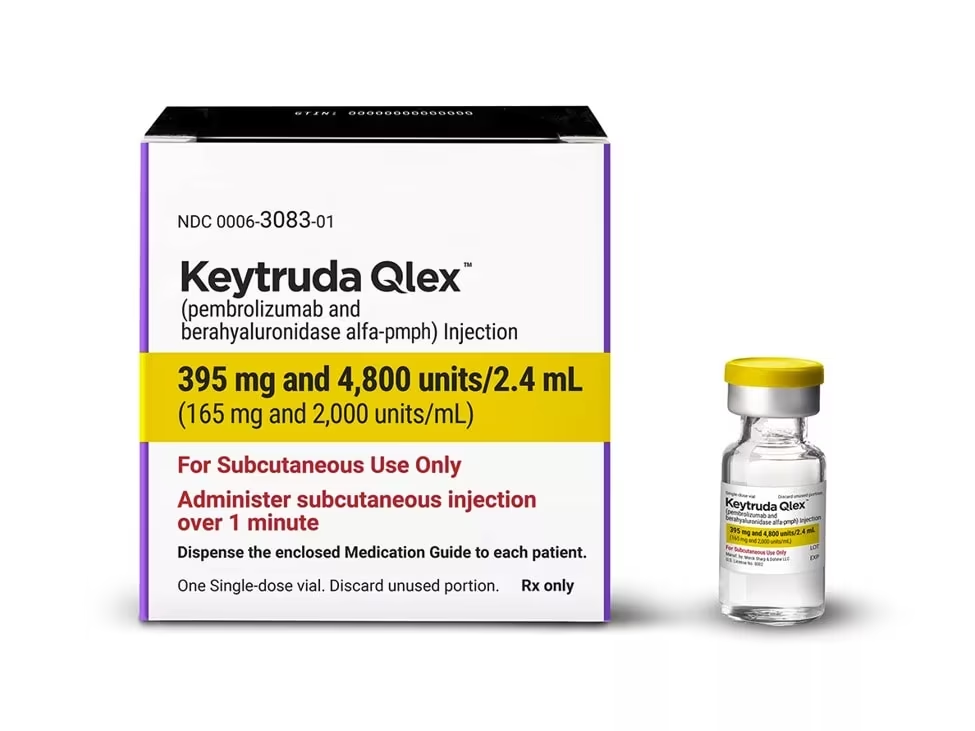
Two key products are currently driving these revenue streams: Keytruda Qlex and the Herceptin biosimilar ALT-L2 (marketed in China as Anguoto). ALT-L2, which was licensed to China’s Qilu Pharmaceutical in 2017, received local approval in July 2024. While royalties from ALT-L2 are paid regularly, the Qlex revenue structure is tied to specific sales thresholds. Alteogen is eligible to receive up to $1 billion (1.46 trillion won) in cumulative sales milestones as the drug hits various targets.
While the intravenous (IV) version of Keytruda recorded global sales of $31.7 billion last year, the newly launched Keytruda Qlex recorded initial U.S. sales of $40 million. Investment banking officials note that if MSD successfully converts 30% to 40% of the Keytruda market to the SC formulation by 2028, Alteogen will secure substantial payments over the coming years. This transition is a core strategy for MSD to protect its market share ahead of upcoming patent expirations.
In addition to the Qilu Pharmaceutical partnership, which is expected to yield royalties until 2033, Alteogen is actively pushing for the commercialization of Eyluxvi within the EU. These combined factors have led market analysts to forecast an operating profit exceeding 300 billion won for the current year.
"This year, the recognition of milestones from Keytruda Qlex sales will provide visible evidence of our growth," said Jeon Tae-yeon, CEO of Alteogen. "Long-term, we remain committed to strategic decisions that enhance corporate value, including stabilizing our global supply chain and securing new pipelines through open innovation."