Abdullah Rahman, a young man from Yemen who had been forced to crawl on his knees since birth due to congenital deformities, completed a grueling journey across the Asian continent to reach a hospital at the southern tip of the Korean Peninsula. After five surgeries involving bone reconstruction and artificial joint implantation, a miracle occurred: he stood and walked on his own two legs. Before his discharge, Rahman invited the medical staff to his room and served them kebabs he had prepared with great care.

Last year, the strains of Beethoven's 'Für Elise' echoed through the hospital’s second-floor lobby. The pianist was Zhou Kaifeng, a music teacher from China. In 2011, she was an eight-year-old girl who could neither stand nor walk due to a curved spine until a missionary told her mother, "You can get treatment in Korea." After six surgeries over four years, she walked out on crutches; eleven years later, she returned to perform a 'recital of gratitude.'
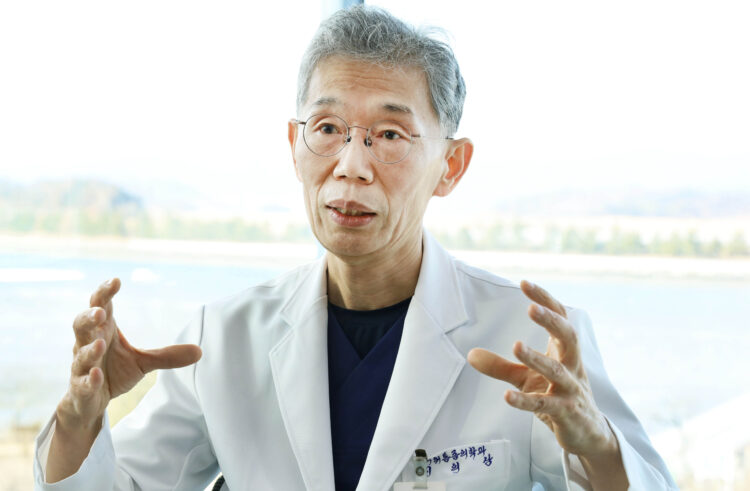
Director Lee Eui-sang (65) of Aeyang Hospital, where such stories unfold, remarked, "I will never forget the moment the Yemeni young man handed me those kebabs, or when Zhou Kaifeng finished playing and awkwardly said 'thank you' in broken Korean. We are blessed to be moved by our patients in this way."
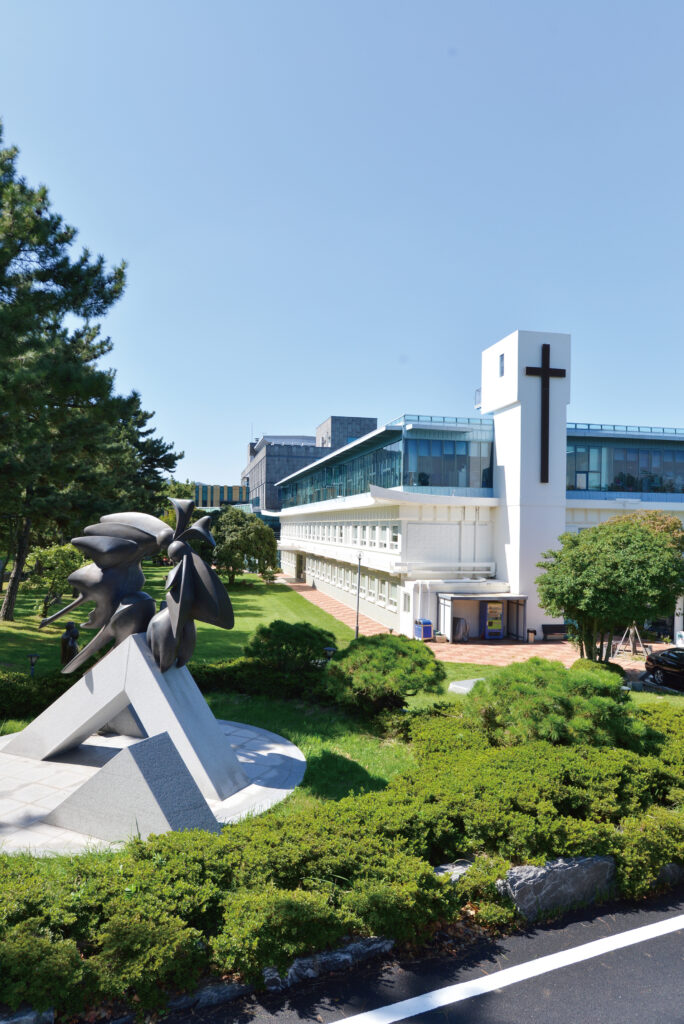
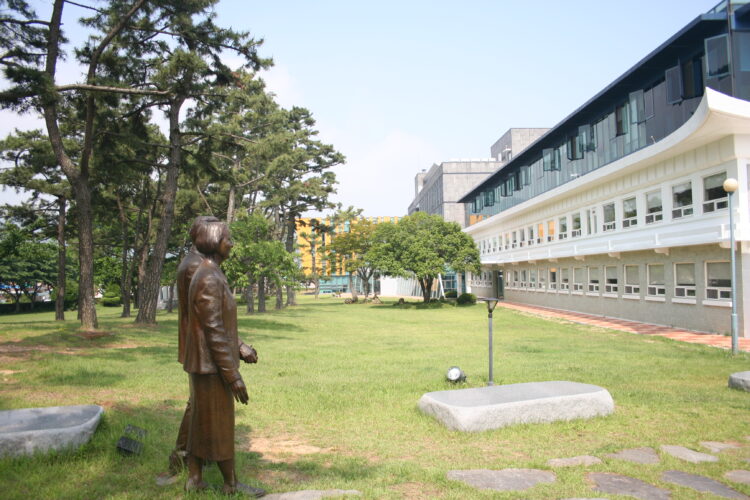
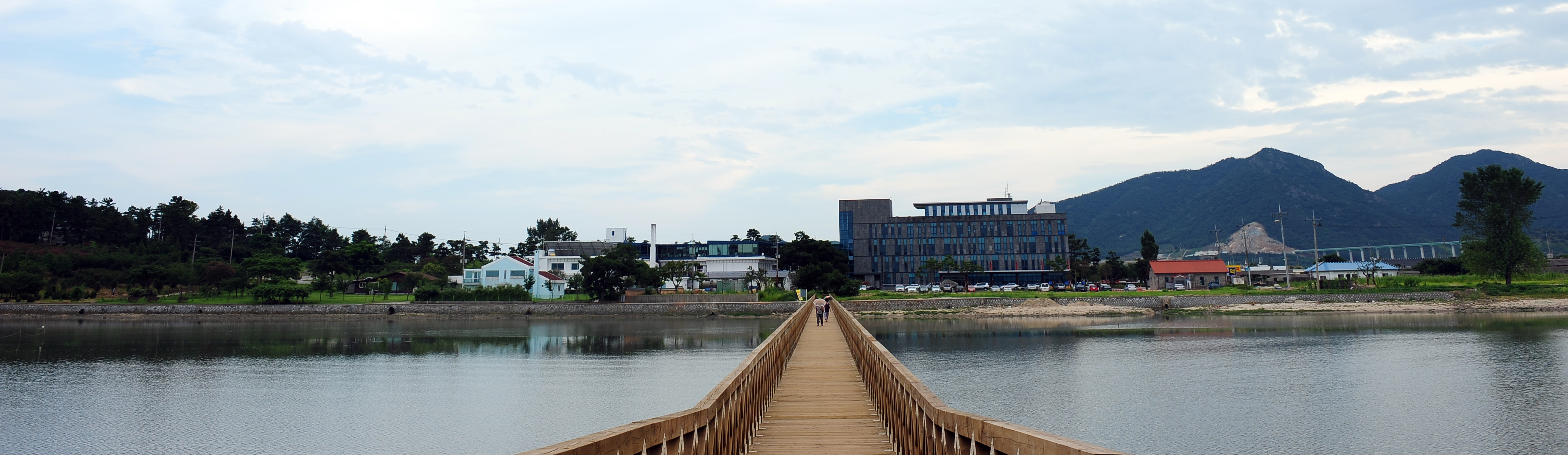
Aeyang Hospital is a place people visit just for its breathtaking views. At dawn and dusk, the sunlight shimmering over the blue sea in front of the hospital is spectacular. A boardwalk connects the tidal flats to Dal Island, drawing visitors to capture the scenery. In the spring, forsythia, cherry blossoms, and wisteria bloom beautifully, warming the hearts of patients on their walks. The five-story glass ward, completed in 2011, harmonizes exquisitely with the surrounding historic stone buildings.
However, for those who know Aeyang Hospital, the stories of the people who have passed through since its founding in 1911 are more beautiful than any landscape. Even staunch atheists, upon hearing the history of this institution, might pause to wonder if there is a God. Director Lee Eui-sang, who connects these extraordinary stories, said, "Our hospital began by healing leprosy patients and was primarily a haven for the needy. By sincerely treating those who were struggling, we now draw patients from across the country and around the world."
It is known that missionaries built the hospital, Pastor Son Yang-won dedicated his life to it, and former director Kim In-kwon contributed greatly to its growth. How did this legacy begin?
"Our hospital’s history began when Dr. Willie Hamilton Forsythe, a medical missionary in Mokpo, heard that a fellow missionary in Gwangju had collapsed. While riding a pony to assist, he discovered a female leprosy patient collapsed by the roadside and treated her. The Gwangju Leprosy Hospital, established in 1911 by Dr. Robert Wilson in honor of Forsythe, eventually moved to Yeosu and became Aeyang Hospital. Initially, we focused on leprosy, but since 1960, we have primarily cared for patients with disabilities, including the aftereffects of polio. Leprosy treatment requires expertise in skin conditions and the reconstruction of deformed joints in the hands and feet; as a result, we naturally evolved into a specialized rehabilitation and orthopedic hospital."
Patients from across the nation have flocked here, reaching a staggering total of 126,000 surgical patients to date. Among them, over 70,000 have undergone artificial joint surgeries—the highest number of any single hospital in Korea. The dermatology department is also highly regarded, treating over 50,000 patients annually.
Missionary Forsythe’s story is reminiscent of the 'Good Samaritan.' While Pastor Son Yang-won’s life has been adapted into an opera, many are still unfamiliar with his story.
"Forsythe’s story deeply moved his fellow missionaries, and I think of him often to center myself. Pastor Son Yang-won is known as the 'Atomic Bomb of Love.' He lost two sons during the Yeosu-Suncheon Incident but adopted the young man who killed them, practicing ultimate forgiveness. At Aeyangwon, he lived among leprosy patients, and during the Korean War, he refused to evacuate so he could continue caring for them, tragically losing his life to the North Korean army. Our hospital is built on this foundation of love and sacrifice."
Honorary Director Kim In-kwon, a graduate of Seoul National University College of Medicine, chose a life of meaning over one of wealth. After volunteering at Sorokdo Hospital during his residency, he returned there as a public health doctor. He eventually settled at Aeyang Hospital after being moved by the patients' prayers and the encouragement of missionary doctor Stanley Toffel. In 1983, his first salary was one-sixth that of other orthopedic surgeons, yet he operated on patients from all over the country with a grateful heart.
Director Lee followed a similar path, joining Aeyang as a public health doctor in 1991 and remaining for over 30 years. "I dreamed of becoming an anesthesia professor," he said, "but I found that I could provide ideal care here, so I changed my career path."
To Director Lee, a "famous doctor" is simply one who has performed many surgeries, believing that skill naturally follows a deep commitment to the patient. Aeyang Hospital has handled complex deformities since the era of its missionary founders. The expertise gained from treating the contracted limbs of leprosy patients translated perfectly into treating degenerative arthritis. The former director is so renowned for his workload that it is said his fingerprints have worn away from surgery. Aeyang has earned a reputation for excellent results at low costs, attracting elderly patients who were turned away elsewhere or who require difficult revisions.

It must be difficult to recruit medical staff due to practical issues like salary, especially since orthopedic surgeons are in high demand even in Seoul.
"Aeyang Hospital has 174 beds and 145 staff members. Among them are 10 doctors, five of whom are orthopedic surgeons. Most of them, like Honorary Director Kim or myself, came here voluntarily. Because it is a Christian hospital, we tend to attract doctors who prioritize meaningful and valuable work over financial gain."
It seems Aeyang Hospital possesses a unique spirit of prioritizing the patient.
"That is our mission. We have a system that allows doctors to reduce medical fees at their discretion for patients in financial difficulty. While this can be operationally challenging, our staff strives to conduct only necessary tests and perform reliable surgeries with total honesty. We also provide integrated nursing services to reduce the financial burden of caregiving on families."
I heard you are also consistently involved in overseas medical volunteer work.
"Our staff travels abroad for volunteer work, and international medical teams come here for training. We collaborate with base hospitals in Myanmar, Pakistan, and Kenya. We also treat international patients here, performing free artificial joint surgeries for those in need from around the world."
In the next decade, Aeyang Hospital aims to become a world-class missionary hospital. As a designated facility for attracting international patients, it is also developing medical tourism, with plans to exchange with countries like Singapore.
As an anesthesiologist, you are known as the 'quiet conductor of the operating room.' This seems to align with your style of safely leading the hospital.
"I have been practicing anesthesia since 1987 and have treated about 100,000 patients at this hospital alone. I am forever grateful to the patients who entrusted their lives to me. Anesthesia is essential not just for the surgery itself, but for managing post-operative pain and responding to emergencies. Timely action saves lives."
Director Lee lives in a house just one minute from the hospital, remaining on standby 24 hours a day. Next month, he will pass the directorship to orthopedic surgeon Dr. Jeong Kwang-min, though he will remain as an honorary director.
"I have been married three times in my life," he joked. "First in 1991 to Aeyang Hospital, a month later to my wife, and in 1994 to the church. There have been difficulties, of course, but I have never once regretted my marriage to this hospital. It was the best choice of my life."
[Photo Gallery] Yeosu Aeyang Hospital: Healing the Hearts of Patients