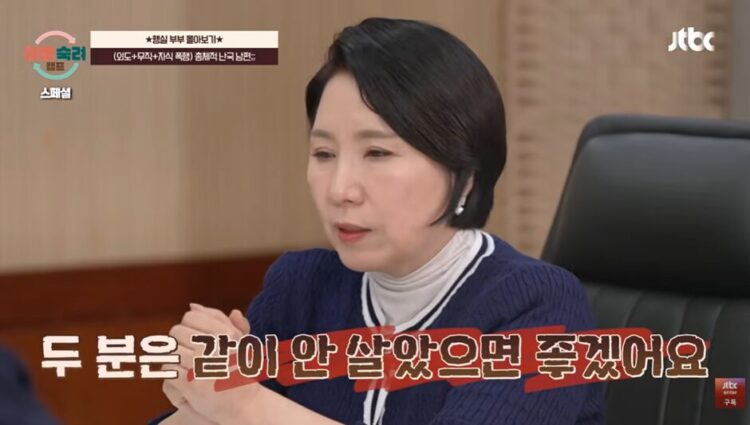
"I hope you two don't live together anymore."
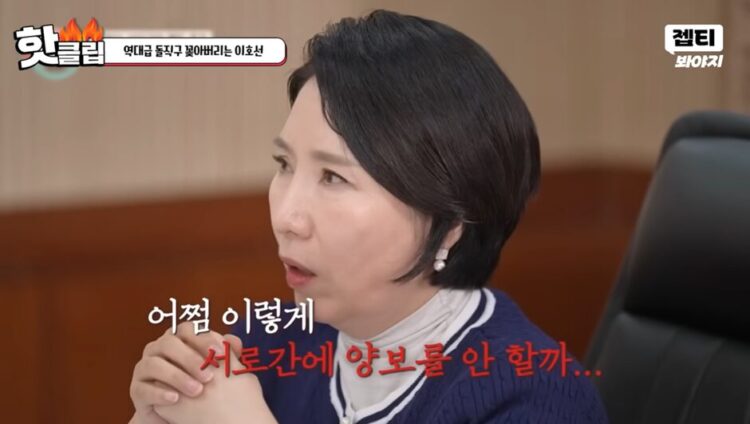
This blunt statement from renowned counselor Lee Ho-sun during a recent broadcast of JTBC’s Divorce Contemplation Camp sent shockwaves through viewers. Known for her "save the marriage at all costs" philosophy, Lee’s public suggestion of divorce marked a significant first.
The couple in question, dubbed the "Behavioral Couple," exhibited a relentless cycle of explosive arguments and accusations in front of their children. Despite mediation, the pattern remained unbroken, leading to their final decision to divorce. This case highlights a sobering reality: there are situations where staying together is far more dangerous than parting ways. Experts suggest that when repetitive, structural issues replace simple personality clashes, separation may be the only path to recovery.
The Cycle of Violence and Learned Fear
Physical violence, threatening behaviors—such as throwing objects or hitting walls—and chronic verbal abuse are non-negotiable warning signs. The danger lies not in a singular mistake, but in a repetitive cycle: violence, followed by an apology and silence, only to recur again.
In these cases, the relationship is no longer built on love, but on learned fear. When a perpetrator minimizes or justifies their behavior, the likelihood of recurrence remains high. In such environments, securing physical and emotional safety must take priority over the idealistic will to "make it work."
Habitual Infidelity and the Erosion of Trust
More damaging than the infidelity itself is the habitual avoidance of responsibility. When a spouse caught in an affair resorts to rationalizations—blaming the other partner's neglect or citing personal stress—trust becomes impossible to restore.
Unlike a one-time lapse in judgment, habitual infidelity undermines the fundamental contract of marriage. Without concrete behavioral changes, such as transparency and professional counseling, the betrayed spouse is forced into a permanent state of suspicion and anxiety. When trust is structurally broken, maintaining the union can become a form of emotional abuse.
Addiction and Economic Abuse: Systemic Failure
Addiction to alcohol or gambling is never an individual problem; it destroys the entire family system. When household funds are drained to cover debts and "I’ll quit" becomes an empty refrain without clinical treatment, the family unit begins to collapse.
Similarly, "economic abuse"—the concealment of assets, taking out loans in a spouse's name, or coercive control of living expenses—is a profound betrayal of trust. In these scenarios, financial safety nets and legal protections often become more urgent than relational recovery.
Protecting the Children: The Deciding Factor
Perhaps the most critical factor in the "Behavioral Couple" case was the exposure of the children to constant hostility. When marital conflict uses children as emotional outlets or tools for taking sides, the nature of the problem shifts from a private dispute to a child safety issue.
Experts believe Lee Ho-sun’s recommendation for divorce was largely rooted in protecting the children’s emotional development. While divorce is rarely the first answer, when structural risks like violence, addiction, and child endangerment overlap, "having the courage to end it" can be the most responsible and healthy choice for everyone involved.