The realization that another year has passed often hits hardest when we catch a glimpse of our reflection. We begin to wonder why some people seem to preserve their youth indefinitely, while others, who were once the epitome of a "baby face," appear to age overnight. While skin quality and styling play their parts, the fundamental answer lies in the three-dimensional architecture of the facial shape.
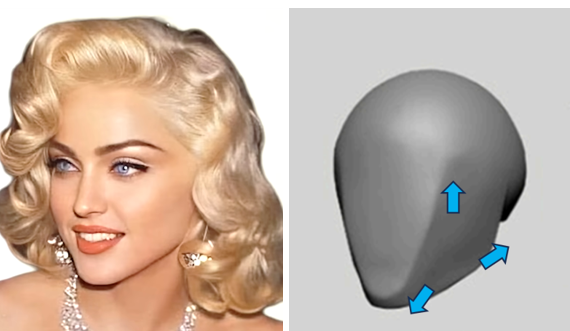
The Two Faces of Youth: "Cute" vs. "Structural"
In plastic surgery, we generally categorize youthful appearances into two distinct types. The first is the "Baby-like Baby Face," characterized by a short, slightly receding chin and a small overall frame. The second is the "Long-lasting Baby Face," which maintains its contour even as the decades pass.
While both look equally young in their twenties, their paths diverge as aging begins. The "baby-like" face often lacks the skeletal tension required to hold soft tissue in place. Because a short or receding chin provides little resistance to gravity, sagging in the jawline typically appears earlier. In this sense, a short chin is often a temporary aesthetic advantage rather than a foundation for long-term youth.
A prime example can be seen in Japanese actress Chizuru Ikewaki. In the 2003 film Josee, the Tiger and the Fish, her short chin gave her an incredibly cute, youthful impression. However, recent years have shown that without strong jawline support, signs of aging in the lower face surfaced relatively quickly.

The Power of a Distinct Jawline
Conversely, a face with a firm, well-defined jawline acts as a structural anchor. If a jawline is stronger or longer than average, a person may look more mature—or "grown-up"—in their youth. Yet, as they enter their 50s and 60s, this same feature prevents the facial contour from collapsing.
Consider George Clooney. In his youth, his prominent chin gave him a mature look. Now in his 60s, that same distinct bone structure provides the tension necessary to keep his facial contour stable and youthful. Similarly, actress Jennifer Connelly exhibits a sharp, clear facial line in her mid-50s because her jawline firmly supports the overlying tissue.

The "Jang Nara Standard": Small but Supported
The ideal facial shape—the "Long-lasting Baby Face"—combines a slim profile with firm support. This is best exemplified by actress Jang Nara. Born in the same year as Chizuru Ikewaki (1981), Jang Nara possesses a slim jawline that is neither short nor receding. Her chin is clearly defined and positioned forward, providing the tension required to prevent sagging. This balance of slim proportions and structural integrity is the benchmark of lasting beauty in East Asian aesthetics.

This facial contour aligns with the aesthetic standards traditionally favored in Korea.
As noted in a segment from my recent lecture at the PRS Korea conference, East Asian facial structures are typically wider, shorter, and flatter than Western features. Interestingly, the facial shapes considered most attractive across both cultures tend to converge toward a balanced average of these two distinct profiles.
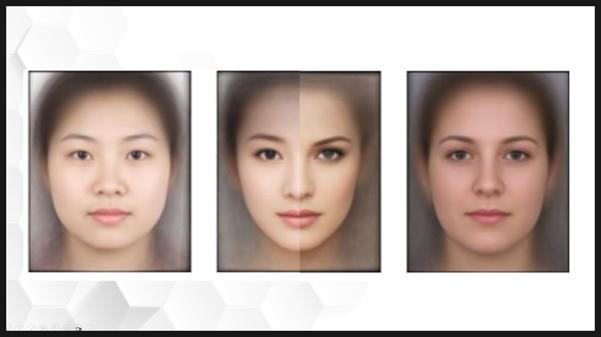
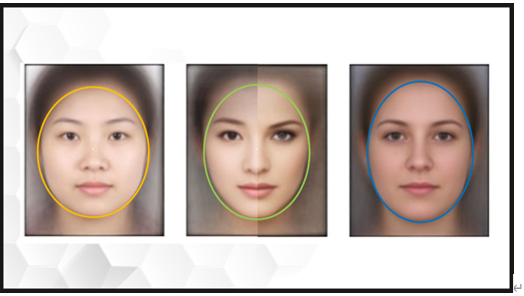
This structure can be simplified into the oval shape illustrated below.
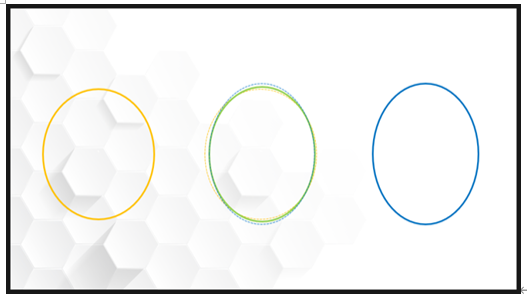
Upon closer inspection, however, another oval shape determines the overall facial contour. A similar oval-shaped structure is also evident when viewed from a superior perspective.
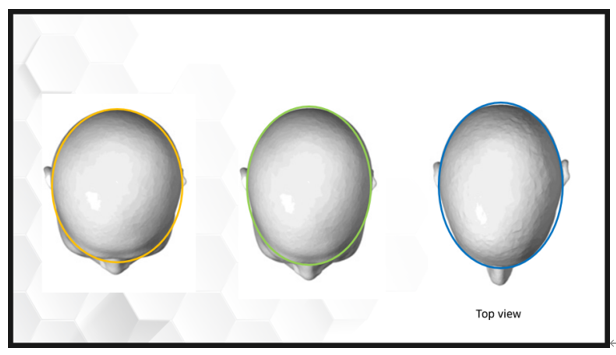
A balanced, three-dimensional structure—much like the light green contour illustrated above—is essential for aesthetic harmony and maintaining stable facial tension. Understanding this underlying architecture reveals a critical truth about facial aging.
While many seek a smaller, shorter chin in hopes of achieving a "baby-face" look, this approach can often accelerate the appearance of aging. It is a common clinical observation that patients may look older after facial bone reduction; this is frequently the result of surgeries that over-prioritize shortening the chin.
True longevity in a youthful face depends less on reducing length and more on securing the tension of the facial contour through the forward support of the jawline. Once this principle is understood, the ideal approach to facial contouring becomes clear: to achieve both immediate beauty and a long-lasting result, the goal must be to enhance proportions and three-dimensionality rather than simply cutting away bone.