
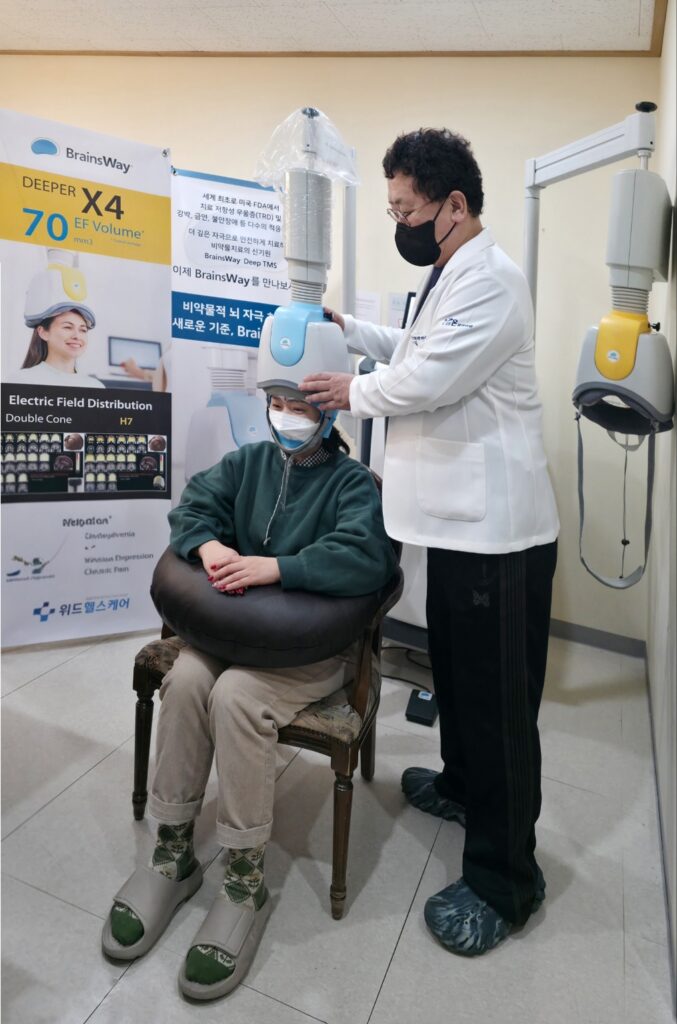
The Busan On Hospital Mental Health Promotion Center (Director Kim Sang-yeop) has introduced Transcranial Magnetic Stimulation (TMS), providing a breakthrough in the treatment of mental illnesses such as treatment-resistant depression. This method stimulates the prefrontal cortex using magnetic fields generated by coils, restoring the balance of serotonin and dopamine. This non-invasive brain stimulation technology is expected to enhance patient accessibility by inducing rapid symptom improvement without the side effects of medication.
The main indication is treatment-resistant depression that does not respond to two or more antidepressants, meeting the criteria for approval by the U.S. Food and Drug Administration (FDA). In South Korea, it is being expanded as an adjunct therapy for anxiety disorders, obsessive-compulsive disorder, and tic disorders, with ongoing research into ADHD and Alzheimer’s. As a hub hospital for developmentally disabled individuals in Busan and Gyeongnam, On Hospital has begun recruiting initial patients with a focus on specialized treatment for this population.
Clinical studies of deep transcranial magnetic stimulation have shown that 50 to 70% of depression patients exhibit symptom improvement (response rate), with 30 to 50% reaching 'complete remission'. This indicates a state where the signs of the disease have diminished or disappeared.
In particular, Deep TMS (dTMS) has shown that one-third of patients achieve this effect after four weeks of treatment, with rapid improvements observed within one week. The hospital reported additional benefits such as reduced suicidal thoughts and improved sleep quality.
The most common side effects of this treatment are mild headaches and scalp discomfort (30 to 50%), which typically resolve within one to two sessions, and the risk of seizures is less than 0.1%. There are no systemic side effects for patients without intracranial metal or a history of seizures, making it applicable for pregnant women and the elderly. Verification of hundreds of thousands of treatment data shows that the rate of severe adverse reactions is only 0.5%. However, the out-of-pocket cost of 150,000 to 200,000 won per session is a barrier.
Director Kim Sang-yeop of the Mental Health Promotion Center stated on the 29th, "As of 2023, the number of patients receiving treatment for depression in South Korea has exceeded one million, with about 30% classified as 'treatment-resistant depression' that does not respond to medication. Recently, there has been a surge in depression and anxiety disorder patients among young people in their 20s and 30s, as well as among those aged 60 and above, so TMS could contribute to restoring the quality of life for depression patients."