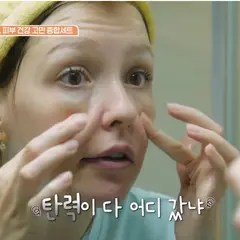
Chef Choi Hyun-seok's daughter, influencer Choi Yeon-soo (26), has expressed feelings of depression due to skin changes after pregnancy.
Choi Yeon-soo recently uploaded a video on social media with the caption, "So! Depressed!"
In the video, Choi Yeon-soo said while washing her face and doing her makeup, "My skin completely deteriorated after getting pregnant. The internet clearly said that if it’s a boy, the skin gets better, but it seems that pregnancy symptoms vary from person to person."
She continued, "I thought I would be dull about body changes and emotional changes during pregnancy, but that was not the case at all," and added, "There are too many restrictions, and I feel depressed. My condition has changed so much before and after pregnancy. I want to know the know-how from those who have been pregnant before."
Pregnancy Alters Hormonal Balance, Leading to Dry Skin and Breakouts
The biggest reason for dry skin and increased breakouts during pregnancy, like Choi Yeon-soo, is hormonal changes. When pregnant, the hormonal balance changes rapidly due to estrogen, progesterone, and various hormones secreted by the placenta, which destabilizes the skin's oil secretion and moisture retention ability.
As a result, one may experience extreme dryness and an increase in acne or pimple-like troubles. Additionally, with increased blood volume and changes in immune response, the skin barrier can break down more easily than usual.
Especially during pregnancy, since nutrients are prioritized for the fetus, the mother's skin can easily become deficient in moisture and nutrition. Coupled with decreased sleep quality, stress, and constipation, the skin condition can worsen further.
Skin Improves After Childbirth... Minimize Skin Irritation to Protect the Barrier
Most symptoms gradually alleviate as hormones stabilize after childbirth, but to improve symptoms, it is essential to protect the skin barrier. Limit face washing to twice a day and avoid products that are overly foamy or have strong cleansing power.
After washing the face or showering, apply moisturizer immediately to prevent moisture evaporation, choosing products with simple ingredients and low irritation. Using whitening, exfoliating, or high-functionality cosmetics excessively during pregnancy can worsen troubles.
Additionally, it is important to maintain adequate hydration and regular meals. Drinking small amounts of water frequently and evenly consuming protein and vegetables can gradually improve skin recovery. However, if symptoms are severe or if itching and inflammation persist, one should seek help from an obstetrician or dermatologist.
No Difference in Skin Condition Based on Fetal Gender
Meanwhile, as Choi Yeon-soo mentioned, the claim that "if you are pregnant with a boy, your skin gets better" is not scientifically proven. While there may be slight differences in hormones secreted based on the fetus's gender, these differences are not significant enough to affect skin condition.
In fact, skin changes are more influenced by the mother's individual hormonal responses, constitution, existing skin condition, living environment, and habits than by the fetus's gender. Therefore, linking changes in skin condition to the fetus's gender is a myth.