When a fracture is severe or involves substantial bone loss, the body's natural regenerative capacity often falls short. To bridge this gap, researchers have developed an innovative biomaterial designed to actively recruit stem cells to damaged tissue and stimulate new bone growth.
At the core of this breakthrough is lactic acid—a compound traditionally associated with muscle fatigue after exercise. Researchers have discovered that lactic acid also functions as a vital signaling molecule that prompts stem cells to differentiate into functional bone cells.
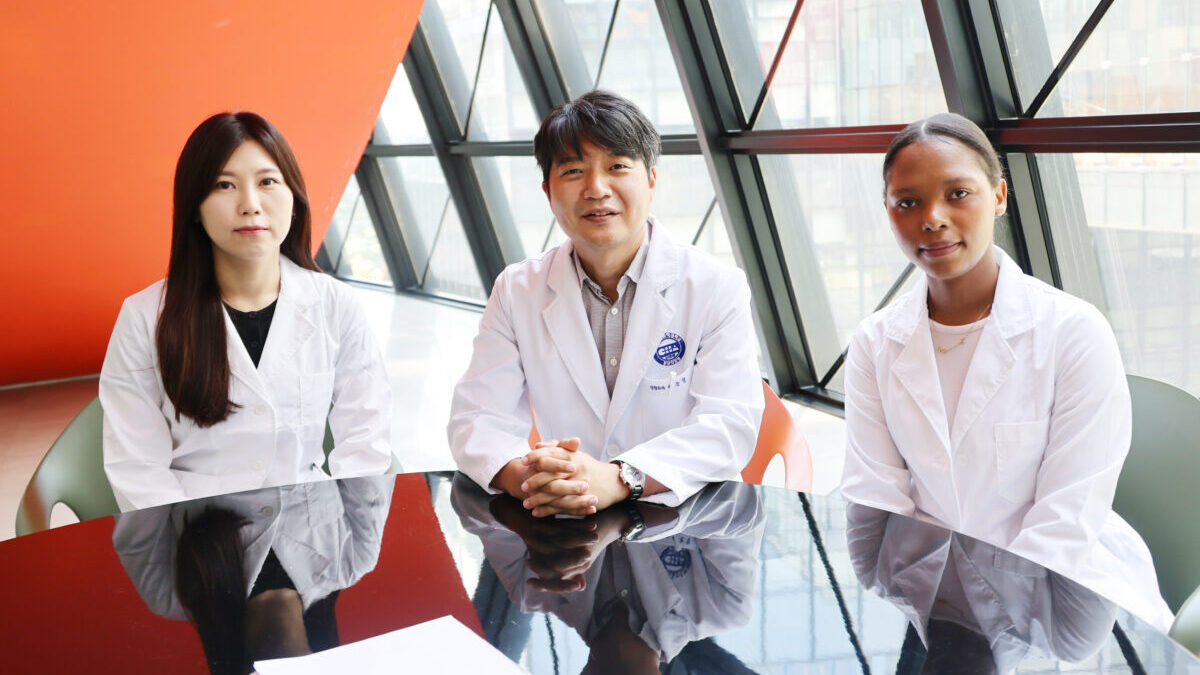
Bundang CHA Hospital at CHA University announced on Aug. 31 that a research team led by Department of Orthopedic Surgery Prof. Lee Soon-chul, Research Prof. Kim Jung-in, and CHA University doctoral candidate Siphesihle Cassandra Nongzola has engineered a novel bone-regeneration scaffold. The study was published online on June 24 in the international journal Carbohydrate Polymers and will appear in Volume 388 on Sept. 15.
Dual-Action Scaffold Recruits and Differentiates Stem Cells
In tissue engineering, a scaffold serves as a structural framework supporting tissue regrowth by providing space for cells to attach and proliferate. However, physical support alone is insufficient for extensive bone loss; stem cells capable of forming bone must gather at the injury site, accompanied by biochemical signals that trigger their conversion into bone cells.
The research team integrated both capabilities into a single platform. Using polycaprolactone (PCL)—a biocompatible polymer—and cellulose-based fibers, they chemically treated the surface to generate calcium lactate, which gradually releases calcium and lactic acid essential for bone matrix formation. They also bound stromal cell-derived factor 1 (SDF-1)—a signaling protein that draws bone marrow mesenchymal stem cells to injured tissue—to the scaffold.
In experimental trials, SDF-1 was released rapidly during the initial phase and sustained through day 28, while lactic acid was supplied gradually and calcium was released within seven days, creating an optimal microenvironment for continuous stem cell recruitment and bone formation.
Uncovering the Lactic Acid-OR5AN1 Signaling Pathway
The team also investigated the intracellular mechanism driven by lactic acid. When human bone marrow mesenchymal stem cells were treated with lactic acid, expression of the receptor "OR5AN1" increased significantly, accompanied by heightened intracellular calcium signaling and elevated markers of osteogenic (bone-cell) differentiation.
OR5AN1 belongs to the olfactory receptor family. While primarily known for detecting odors in nasal tissue, olfactory receptors are also present in non-olfactory tissues, where they participate in cell-to-cell signaling. While earlier animal studies suggested lactic acid might promote bone formation through olfactory receptors, this study confirmed that treating human stem cells with lactic acid directly boosts OR5AN1 expression and accelerates osteogenesis.
Proven Efficacy in Animal Models
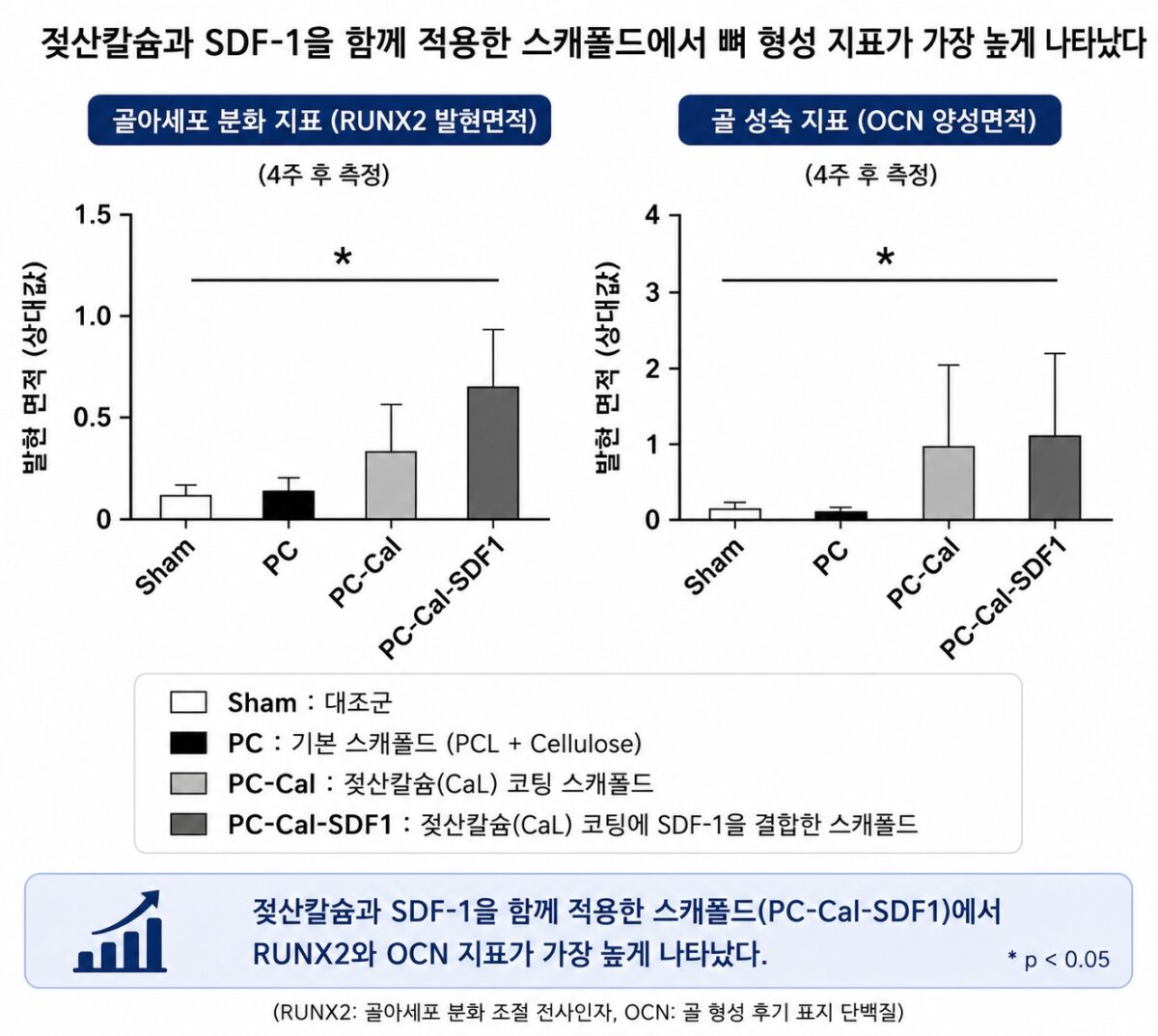
To evaluate real-world potential, the researchers implanted the scaffold into a mouse model with femoral bone defects. Compared to control groups, mice treated with the combined SDF-1 and calcium lactate scaffold demonstrated significantly greater new bone formation, active bone-matrix development, and enhanced tissue maturation.
While the results are promising, the technology remains in the pre-clinical stage. Further research is required to evaluate safety and clinical efficacy in humans before the scaffold can be deployed for complex fractures, massive bone loss, or joint replacement procedures.
"This study is significant because we created a biomaterial that does not merely provide structural support, but actively gathers stem cells at the injury site and induces them to regenerate bone," said Prof. Lee. "We anticipate this technology will find broad applications in orthopedic surgery, including fracture repair, defect reconstruction, and joint replacement."
The research was also highlighted by the Biological Research Information Center (BRIC) in its "People Who Made Korea Shine" (Hanbitsa) series.