When a specific gene or protein is expressed at unusually high levels in diseased tissue, determining whether the anomaly drives the condition or merely reflects normal human variation is a fundamental challenge in biomedical research. To unlock the true significance of these molecular shifts, scientists require healthy "normal tissue" for direct comparison.
However, securing healthy tissue from organs such as the heart or brain from living donors is virtually impossible. To bridge this critical research gap, the South Korean government is launching a national initiative to collect normal organ tissue from deceased donors for the national biobank starting this year.
A Comparative Baseline for Precision Medicine
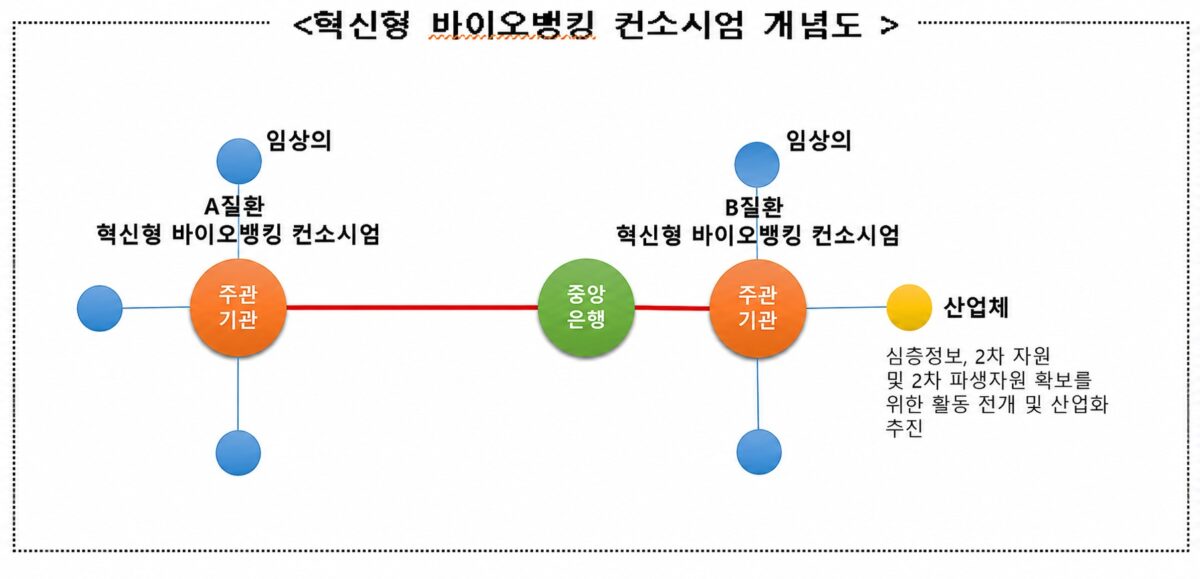
The Korea National Institute of Health (KNIH), under the Korea Disease Control and Prevention Agency (KDCA), announced on August 14 that it has added a cadaveric normal tissue category to its Innovative Biobank Consortium Support Program. The initiative will prioritize collecting healthy organ tissues, particularly the heart, alongside clinical data to enable direct comparative studies with diseased specimens.
Modern biobanks serve as comprehensive life science repositories, managing biospecimens—such as blood, tissue, and DNA—integrated with clinical records, medical imaging (MRI, PET), and multi-omics data. Since 2016, the KNIH has steadily expanded its biobank program across disease domains, including chronic cerebrovascular disease, sarcoma, gynecologic cancers, and hereditary developmental disorders. However, healthy control samples for direct organ-level comparison have remained scarce.
To address this shortage, the KNIH is establishing the "Cadaver-Derived Normal Tissue Consortium," led by Prof. Oh Ji-won of Yonsei University's Industry-Academic Cooperation Foundation. With this addition, the national program now operates across four core areas: chronic cerebrovascular disease, sarcoma, hereditary developmental disorders, and cadaver-derived normal tissue.
Bridging the Gap in Heart and Brain Research
Healthy control tissue acts as an essential calibration tool. If a gene shows heightened activity in a patient with heart disease but exhibits similar activity in a healthy heart, that gene is unlikely to be a viable disease marker. Conversely, if a genetic alteration appears consistently in diseased tissue but rarely in normal tissue, it provides a compelling lead for therapeutic targeting and biomarker discovery.
While surgical waste from living patients can provide diseased samples, healthy heart or brain tissue cannot be ethically removed for research. Postmortem donation overcomes this barrier, allowing researchers to collect samples across multiple organs from a single donor to study organ-specific gene expression.
This strategy builds on successful international models, most notably the Genotype-Tissue Expression (GTEx) project launched by the U.S. National Institutes of Health (NIH) in 2010. GTEx compiled a massive reference dataset from 838 deceased donors, generating 17,382 RNA sequencing analyses across 54 tissue sites to demonstrate how gene expression varies across organs and individuals.
Maintaining specimen quality remains a critical factor. Because biomolecules like RNA degrade quickly postmortem, the utility of cadaveric tissue depends heavily on strict protocols governing time-to-collection and preservation methods.
Lowering Research Barriers Nationwide
By the end of 2025, the KNIH's innovative biobank program had collected biospecimens from 3,648 individuals—including 1,755 cases of chronic cerebrovascular disease, 1,089 cases of sarcoma, 404 cases of gynecologic cancer, and 400 cases of hereditary developmental disorders.
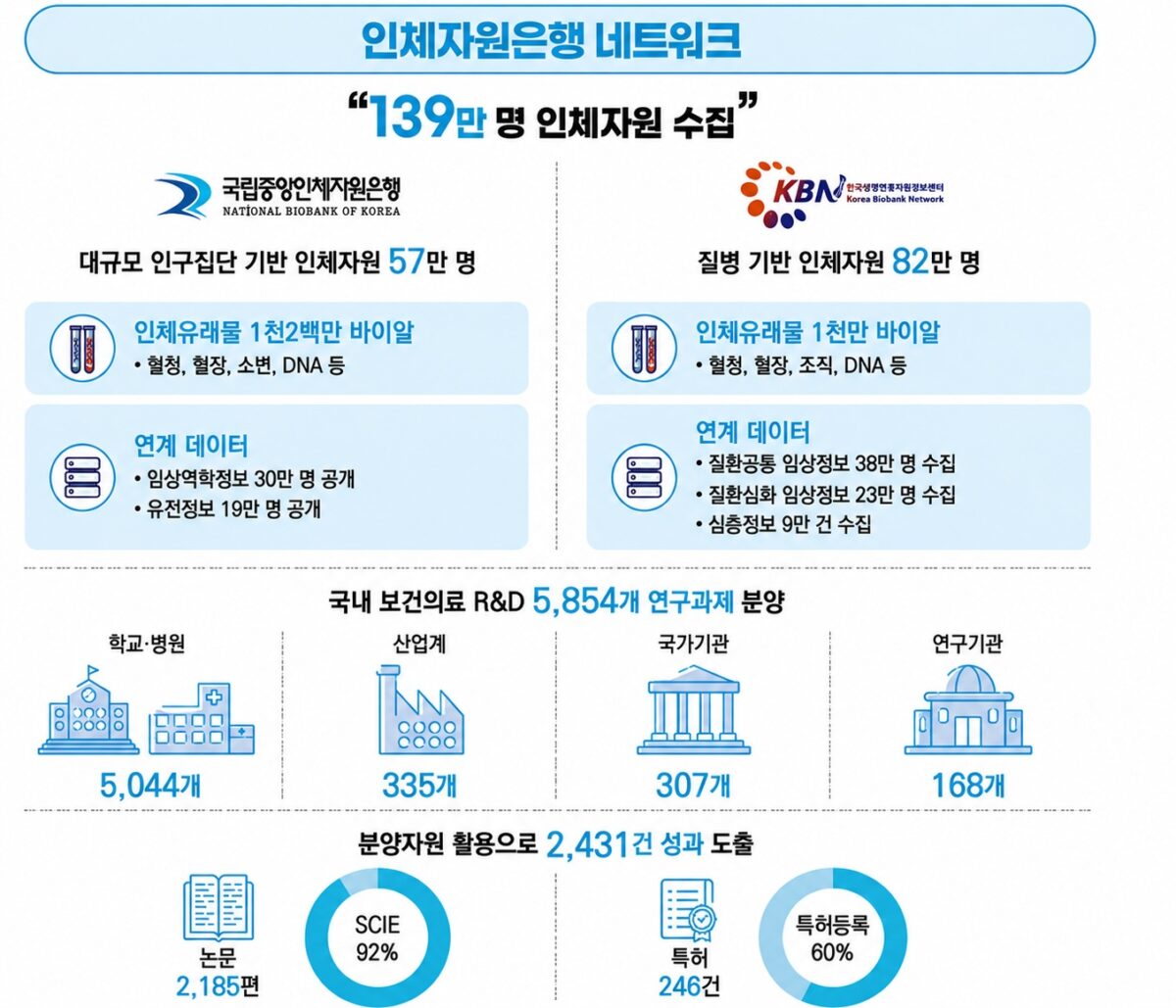
From these holdings, 1,645 datasets have been distributed to researchers, resulting in 46 papers in international academic journals, 10 patents, three technology transfers, and one commercial product. Resources from the bank have also supported the development of digital therapeutics for dementia, AI-driven content toxicity analysis tools, and personalized mental health platforms. Across the broader Korea Biobank Network, cumulative holdings reached 1.39 million donors by late 2025, supporting 5,854 research projects and 246 patent applications.
By centralizing the collection and standardized management of hard-to-obtain tissues, the expanded national biobank eliminates the burden on individual research teams to recruit donors, drastically accelerating the timeline for therapeutic discovery.