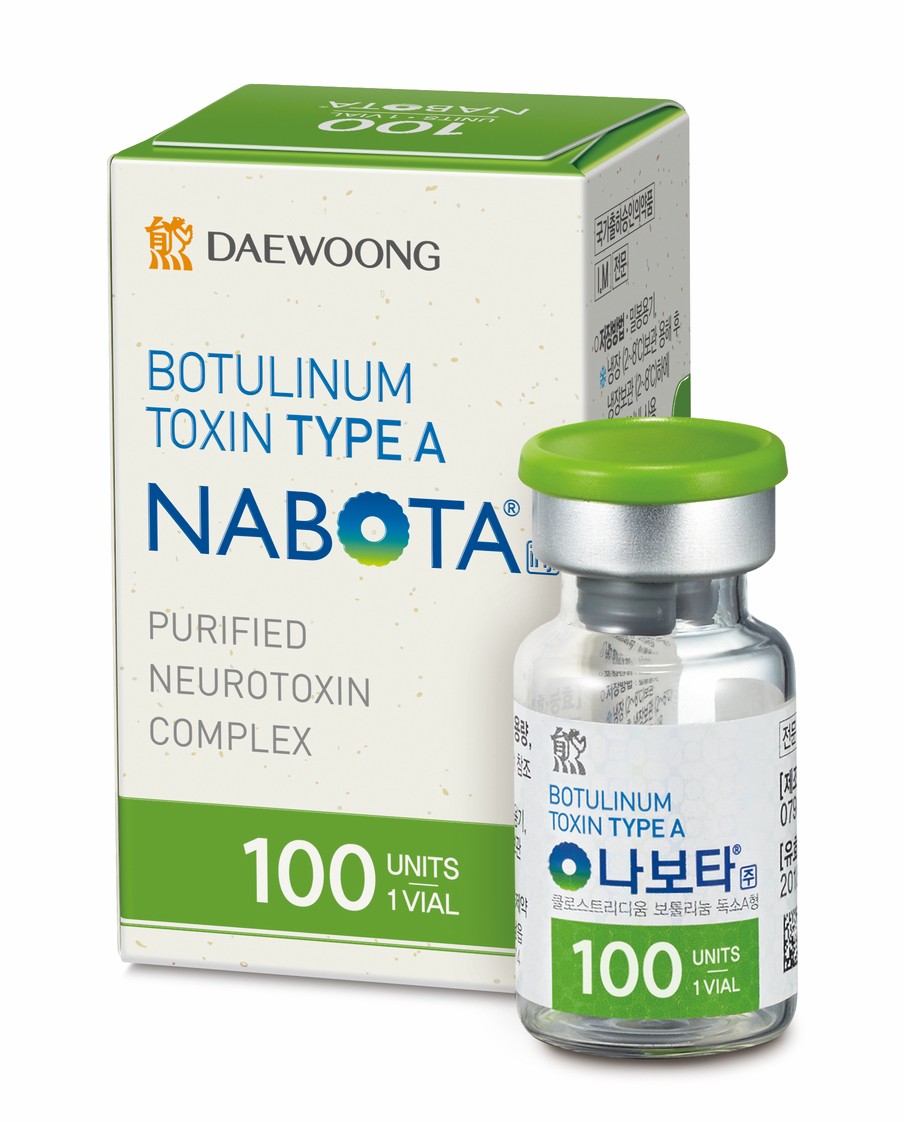
Daewoong Pharmaceutical announced on the 13th that its flagship botulinum toxin product, Nabota, surpassed 1 trillion won in cumulative sales as of June 30, marking a major milestone 12 years after its initial launch. Internationally, the product has built a significant commercial presence, marketed under the brand name Jeuveau in the United States and Nuceiva in Europe.
Since entering the market in 2014, Nabota has demonstrated consistent year-over-year sales growth. Its global trajectory accelerated sharply after securing approval from the U.S. Food and Drug Administration (FDA) in 2019. Driven by the strength of this single product, its annual sales breached the 200 billion won threshold in 2025.
Daewoong Pharmaceutical attributed these results to tailored, country-specific market entry strategies and robust global partnerships. In the highly competitive U.S. market, the company established a stable foothold alongside its local partner, Evolus. Meanwhile, in Latin America and Southeast Asia, it implemented a premium positioning strategy to capture new demand. The product has also expanded into multiple countries across the Middle East and North Africa (MENA), giving Daewoong the widest overseas footprint among South Korean toxin manufacturers.
Scaling Production Capacity to Meet Global Demand
To keep pace with rising global orders, Daewoong Pharmaceutical is constructing a new manufacturing facility dedicated exclusively to toxin production, with operations scheduled to begin in 2027. The company’s current production capacity stands at 5 million vials annually; the new plant will scale this output to 16 million vials per year. Company officials noted that this expansion will position Daewoong among the top-tier manufacturers in terms of production competitiveness within the global botulinum toxin market.
Diversifying into a Full-Spectrum Aesthetics Portfolio
Building on the success of Nabota, Daewoong Pharmaceutical plans to transform into a full-spectrum global medical aesthetics company by expanding its product pipeline into skin boosters, dermal fillers, cosmetics, and next-generation toxins.
The company is rapidly accelerating its research and development initiatives. In the skin booster sector, it is developing new products utilizing biodegradable materials that actively stimulate collagen production. In the cosmetics sector, Daewoong is leveraging advanced biomaterial technology to build a next-generation medical cosmetics platform. Similarly, its dermal filler segment is pushing forward with new formulations utilizing unique, differentiated biomaterials.
Concurrently, the development of next-generation toxin products is underway. The company is actively engineering a recombinant toxin utilizing genetic recombination technology as a core future growth engine, aiming to introduce innovative aesthetic solutions that overcome the limitations of traditional toxin treatments.
"Achieving 1 trillion won in cumulative sales in just over a decade is a testament to Nabota's superior quality and our highly effective global marketing strategies," said Yoon Jun-soo, head of Daewoong Pharmaceutical’s Nabota Business Division. "By continuing our aggressive expansion into international markets and building out a next-generation medical aesthetics portfolio, we are on track to elevate Nabota into a brand that generates 500 billion won in annual sales by 2030."