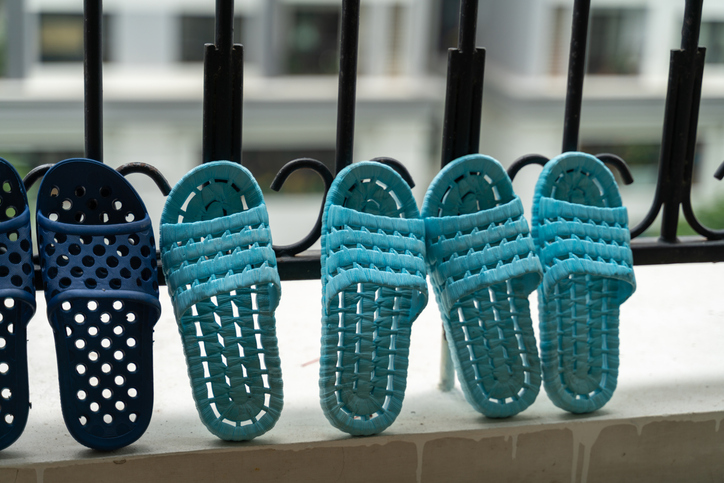
Bathroom slippers provide the ideal environment for bacterial and fungal growth. Over time, unwashed footwear inevitably accumulates a layer of dead skin cells, biofilm, and grime tracked directly from the wet floor. To minimize these hidden hygiene risks, regular sanitization and thorough drying are essential steps for any household.
Why Microbes Thrive on Bathroom Footwear
The primary culprit behind contaminated slippers is constant exposure to water and moisture. Because they trap daily shower runoff, organic soap residue, and shed skin, they quickly become an incredibly efficient breeding ground for microbes. Slippers with poor drainage designs are particularly problematic, allowing stagnant water and mold to settle directly where the material makes contact with the soles of your feet. Fortunately, consistent laundering can easily disrupt this cycle before deep structural contamination sets in.
The Standard Sodium Percarbonate Deep Clean
A remarkably straightforward sanitizing method relies on sodium percarbonate, a widely available oxygen bleach praised for its ability to lift mold stains and break down stubborn organic odors.
To begin, place the slippers inside a heavy-duty plastic bag large enough to hold them comfortably. Fill the bag with warm water and mix in roughly two-thirds of a cup of sodium percarbonate powder. It is important to avoid using boiling water, which can permanently warp or weaken the synthetic materials of the slippers.
Once the powder has fully dissolved and begins to effervesce, seal or tie the bag securely. Allow the slippers to soak for at least 30 minutes, occasionally rotating or gently agitating the bag to ensure the oxygenated solution penetrates every groove, tread, and crevice.
Rinsing, Drying, and Preventative Storage
After the 30-minute soaking period, put on protective household gloves and use a stiff-bristled cleaning brush to scrub away any loosened grime or remaining film. Next, rinse the slippers thoroughly under clean running water. Removing every trace of the cleaning solution is vital, as dried sodium percarbonate residue can cause skin irritation or chemical sensitivity when it comes into direct contact with bare feet.
Finally, place the washed slippers to dry completely in a well-ventilated area. Propping them upright against a wall prevents water from pooling in the footbeds and drastically accelerates the drying process. In fact, adopting this vertical storage habit after daily showers is an excellent preventative measure to stave off mold and sour odors entirely. However, if deep discoloration remains locked into the plastic or the material begins to crack and degrade, it is advisable to discard them and invest in a fresh pair.