For many individuals experiencing hair loss, investing significant time and money into treatments does not always guarantee meaningful results. Even with the disciplined use of oral medications or daily topical solutions, shedding can persist. While a hair transplant is often considered the definitive next step, its high cost can be prohibitive, and many patients are disqualified from the procedure entirely due to insufficient scalp elasticity or inadequate donor hair thickness.
However, new clinical findings are offering fresh hope to those struggling with severe, hard-to-treat hair loss, including patients who have failed to respond to conventional therapies.
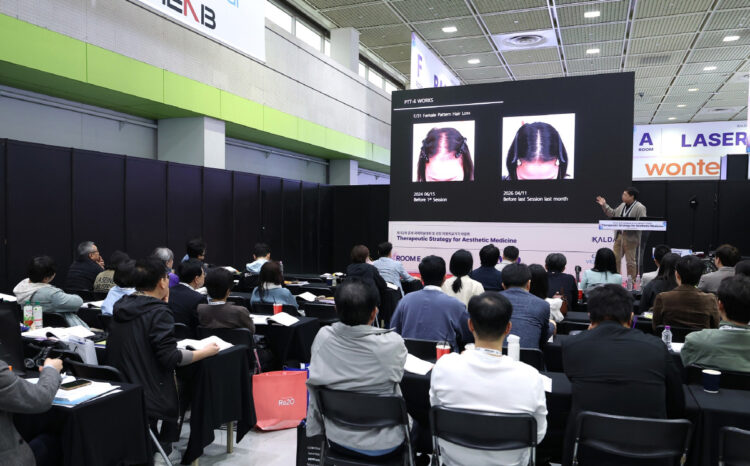
Kim Ji-seok, director of the Mammoth Hairline Clinic and a member of the Follicular Unit Extraction Society of Asia (FUE ASUA), recently unveiled the clinical outcomes of an innovative "umbilical membrane-derived stem cell therapy." The research focuses on a specialized substance known as PTT-6, which demonstrated significant efficacy in restoring hair during patient trials.
PTT-6 is isolated from the umbilical membrane—the delicate tissue surrounding the umbilical cord. This specific membrane is recognized for holding the highest concentration of stem cells among human tissues. When extracted in a pure form without chemical degradation, it yields a potent matrix for regenerative medicine. The resulting PTT-6 substance is rich in cell-signaling proteins and growth factors that naturally drive tissue repair, cellular growth, and follicular rejuvenation.
The clinical investigation specifically targeted whether these regenerative components could successfully reactivate dormant hair follicles in severe cases, such as alopecia induced by chemotherapy or long-standing treatment-resistant hair loss.
High Efficacy with Fewer Treatment Sessions
The clinical trial monitored approximately 500 patients over a period of 18 months. The results were highly encouraging, with more than 70% of the participants receiving the PTT-6 therapy demonstrating visible, measurable hair regeneration.
Beyond its success rate, the therapy significantly improved clinical efficiency. Traditional hair regeneration protocols typically demand biweekly procedures spanning a total of 6 to 12 sessions, which often leads to patient fatigue and non-compliance. In contrast, the PTT-6 protocol achieved comparable or superior hair growth with just one session per month, requiring an average of only three sessions total.
"The core advantage of PTT-6 therapy lies in its ability to completely reconstitute the regenerative microenvironment of the scalp tissue," said Kim Ji-seok. "By pairing this biological breakthrough with South Korea’s advanced medical delivery systems, we were able to maximize treatment efficiency and fundamentally reduce the patient's therapeutic burden."
These promising clinical findings were officially presented on May 3 at the Spring International Academic Conference of the Korean Society for Laser, Skin and Hair, drawing substantial attention from dermatologists and hair restoration specialists worldwide.