
Lia of the K-pop girl group ITZY has sparked a fresh conversation around personal hygiene and the lifespans of bath accessories after showcasing a shower glove as one of her essential daily items.
On her YouTube channel, Lia Choi, the singer recently walked viewers through the staple products she packs in her suitcase when traveling abroad. Noting that she has sensitive skin, the video featured her packing various facial cleansers, bathing products, and disposable face towels. She also highlighted a glove-style shower towel that slips directly over the hand, revealing that she uses similar shower gloves at home in various sizes. Lia explained that a thorough cleansing routine is vital for her, as she sweats heavily during intense stage choreographies and frequently applies stubborn pearl shimmer makeup to her neck and body.
"I used to use a shower pouf, but it just felt gross for no reason," Lia admitted, adding, "It bothered me that it was constantly left sitting in the bathroom while still wet." Instead, she recommended a shower glove as an alternative that allows for a much cleaner wash. Is that intuitive "gross" feeling a legitimate sign that it's time to throw your bath accessories away? Here is a look at how to manage shower items hygienically and when to replace them.
The Illusion of Rich Lather vs. Actual Cleanliness
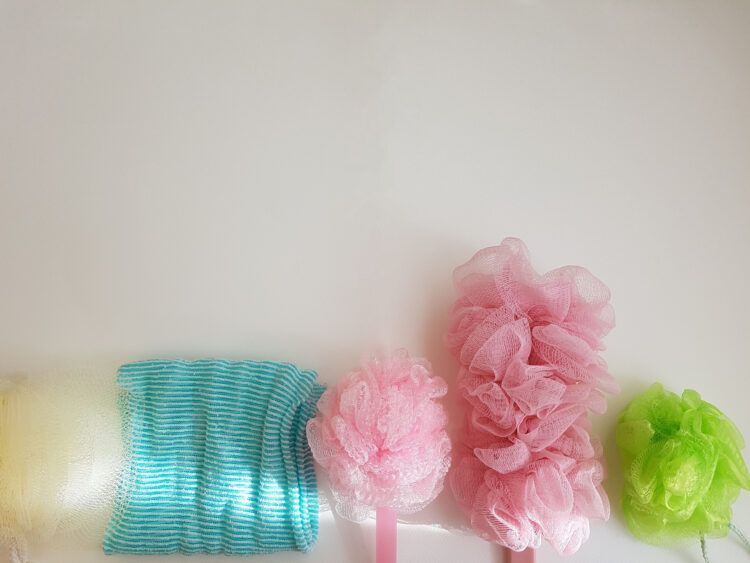
It is easy to assume that mesh shower poufs and loofah towels are inherently clean because they generate a thick, luxurious lather and easily scrub away dirt. However, during a shower, these tools trap dead skin cells, sebum, residual body wash, and cosmetic products. Even if the exterior appears perfectly rinsed, microscopic organic debris can remain trapped deep inside the tightly bound mesh layers.
Furthermore, bathrooms are inherently humid environments that frequently lack optimal ventilation, causing wet towels to remain damp for hours. Round, ball-shaped shower poufs are particularly problematic due to their layered, densely folded structures, which cause moisture to pool deep inside and drastically extend drying times. This is why, as Lia noted, leaving an accessory chronically wet warrants a closer look at its hygiene and overall usage cycle.
A good lather does not automatically equal superior hygiene. While rich foam makes cleansing feel more effective, any soap residue left inside the mesh can degrade over time. If a body wash fragrance clings to the pouf long after use, or if the material feels persistently slippery after being rinsed, it is not an indication of freshness—it is a clear sign that trapped cleanser and organic skin residue are still present.

Proper Care for Glove-Style Shower Towels
The glove-style shower towels favored by Lia fit snugly over the hand, allowing users to control scrubbing pressure far more easily than a standard pouf. They are also much simpler to wring out, dry, and pack tightly into travel bags or business kits.
However, whether using a shower glove or a traditional mesh ball, thorough maintenance is required. After every use, the item must be rinsed completely until no foam remains, shaken vigorously to remove excess water, and hung in a well-ventilated area. Leaving a shower accessory resting flat on a bathroom shelf or on the floor allows water to pool at the base; hanging it ensures that gravity can drain the moisture downward.
If you store a shower glove inside a travel pouch like Lia does, it is critical not to pack it away while damp. Ensure it dries completely before long-term storage. Because travel organizers are frequently lined with waterproof materials that trap moisture, leaving the pouch unzipped or open can significantly aid the drying process.
Recognizing the Signs: When to Replace Your Bath Accessories
For items like shower gloves and poufs, it is more practical to determine a replacement date based on physical condition rather than a strict calendar schedule. If an accessory has been stored improperly while damp and develops a musty odor, exhibits discoloration, or feels persistently slimy to the touch, it should be discarded immediately.
When body wash fragrance or soap suds refuse to rinse out easily, it typically indicates a heavy buildup of organic residue. Additionally, if the texture has grown overly rough and begins to scratch or irritate the skin, or if the mesh has stretched out, lost its elasticity, and become limp, the tool has outlived its usefulness.
While some fabric shower towels can be laundered, they should be replaced if they retain a sour smell or a slippery texture after a wash cycle. Mesh shower balls are structurally difficult to sanitize completely on the inside, making frequent replacement the safest and most practical approach. The golden rule of bathroom hygiene is to avoid leaving items damp for extended periods and to replace them without delay the moment they begin to feel unclean.
Softening the Skin to Minimize Friction
When attempting to remove stubborn pearl shimmer, color cosmetics, or water-resistant sunscreens from the body, a shower glove can feel far more effective and refreshing than using your hands alone. However, dermatologists recommend avoiding immediate, aggressive scrubbing. Instead, soften the skin with warm water and apply a rich lather first. Even with a looser mesh design, these tools generate physical friction, and repeatedly rubbing a dry or unlubricated area can compromise the skin barrier, leading to dryness, irritation, or a stinging sensation.
Rather than trying to forcefully scrub away grime, allow the soap foam to naturally lift the debris from the skin's surface. For stubborn areas that do not clean easily, apply a second round of lather and gently wash the area again rather than applying harsh, repeated friction. Finally, if you are prone to body acne or folliculitis, have recently shaved or waxed, or are recovering from a sunburn, avoid using abrasive shower tools entirely on any areas displaying redness, inflammation, or localized stinging.