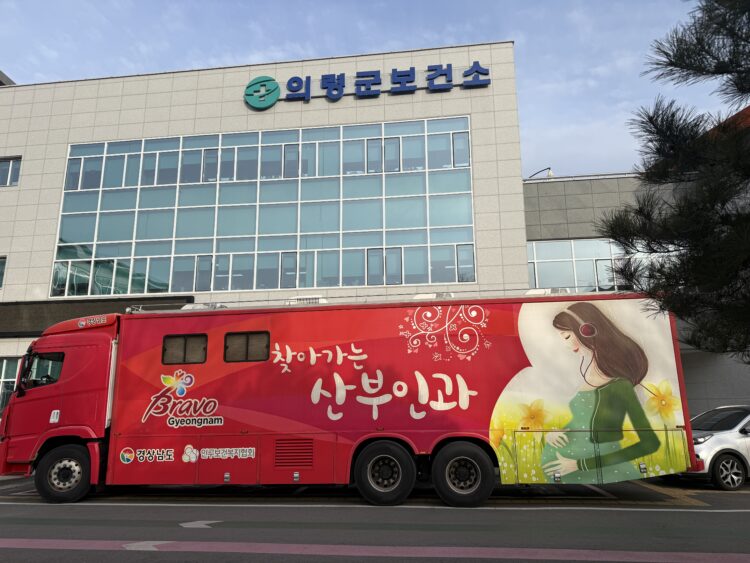
Uiryeong County in South Gyeongsang Province has been selected for the Ministry of Health and Welfare’s 2026 "Maternity Care Desert (Mobile OB-GYN) Support Program." Starting this July, the county will receive 100 million KRW in annual national funding. This expansion brings the total number of federally supported maternity care desert programs in South Gyeongsang Province to three, joining Sancheong and Hamyang counties.
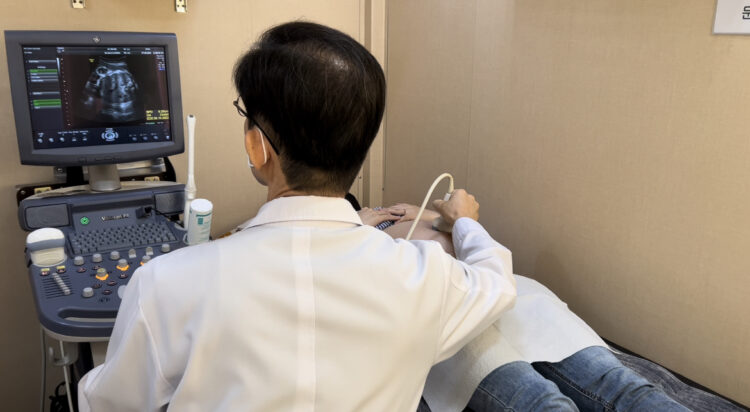
The program utilizes a specialized medical vehicle equipped with advanced diagnostic tools. A six-member team—including an obstetrics and gynecology specialist, nurses, and a clinical laboratory technologist—conducts rotating visits three to five times per month. The mobile clinic provides essential prenatal testing and gynecologic care for pregnant women and those of childbearing age in underserved regions.
For residents like one woman in her 30s from Sancheong County, the service has proven vital. Facing both language barriers and a long commute to the nearest hospital, she struggled to find consistent care. When the mobile clinic visited her area, she was able to undergo a Non-Invasive Prenatal Test (NIPT). The screening identified a potential genetic abnormality, allowing for timely medical consultation and informed decision-making that otherwise might have been delayed.
High satisfaction and expanded diagnostic services
The impact of the initiative is significant. "Approximately 2,000 residents utilize this program annually, with satisfaction rates reaching 98% over the past four years," officials from South Gyeongsang Province stated on the 7th.
To further improve care, the province is expanding the program’s scope this year. New services include ovarian function testing to assist in early infertility management and immunoserology testing to support early cancer detection and immune health assessments.
Additionally, the province plans to invest 91 million KRW in provincial funds to replace aging ultrasound machinery. By upgrading to the latest medical imaging equipment, the program aims to ensure that women in rural areas receive the same high-quality diagnostic services available in major urban centers.