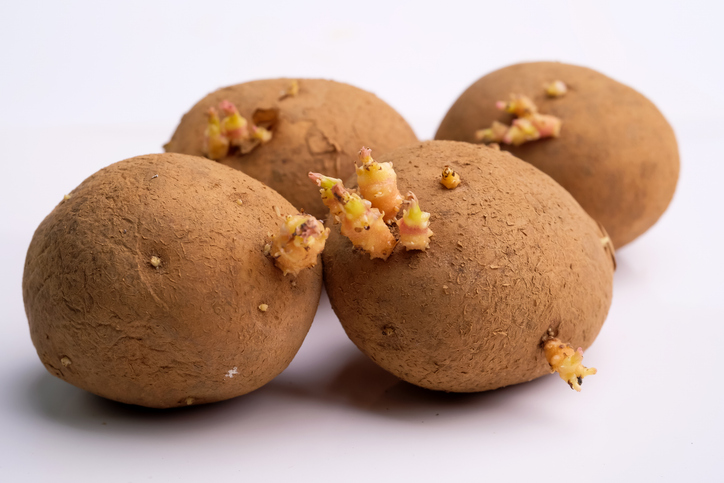
When you are busy, it’s easy to unintentionally throw away food. Especially, potatoes and bananas can easily sprout or brown while being stored, making them look spoiled. These ingredients often end up in the trash, but if you know how to use them, they can serve surprisingly useful purposes.
Eating potato sprouts poses a risk of food poisoning, but they are useful for cleaning mirrors
Potato sprouts contain a toxic substance called solanine. If the sprouts are just starting to grow, you can cut off that part and eat the potato. However, if the sprouts are quite long and the inside of the potato has turned green, there is a high risk of food poisoning.
For this reason, while consuming sprouted potatoes is dangerous for the human body, they can be useful for cleaning. This method can reduce the use of chemical products, thus protecting your health. The starch abundant in potatoes is effective for removing grease and coating surfaces. When starch particles come into contact with mirrors or glass surfaces, they absorb fine dust and oil components.
The cleaning method is simple. Cut a raw potato in half and rub the cut side on mirrors and such. At this time, the starch will leave a white residue on the mirror as it dries. This can be cleaned off with a dry cloth or newspaper. It also prevents fogging. The potato starch forms a thin coating on the glass surface, preventing moisture from sticking.
Banana peels revive the shine of old leather
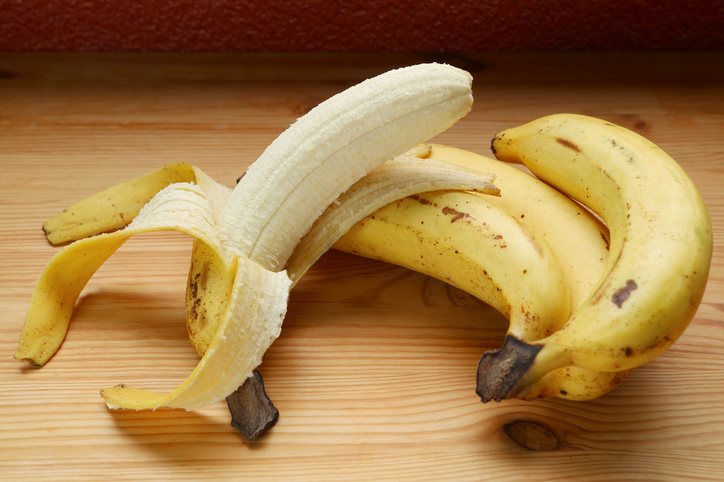
Even spoiled bananas have useful peels. The same goes for peels left after consumption. The inside of banana peels contains tannins that give a bitter taste and natural oils. Rubbing old leather shoes, bags, etc., with banana peels and then wiping them with a dry towel will restore their shine. Wiping plant leaves with banana peels will make them shiny. This helps remove dust that settles on the leaves, preventing the pores from getting clogged.
Tangerine peels and lemon slices are perfect for cleaning the microwave
It’s best not to throw away the peels of tangerines, which are rich in vitamin C and often eaten in winter, and old lemons. The acidic components of citrus fruits are excellent for cleaning. In particular, citric acid found in citrus fruits is good for removing water stains, disinfecting, and bleaching. If white dishcloths or cutting boards have been stained with food colors, rubbing those areas with lemon slices will likely restore them to their original color.
It is also effective for eliminating odors from cutting boards used for fish, garlic, etc. This principle can also be applied to cleaning microwaves that have absorbed various food odors. By placing water, lemon slices, and tangerine peels in a bowl and running it for about 3-5 minutes, steam will form inside. At this time, a fresh scent will spread, eliminating bad odors and loosening stubborn stains. Spraying alcohol on a cloth and wiping the inside will enhance the disinfecting effect.