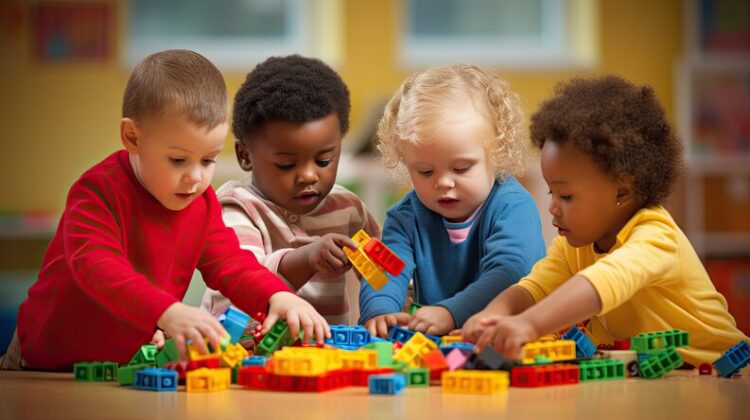
Daycare and kindergarten, where children spend time with their peers for the first time after birth, are not just places for education that includes communication. Research has shown that they also play a role in protecting children's gut health.
According to a study published this week in 《Nature》, the microbiome (microbial community) of infants is formed not only from family but also from social relationships established during childhood.
A research team from the University of Trento in Italy investigated the transmission of microbial communities among 134 participants, including children attending three daycare centers, their parents, siblings, pets, and teachers working at the daycare centers. Among the participants, there were 41 children aged between 4 months and 15 months.
The research team regularly collected and analyzed samples from each participant over the course of a school year from September 2022 to July 2023. They identified patterns of sharing and transmission among people over time.
The researchers stated, “Previous studies have confirmed that microorganisms are transmitted from mothers to infants immediately after birth, and later among cohabiting adults,” and “It is presumed that early social environments, such as daycare, can be places for the exchange and acquisition of gut microorganisms.”
The study found that at the beginning of the school year, there were almost no common strains. However, during the first three months of life, children in the same class began to share strains. In contrast, there was no sharing among children attending different daycare centers. By the end of the school year, it was found that, on average, babies shared about 20% of strains with at least one other baby in the same daycare.
Specifically, a single strain of Akkermansia muciniphila, a commonly seen gut bacterium, was transmitted from mothers and babies to peers in the same class, ultimately reaching the peers' parents. It also replaced existing viral variants. Hundreds of different bacterial species exhibited similar phenomena.
The researchers said, “Sharing the same space and engaging in social interactions with peers during the first year of life contributes to the development of our body's microbiome as much as inheriting microbial communities from family members, and this influences the unique collection of bacteria that each individual possesses.”